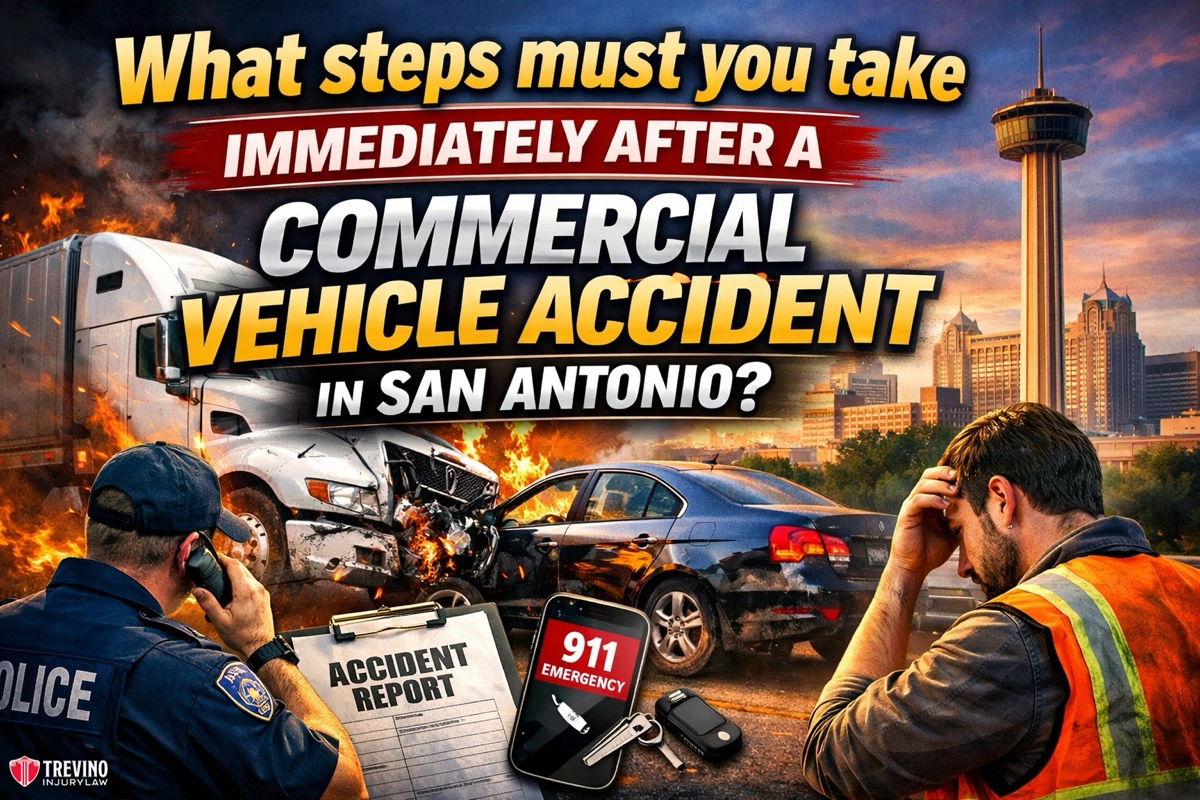
You survive the initial impact of a commercial truck crash, but the legal threat begins before the wreckage clears. Adrenaline masks your internal injuries while trucking company dispatchers orchestrate a defense strategy against you.
Their corporate rapid-response team is already en route to sanitize the scene and impose a verbal quarantine, blocking your financial recovery. According to the Texas Department of Transportation, Bexar County recorded 2,684 commercial motor vehicle crashes in 2024. Behind those collisions are logistics companies that routinely deploy investigators to twist your polite apologies into admissions of fault.
What Could Your Commercial Vehicle Accident Case Be Worth?
Answer a few quick questions about your accident. Takes about 60 seconds.
See What My Case Might Be WorthThe insurance company offered less than $20,000. I ended up with over $1 million. — Jackie Galindo
Critical proof vanishes quickly. The fleet operator returns the truck to service, overwriting the electronic control module’s speed and braking records. A Spoliation Letter, a legal demand to stop the property owner from destroying evidence, must be sent immediately. The system erases that black-box data in 30 days, permanently deleting your claim.
At Trevino Injury Law, our commercial vehicle accident lawyers secure the crash data and neutralize corporate defense tactics from day one. Call 210-TREVINO now for a free case review. You pay nothing unless we win. Se Habla Español.
What is the First Procedure You Should Follow Immediately After an Accident?
In the immediate aftermath of a collision in Bexar County, applying the 3/6 Second Rule is a matter of survival. With 2,684 total CMV-involved crashes reported in the county for 2024, the risk of a secondary pileup on high-traffic corridors like Loop 1604 is extreme. This tactical pause is vital because the county recorded 2,037 non-injury crashes last year; failing to move your vehicle under the “Steer It, Clear It” law can escalate a minor fender-bender into one of the 34 suspected serious crashes TXDOT recorded.
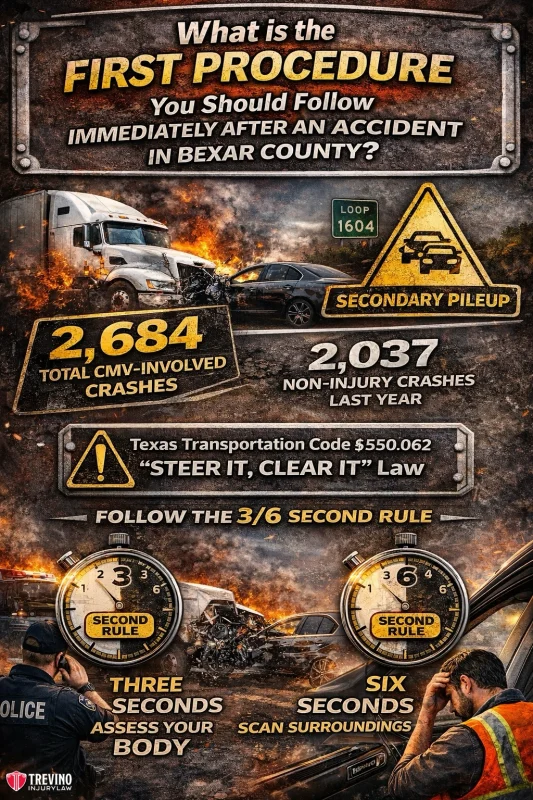
This is not just a safety recommendation; it is a legal requirement under Texas Transportation Code § 550.062, commonly known as the ‘Steer It, Clear It’ law.
This statute requires operators of vehicles involved in non-injury accidents on freeways or metropolitan highways to immediately move their vehicles out of the main lanes to minimize traffic obstruction and prevent secondary pileups.
Implementing the 3/6-second rule means taking exactly 3 seconds to assess your body for shock or internal injury and 6 seconds to scan your surroundings for oncoming commercial traffic before attempting to exit the vehicle.
This tactical pause is vital because the adrenaline dump from a heavy vehicle impact can mask severe pain, and the danger of being struck by a secondary vehicle while inspecting damage is a leading cause of roadside fatalities in Helotes and the surrounding Hill Country.
Who Must Be Called Immediately After an Accident Involving Commercial Liability?
You must follow a strict hierarchy of notification by first calling 911 for emergency medical services, followed by the San Antonio Police Department non-emergency line at 210-207-7273 for minor fleet collisions, and finally your attorney before speaking to any insurance representative.
This protocol ensures neutral authorities create an official record rather than the trucking company’s internal safety team, which often arrives in Alamo Heights or Terrell Hills to gather evidence that favors the driver.
What Evidence Must You Collect Before the Rapid Response Team Arrives?
Before a corporate “Rapid Response Team” can sanitize the scene, you must collect the DOT and MC numbers stenciled on the truck cab door, photograph the geometry of skid marks and debris, and record the names of any witnesses.
Unlike in personal car accidents, the evidence in a commercial crash, such as digital logs and the physical debris field, can be altered or cleared within an hour of the collision on Loop 1604.
Once your physical safety is established and the scene is documented, the next critical challenge is managing the high-pressure interactions that occur before you leave the crash site.
What Should You Not Say When Making an Insurance Claim or Talking to Drivers?
You should never say “I’m sorry,” “I didn’t see you,” or “I’m okay” to the truck driver, as these phrases are recorded by their insurers to devalue your claim immediately. While it is natural to feel the need to be polite, commercial drivers are often trained to elicit these admissions of fault or health status to create a “verbal quarantine” that protects the trucking company from liability in the Medical Center district or Downtown.
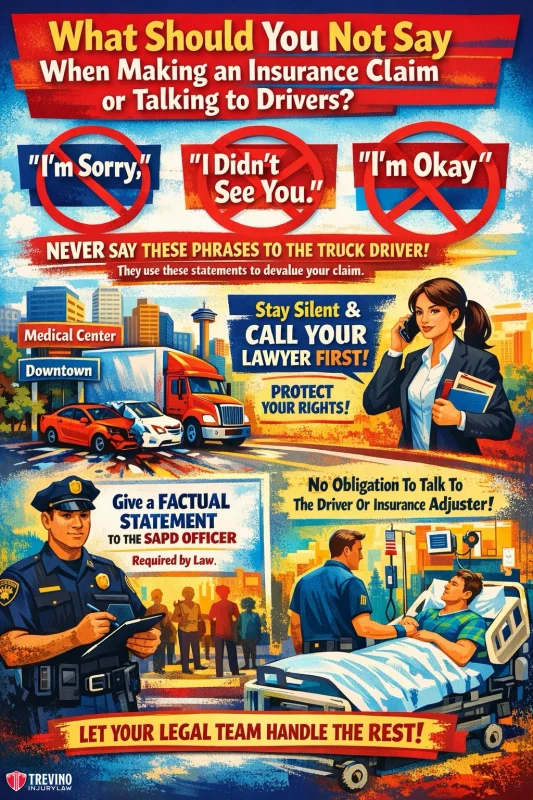
The question of who must be called immediately after an accident is answered by this need for silence; by contacting your legal team first, you ensure that all communications are handled by professionals who understand insurance traps.
You are legally required to provide a factual statement to the SAPD officer on the scene, but you have no obligation to chat with the driver or provide a recorded statement to an adjuster who may call your phone while you are still being treated in Stone Oak.
Do I Need a Police Report for a Commercial Crash in San Antonio?
Yes, you absolutely need a police report (CR-3) for any commercial crash in San Antonio to lock in the facts against corporate denial.
Although trucking companies may pressure you to settle “out of pocket” to avoid FMCSA points, an official report from an officer in Leon Valley or Balcones Heights provides the essential third-party verification required to prove negligence in a South Texas courtroom.
Scene Documentation: Commercial Truck vs. Personal Car
Documenting a commercial wreck requires identifying the federal DOT and MC numbers and the trailer license plate, whereas a personal car accident typically only requires a license plate and a driver’s license.
In many cases involving logistics hubs near Alamo Ranch, the trailer owner is a different legal entity from the truck cab owner, making it vital to photograph every identifying mark to ensure all responsible parties are named in the claim.
Securing the scene and staying silent protects your legal rights, but the hidden physical toll of a heavy-vehicle impact requires a different type of immediate action.
Why Must You Seek Medical Attention Even If You Feel Fine?
You must seek immediate medical attention because the massive kinetic energy of commercial collisions often causes internal injuries that adrenaline masks for hours or days.
This “Adrenaline Dump” is a biological reality for victims in San Antonio, and waiting to see a doctor creates a “Gap in Treatment” that corporate lawyers in Shavano Park will use to argue that your injuries were caused by something other than the crash.
If the impact was at high speed, you should report to a Level 1 Trauma Center, such as University Hospital. Explicitly tell triage staff at Brooke Army Medical Center (BAMC) that you were involved in a commercial vehicle collision. Request specific trauma imaging for the spine and head, even if you are not currently experiencing localized pain.
While the main considerations for seeking medical attention apply to any accident, San Antonio’s specific timing protocols and evidence-preservation requirements create additional urgency. Beyond the standard advice, victims in Bexar County must navigate the specific imaging protocols used by our local trauma units to ensure that documentation of internal bleeding or disc herniations is captured before the insurance company can claim the injury is pre-existing. For a deeper look at delayed symptoms, permanent limitations, and future-care issues, review the long-term effects of commercial vehicle injuries.
Understanding the urgency of medical care protects your health, but it is the immediate preservation of electronic evidence that ultimately determines the outcome of your legal recovery.
What is the First Thing You Should Do Immediately Following a Collision?
The first step is to secure your physical safety; the second is to protect your legal rights by contacting a specialized attorney who can preserve the black box. While your immediate focus is naturally on triage and the San Antonio Police Department’s investigation, the trucking company is likely already deploying its own experts to the scene to gather data that can be used to minimize your claim.
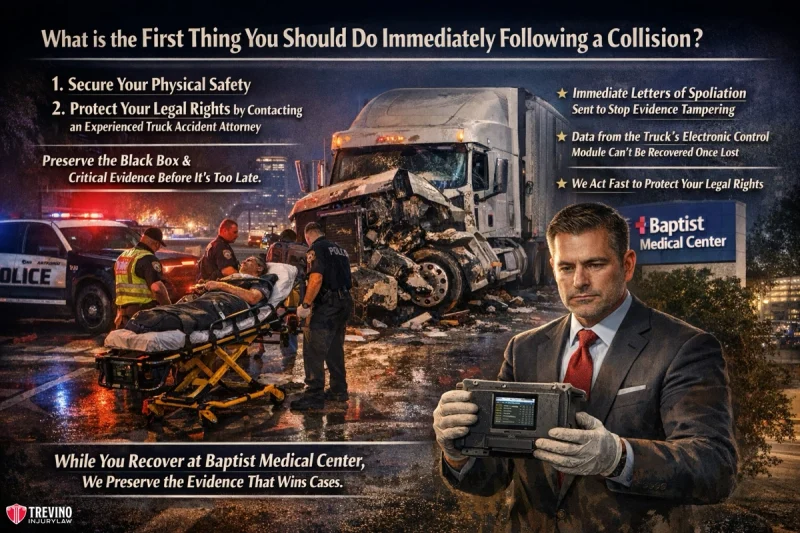
By involving a commercial accident vehicle lawyer within the first hour, you initiate the critical legal process of ‘evidence preservation.’ We immediately issue Letters of Spoliation to prevent the carrier from resetting electronic logs or repairing the vehicle.
This is vital because, under the strict standard in Brookshire Bros., Ltd. v. Aldridge, a victim must often prove that a company intentionally destroyed evidence to obtain a favorable jury instruction. Our rapid response ensures the evidence is secured before it can be destroyed, helping you recover.
This transition from physical survival to legal preservation is critical because the window for capturing high-fidelity data from the truck’s Electronic Control Module is extremely narrow. While you focus on recovering at a facility like Baptist Medical Center in Downtown, your legal team serves as your eyes and ears on the scene, ensuring that technical failures or driver fatigue aren’t hidden by corporate bureaucracy.
Understanding the need for a rapid legal response underscores how much evidence can be lost when specific identification steps are missed amid the chaos.
Can I Use My Own Phone to Record the Truck Driver?
Yes, you can and should use your phone to record the scene and the driver’s behavior, but do not interfere with their actions or the police investigation.
In Texas, you are legally permitted to record in public spaces, as there is no reasonable expectation of privacy on a public roadway. This footage can serve as primary evidence of intoxication or fatigue that the black box later confirms.
Can I Record the Police Officers on the Scene?
Yes, you can and should use your phone to record the scene and the driver’s behavior, but do not interfere with their actions or the police investigation. In Texas, you are legally permitted to record in public spaces, and that footage can serve as primary evidence of intoxication or fatigue that the black box later confirms.
Because truck accidents often involve high-stakes liability, capturing the truck driver’s name and their commercial driver’s license (CDL) number via photo or video is a critical first step. Note the company’s name on the side of the trailer; often, the tractor and trailer are owned by different entities.
Documentation of the commercial vehicle crash site, including skid marks and the final resting positions of the vehicles, is essential because a commercial vehicle is much larger and heavier than a standard car, making physics a significant factor in accident reconstruction. Your recording can help experts determine if the driver was speeding or failed to brake.
Can I Record the Truck Driver’s Conversations?
No, you should be cautious about recording private conversations you are not part of, as Texas is a “one-party consent” state, meaning at least one person in the conversation must consent to the recording. However, if you witnessed the accident and are speaking directly to the driver, you may record that specific interaction.
Be aware that trucking companies and their insurance adjusters will look for any recorded statement to use against you. While you may record for your own records, avoid posting this footage to social media.
An experienced truck accident lawyer will use this footage to win your case by identifying inconsistencies between the driver’s immediate reaction and their later official statement. This level of accident documentation is critical for any future personal injury lawsuit
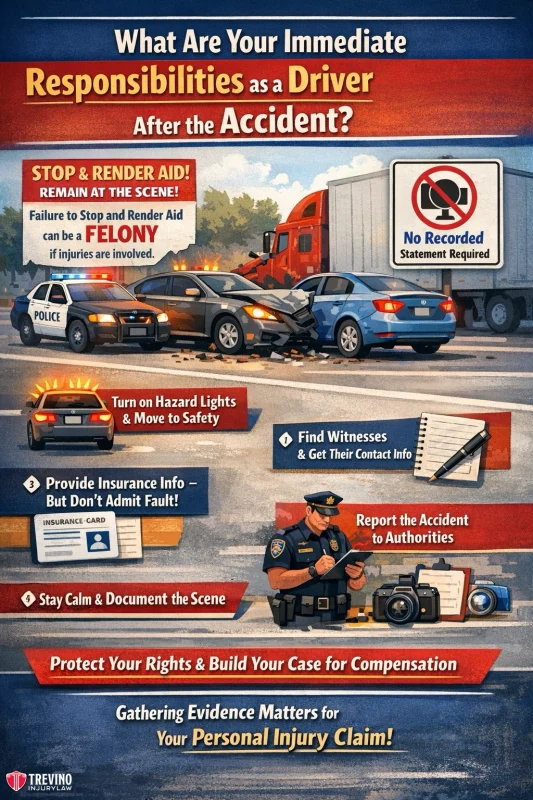
What Are Your Immediate Responsibilities as a Driver After the Accident?
Your immediate legal responsibilities are to stop, render aid if possible, and exchange information, but you have no responsibility to give a recorded statement to the other party’s insurance. Under the Texas Transportation Code, “Failure to Stop and Render Aid” can be a felony if injuries are involved, so you must remain at the scene in Universal City or Live Oak until dismissed by law enforcement.
To protect your right to the compensation you deserve, you should:
Turn on your hazard lights to alert oncoming traffic and keep your vehicle out of traffic if it is safe to move.
Check if anyone witnessed the accident and gather their contact information; third-party accounts are vital when involved in an accident with a commercial carrier. Provide your commercial auto insurance or standard liability info, but do not apologize or admit fault.
Remember that you are required to report any collision with a commercial vehicle that results in injury or significant property damage. The circumstances of the accident are often chaotic, but staying calm and following these steps ensures that when you file a personal injury lawsuit, your legal team has the foundation needed to prove that the truck accident involves unique violations of federal safety regulations.
What Happens If You Don’t Document the Trucking Company’s DOT Number?
Identifying Operating Authority, the motor carrier’s legal right to transport goods, is the first hurdle in a San Antonio litigation. In 2024, Bexar County’s high crash volume included 18 fatal crashes, many involving complex logistics chains where the trailer and cab belong to different entities.
Securing the USDOT and MC numbers stenciled on the cab is non-negotiable; these identifiers link the carrier to their public safety record and federal FMCSA points, which we use to prove a pattern of negligence before evidence is purged.
The logo on the truck’s door often belongs to a different entity than the logo on the trailer, and without the cab’s specific USDOT number, the commercial accident vehicle lawyer cannot issue the correct Letter of Spoliation.
This lack of identification creates a dangerous blind spot: the true carrier, often a shell company based outside San Antonio, remains hidden while the evidence clock ticks down. Documenting the carrier’s identifying information is only the first step. Once the correct company is identified, the next question is who bears liability for a commercial vehicle accident in Texas and how responsibility is evaluated among the parties connected to the crash.
When Is It Too Late to Preserve Black Box Data?
It is too late to preserve black box data once the vehicle is repaired or the Electronic Control Module (ECM) overwrites the crash event, which can occur within 30 days. While the legal statute of limitations for injury claims in Texas is two years, the “evidence statute of limitations” is effectively measured in days.
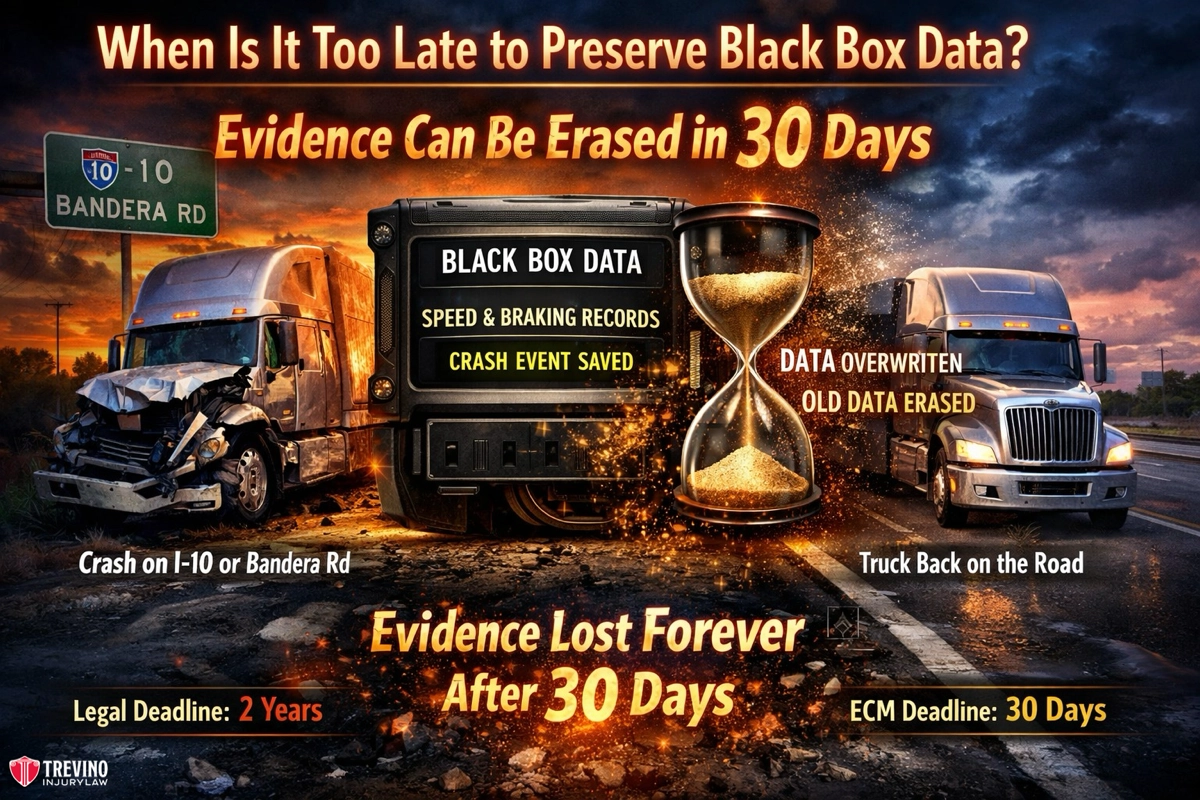
Once a truck involved in a crash on I-10 or Bandera Road is put back into service, the new driving data overwrites the critical speed and braking records from your accident, destroying the proof of negligence forever. For a deeper explanation of preservation demands, ELD records, and event-data evidence, see how to preserve truck crash evidence in Texas.
Why Hire a San Antonio Commercial Vehicle Accident Lawyer?
Once crash data is overwritten on I-10, proof of negligence vanishes. Corporate logistics teams rely on this to crush your Truck Accident claim. While settlement mills beg for quick payouts, Trevino Injury Law forces these giants to face a jury. We fight for families and aggressively challenge defense tactics.
Want to Protect the Full Value of Your Claim?
You’ve seen how this affects your case—but it is only one piece of the puzzle. Our Commercial Accident Lawyer page breaks down what a trial-ready firm does differently.
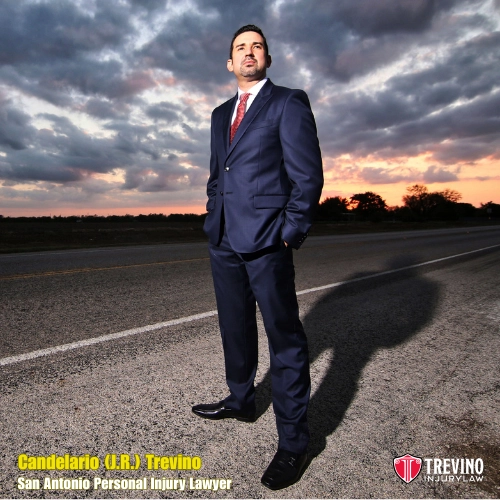
Our team acts quickly to preserve commercial-vehicle crash evidence and prepares claims for court when necessary. Trevino Injury Law is a San Antonio personal injury law firm with a $17 million trucking-case result.
Call 210-TREVINO for a free case review. Se Habla Español. We win, or you pay nothing.