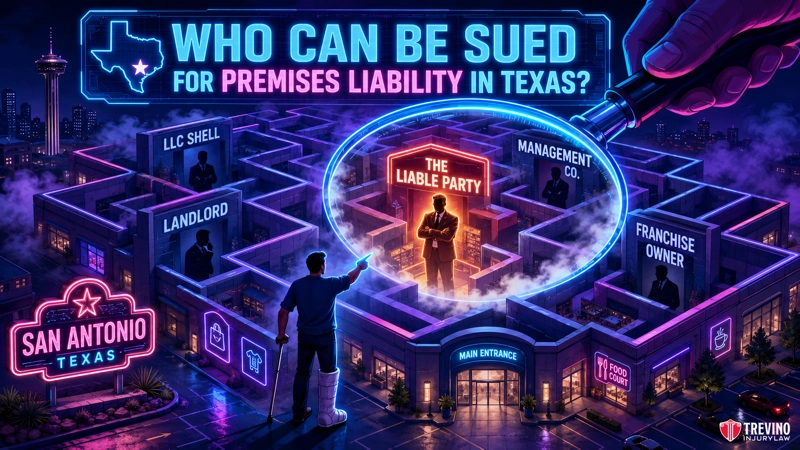
The entity that physically controls the hazard is the exact corporate defendant you sue for an injury on a San Antonio commercial property. Business tenants, property management companies, and commercial landlords share liability when their maintenance failures, ignored security threats, or structural defects leave you hurt.
The commercial landlord is already utilizing a Triple Net Lease to shift all liability to a local tenant while hiding their corporate assets behind a separate shell company. A proven trial record stops these evasion tactics, including a $536,007 jury verdict secured against defendants who refuse to accept responsibility.
What Could Your Premises Liability Accident Case Be Worth?
Answer a few quick questions about your accident. Takes about 60 seconds.
See What My Case Might Be WorthThe insurance company offered less than $20,000. I ended up with over $1 million. — Jackie Galindo
Vendor contracts, surveillance footage, and internal maintenance logs vanish within days. A Spoliation Letter, a legal demand that prevents the property owner from destroying evidence, must be issued immediately. Texas limits your window to formally name the correct corporate entity to two years. After that, the court dismisses your lawsuit permanently.
Trevino Injury Law’s premises liability attorneys pierce the corporate veil on day one and secure the evidence needed to obtain maximum compensation. Call 210-TREVINO now for a free case review. You pay nothing unless we win. Se Habla Español.
San Antonio Commercial Property Injury Litigation: Key Takeaways
- As your commercial property injury lawyer in San Antonio, we aggressively target hidden landlords on corridors like Loop 410 across Bexar County.
- Our legal team pierces Triple Net Leases and shell LLCs to establish actual legal control over the dangerous commercial hazard.
- Trevino Injury Law forced the defense to pay a $536,007 jury verdict after they offered a mere $5,000 settlement.
- Your attorney initiates immediate investigations to prevent negligent corporations from shifting blame and escaping the strict Texas statute of limitations.
Identifying the Liable Party on Commercial Property
Under premises liability law, liability for a commercial property injury hinges on the degree of control. We must determine which entity had physical control over the hazard. This could be the property owner, the business tenant, or a management company. A property owner owed you a duty to keep the premises reasonably safe.
This foundational rule was articulated by the Texas Supreme Court in Wal-Mart Stores, Inc. v. Alexander. This case establishes that a party’s duty of care is dictated by its actual control over the premises. We use this critical legal standard to expose commercial landlords who attempt to shift the blame when a property owner is negligent.
Invitees are owed the highest duty of care. Identifying the specific corporate entities that hold that duty to keep their premises safe is how we secure your compensation. We must determine who is responsible for injuries that occur on someone else’s property.
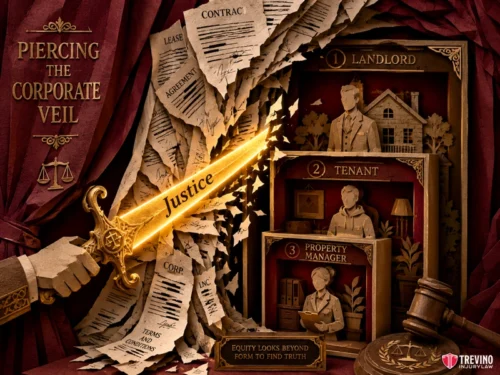
An experienced premises liability attorney deeply explores the concept of “control” over the premises. This determines exactly who is liable for injuries.
When a premises liability accident occurs in massive commercial spaces along Loop 410 or I-10, the property owner is rarely a single local individual. It is often an out-of-state holding company working to avoid liability. The danger in these spaces is statistically significant. There were 50 fatal work injuries recorded in business and communal areas across Texas in a single year.
Landlord vs. Business Tenant Liability in Commercial Leases
The business tenant is typically liable for hazards inside their leased store. The landlord remains liable for common areas such as parking lots, elevators, and roofs. In San Antonio retail centers, property owners frequently utilize Triple Net Leases. These leases attempt to shift all liability for injuries directly to the commercial tenant.
These complex lease agreements protect corporate assets. They often leave slip-and-fall victims trapped in a blame game between the landlord and the store operator. This blame game is legally consequential. Texas law dictates that responsibility may be assigned among each claimant and each designated responsible third party.
Can You Sue the Property Management Company Instead of the Owner?
Yes, you can sue the property management company directly. You can do this if their specific negligence in daily maintenance, security, or hazard response caused your injury. Questions about injury liability at San Antonio apartment complexes often involve the management companies that run the property. They are liable when they fail to order repairs or intentionally ignore hazard complaints.
If the management company was contracted to keep the premises safe but allowed a dangerous condition to persist, they share direct responsibility for your injuries. A San Antonio premises liability lawyer will uncover these vendor contracts.
Establishing this baseline of physical and legal control naturally leads to how control is divided and defended in standard leases and massive corporate chain structures.
Suing a National Franchise for a Local Store Injury
You can generally only sue the local franchise owner for an injury. You must prove that the national corporation mandated the specific unsafe policy or structural defect to sue them. This is common when you file a premises liability lawsuit.
Analyzing franchise models prevalent in San Antonio requires analyzing brand-level liability. Incidents at retail franchises frequently involve national brands shielding themselves from local negligence.
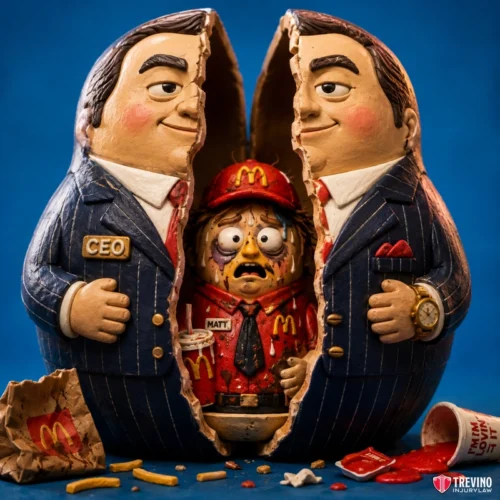
These corporations argue that the local franchisee is an independent operator. They attempt to cut off your access to the parent company’s larger insurance policies.
How LLC Shell Companies Hide the True Property Owner
Wealthy commercial landlords frequently create separate Limited Liability Companies (LLCs) for each individual building they own. This prevents a lawsuit at one property from draining the total corporate assets.
The investigative process of finding the parent company is critical. This is especially true when the defendant is listed as a generic entity, such as Bexar Retail Holdings LLC, in Bexar County records. These shell companies obscure ownership and limit payouts to injured victims in San Antonio.
These complex corporate structures create barriers to justice. An experienced personal injury attorney examines how these entities use legal loopholes to hide assets.
Are Independent Contractors and Maintenance Companies Liable for Hazards?
Yes, independent contractors and maintenance vendors can be sued directly if they created the hazard. When the property owner attempts to blame a third party, we must detail the exact vendor relationships. In some types of premises liability cases, the property owner is not at fault because a third-party vendor created the danger.

Finding the right defendant requires a thorough investigation into every contractor. The risk posed by negligent contractors is severe. State records show that 80 fatal occupational injuries occurred at construction or maintenance sites across Texas in one recent year.
Examples of Vendor Liability in Commercial Spaces
Common premises liability cases involve janitorial services leaving unmarked wet floors. Elevator maintenance companies failing to repair drop risks is another example. When evaluating third-party negligence in downtown San Antonio high-rises or The Pearl, premises liability cases include:
- Janitorial crews are failing to display warning signs after mopping commercial lobbies.
- Escalator and elevator contractors are ignoring maintenance schedules and allowing drop risks.
- Landscaping companies are leaving equipment or creating tripping hazards on pedestrian walkways.
These hazards lead to catastrophic outcomes. There were 77 fatal occupational injuries resulting from slip and fall injuries statewide in a single year.
Untangling this web of independent contractors and shell companies is complex. Initiating this investigation on day one can make or break your premises liability claim.
Why Is Early Entity Identification Critical for Your Case?
Identifying all potentially liable parties immediately is critical. Under Texas Civil Practice and Remedies Code Section 16.003, most injury victims have two years from the date of the accident to file a lawsuit. Failing to officially name the correct corporate entity before that deadline expires destroys your right to financial compensation. We must find them quickly and reveal the core of our trial-first mindset.
When we litigate to a verdict, we search for every available commercial insurance policy. Our aggressive approach secured a $536,007 Jury Verdict against a mere $5,000 settlement offer. We accomplished this by accurately identifying the liable parties, preserving the evidence, and forcing them to pay.

Commercial property owners intentionally use shell companies to stall investigations. If you wait too long, the true owner of the property remains hidden. We initiate this aggressive investigation on day one. We prevent massive corporations from shifting the blame and running down the clock on your liability claims in San Antonio.
Understanding this timeline helps us identify the specific legal tools we use to uncover property owners hiding in plain sight.
Finding the True Commercial Property Owner in Bexar County
We find the true owner by searching the Bexar County Appraisal District records. We analyze warranty deeds and pierce corporate filings. This uncovers hidden landlords and prevents them from escaping liability in San Antonio.
We dig through public records to identify the actual corporation holding the assets. Doing this work early prevents the empty chair defense. This is a tactic where the named defendant blames a phantom third party at trial to avoid paying for your lost wages.
Can I Sue the City of San Antonio for a Commercial Sidewalk Injury?
Yes, but suing the City of San Antonio requires navigating the Texas Tort Claims Act. You must provide formal written notice of the injury within 90 days. Under this Act, a governmental unit may be held liable only if it would be liable as a private person under San Antonio’s liability law.
Do Commercial Properties Carry Higher Insurance Policy Limits?
Yes, commercial properties and national franchises typically carry million-dollar commercial general liability policies. These offer significantly higher compensation potential than residential claims when you file a premises liability claim.
Individual vs. Corporate Liability in Property Injury Claims
Corporate liability targets the business entity and its commercial insurance limits. Individual liability targets an employee personally only if their gross negligence caused your harm. This applies if they operated outside their scope of employment during a premises liability accident.
Suing a minimum-wage employee who dropped an item at a local H-E-B rarely results in meaningful compensation. Individuals lack the financial resources to cover the costs of severe medical bills. Instead, a personal injury lawyer targets the corporation that failed to train them, understaffed the facility, or ignored safety protocols.
| Liability Type | Target Defendant | Typical Insurance Limits | Required Proof |
| Corporate Liability | Business entity, LLC, or holding company | High (Million-dollar CGL policies) | Systemic negligence, failure to train, unsafe policies |
| Individual Liability | Specific employee, manager, or contractor | Low (Personal policies or assets) | Gross, intentional negligence outside job scope |
What Happens If You Sue the Wrong Corporate Entity?
If you sue the wrong corporate entity, the Texas court system will dismiss your case. You will be forced to pay your own medical bills out of pocket. You will have no legal recourse or ability to file a claim again after your San Antonio slip-and-fall.
Insurance adjusters and defense lawyers love exploiting this error. If you fall into this trap without a trial-tested injury attorney, the sued party will point the finger at an unnamed vendor. The true liable party will escape justice while your family suffers the financial consequences of negligence in a premises liability case.
When Is It Too Late to Add a Corporate Defendant to Your Lawsuit?
It is too late to add a third-party corporate defendant after the strict two-year Texas statute of limitations has permanently expired. This completely destroys your claim for compensation. This is true even if you just discovered their hidden involvement after you were injured on a person’s property in San Antonio.
This expiration poses a fatal barrier for victims who handle claims on their own or use high-volume settlement mills. The moment that the deadline passes, your rights vanish. This solidifies the urgency of hiring a Trial Authority. A San Antonio premises liability attorney investigates corporate structures and secures critical evidence on day one.
Why Hire a San Antonio Premises Liability Lawyer?
Commercial property owners and their insurance companies use shell LLCs and third-party vendors to hide their assets. Do not let them shift the blame or run down the clock on the strict Texas statute of limitations. We are plaintiff trial lawyers who have taken more than 80 personal injury cases to trial, and we know their playbook.
Want to Protect the Full Value of Your Claim?
You’ve seen how this affects your case — but this is only one piece of the puzzle. Our Premises Liability Lawyer page breaks down what a trial-ready firm does differently.
As your personal injury law firm San Antonio, we investigate on day one to uncover the true liable party. We litigate to a verdict to force them to pay. We did exactly this when we secured a $536,007 Jury Verdict against a mere $5,000 settlement offer.
Do not give a recorded statement to the insurance company. Call 210-TREVINO for a free consultation. Se Habla Español.