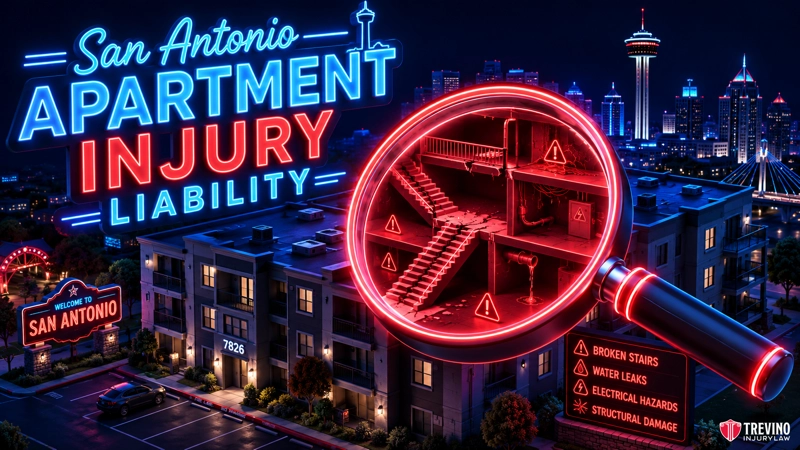
Corporate landlords and negligent property managers hold strict liability when their failure to maintain safe common areas or individual units causes your injury.
The insurance adjuster is already weaponizing your standard lease agreement to blame you for structural hazards they outright refused to fix. To combat these widespread issues, the city launched the Proactive Apartment Inspections program in April 2023 to enforce safety and code compliance in complexes with five or more units (City of San Antonio Development Services Department, 2023). Behind these newly mandated inspections are corporate syndicates that ignore broken stairwells, refuse to replace defective gates, and defer critical maintenance to protect their profit margins. That is not bad luck. That is systemic negligence.
What Could Your Premises Liability Accident Case Be Worth?
Answer a few quick questions about your accident. Takes about 60 seconds.
See What My Case Might Be WorthThe insurance company offered less than $20,000. I ended up with over $1 million. — Jackie Galindo
Evidence disappears in the first week. Maintenance logs get deleted. Surveillance footage gets recorded over. A Spoliation Letter, a legal demand that prevents the property owner from destroying evidence, must be issued immediately. Texas gives you two years to file a lawsuit before the claim is permanently barred.
Trevino Injury Law premises liability lawyers will subpoena digital work order systems on day one and lock the evidence down before the corporation deletes it. Call 210-TREVINO now for a free case review. You pay nothing unless we win. Se Habla Español.
San Antonio Apartment Complex Injury Litigation: Key Takeaways
- As your San Antonio apartment injury lawyer, we aggressively fight corporate landlords ignoring structural hazards on corridors like Loop 410 across Bexar County.
- Our legal team establishes constructive knowledge by subpoenaing maintenance logs to show that management knowingly violated strict Texas Property Code timelines.
- Trevino Injury Law litigated the Arriaga case and secured a $536,007 jury verdict after the insurance company offered a mere $5,000.
- Your attorney immediately sends formal Spoliation Letters to block the insurance adjuster from maliciously deleting critical surveillance footage before trial.
Can You Sue an Apartment Complex for Injury?
Yes, you can file a premises liability lawsuit for serious injuries by successfully proving the owner or landlord breached their strict legal duty to keep the premises reasonably safe for visitors.
This section provides a deep technical exploration of the baseline duty of care owed to residential tenants in South Texas. To successfully hold negligent property owners accountable, you must understand the four things required to prove negligence: duty, breach, causation, and damages.
Corporate apartment complexes in affluent areas like Stone Oak or in high-density zones like the Medical Center often seek to leverage standard lease agreements to shield themselves from accountability. In cases involving these massive properties, we know their playbook. We dismantle these defenses by demonstrating exactly how their failure to act directly resulted in your catastrophic injury.
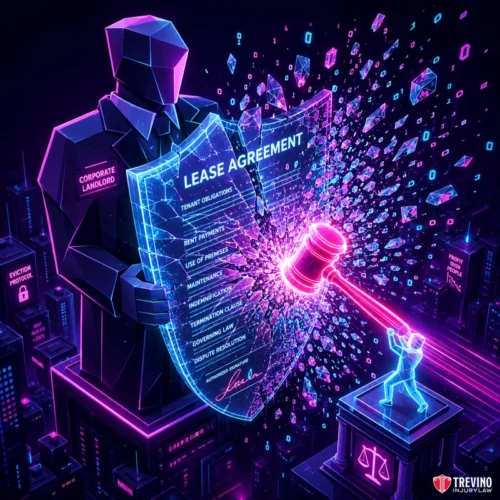
Many high-volume settlement mills will simply accept whatever initial excuse the insurance company provides. At Trevino Injury Law, our experienced premises liability attorney team brings a trial-first mindset. We prepare every case for the Bexar County Courthouse from day one. We look beyond the surface to expose the systemic negligence of these massive property syndicates so they are held liable for injuries they cause local families.
This systemic negligence is often already documented by local authorities. A complex can be forced into the city’s proactive inspection registry if it receives three designated citations within a rolling six-month period, creating a clear record of owner failures (City of San Antonio Development Services Department, 2023).
Common Injuries Covered in Apartment Liability Cases
Various types of premises liability injuries frequently occur in San Antonio when corporate owners fail to protect their residents. When property managers ignore these dangers to save on maintenance costs, families suffer the consequences. The main causes of premises liability hazards often manifest as:
- Traumatic brain injuries resulting from collapsing ceilings.
- Permanent spinal cord damage caused by falls in unlit stairwells.
- Severe fractures resulting from negligent security incidents.
- Child-related accidents caused by defective swimming pool gates that fail to secure the area from unsupervised children.
- Crushing or fall injuries from rotten balcony railings that give way under normal weight.
- Assaults or pedestrian accidents caused by broken lighting in parking lots along major corridors like I-10 or Loop 410.
The reality of these dangers is backed by local data. In 2024, the San Antonio Police Department recorded 31,264 assault offenses and 7,411 burglaries citywide, highlighting the severe risks of negligent property security. Meanwhile, the Texas Department of Transportation reported 39,805 total motor-vehicle traffic crashes, reinforcing the hazards posed by poorly designed, complex parking lots and access roads (San Antonio Police Department, 2024; Texas Department of Transportation, 2024).
Insurance adjusters will immediately try to minimize the severity of your injury claim. They will treat you like a statistic rather than a victim. We fight for families by bringing over 20 years of experience as an experienced premises liability lawyer to the table. We force the defense to acknowledge the full medical and financial reality of your harm.
These physical manifestations of corporate negligence clearly establish a breach of duty. However, the ability to recover compensation directly depends on proving exactly when the property management team learned of the danger.
What Evidence Proves the Landlord Knew About the Hazard?
Successfully proving that the landlord must have known about a defect requires rapidly securing maintenance request logs, resident portal communications, eyewitness testimony, and a documented history of city code violations. This proves the corporate landlord possessed actual or constructive knowledge of the specific danger, meaning the property owner can be held financially responsible for injuries.
Texas premises law maintains strict notice requirements that dictate whether a corporate owner may be held liable for an accident. At Trevino Injury Law, we immediately subpoena digital work order systems and send formal Spoliation Letters before management companies can maliciously delete the data.

By securing Bexar County code enforcement records and cross-referencing them with internal resident complaints, we prevent property owners from hiding behind a wall of claimed ignorance. Properties flagged for recurring hazards must undergo monthly inspections of up to 5% of their units and remain on the city’s registry for a minimum of six months, providing our team with a definitive, legally binding paper trail for your premises liability claim.
We litigate to a verdict because we understand that establishing this paper trail is the absolute cornerstone of a successful lawsuit. If a property manager in Alamo Heights or a complex near the UTSA Area knew about a rotting staircase and deliberately did nothing, they must be held responsible. We uncover the truth by deposing maintenance workers and forcing the corporation to hand over its internal communications to the court.
Texas Property Code Timelines for Fixing Unsafe Conditions
Under the strict guidelines of the Texas Property Code, property owners must make a diligent effort to repair a hazardous condition that materially affects the physical health or safety of an ordinary tenant within seven days after receiving proper written notice.
The legal threshold of a “reasonable time” often becomes a fiercely contested battleground. Corporate landlords routinely use weekend delays, alleged backorders, or intentionally understaffed maintenance crews as excuses to leave tenants in danger. Our trial lawyers expose these delay tactics to demonstrate a clear disregard for tenant safety.
Following a premises liability accident, if the defense refuses to offer a fair settlement, we are prepared to take them to trial. We have a history of securing high outcomes. For example, we secured a $536,007 jury verdict in the Arriaga case, where the initial insurance offer was merely $5,000. This proves that aggressive litigation by a trial-proven law firm forces defendants to pay what is fair.
Proving the landlord ignored these mandatory timelines establishes their liability, leading directly to the specific actions you must take to preserve this evidence before it disappears.
What Do Tenants Need to Document After a San Antonio Apartment Injury?
The critical first 48 hours following a fall or injury at a complex in neighborhoods like Alamo Ranch or the Potranco Road corridor dictate the strength of your future case. If you are injured on someone else’s property, you must immediately take the following steps:
- Photograph the Specific Hazard: Capture the dangerous condition before management quietly repairs it.
- Screenshot Resident Portals: Preserve all past maintenance requests and communications regarding the defect.
- Obtain Witness Information: Secure independent contact information from anyone who saw the incident.
- Seek Emergency Medical Care: Establish a definitive medical timeline linking your injury case directly to the fall.
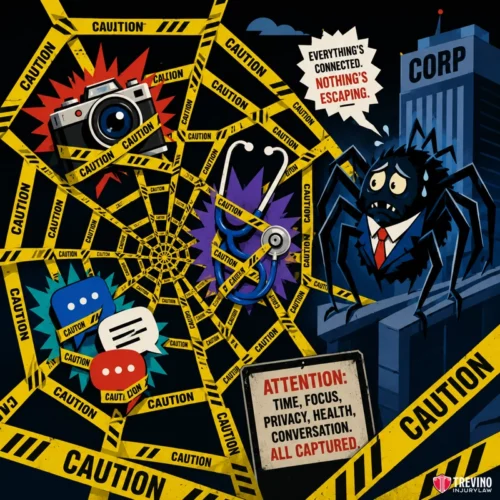
Insurance companies representing these complexes, such as Progressive Commercial or Liberty Mutual, will aggressively attempt to twist the facts if the scene is not meticulously preserved. We step in during this vulnerable time to take over the investigation, utilizing our expert personal injury claim team to document the structural failures before the management team can pour new concrete or replace the broken railing.
Proving Delayed or Complex Medical Injuries
Soft tissue damage, severe concussions, and progressive spinal cord injuries are extremely difficult to prove if you delay medical treatment. This allows the aggressive insurance adjuster to falsely argue that the physical harm occurred somewhere completely unrelated to the negligent apartment complex.
Corporate defense lawyers relentlessly exploit gaps in medical treatment to diminish the value of your claim or deny it entirely. We counter these bad-faith tactics by building an airtight timeline of causation on day one.
We utilize comprehensive medical records from top-tier local facilities like the South Texas Medical Center or University Hospital to definitively link your catastrophic injury to the specific fall. We also prepare detailed Life Care Plans that outline your future medical needs, ensuring that the insurance company is forced to evaluate the true, long-term financial impact of their negligence on your family.
Establishing this airtight timeline of causation and documentation is critical. Without aggressive intervention from an accident lawyer, the management company will rapidly dismantle your evidence.
Why Is Early Legal Intervention Critical for Apartment Claims?
Securing immediate legal representation is vital because large apartment syndicates and their insurance companies will aggressively mobilize to fix the hazard, destroy critical maintenance logs, and coerce you into accepting a lowball settlement before you truly understand the full extent of your injuries.
If you want to know if you may be entitled to compensation, our personal injury attorneys ensure evidence is preserved. At Trevino Injury Law, we fight for families by stepping directly in front of the insurance adjuster to stop their manipulative tactics.
Our trial-first approach ensures evidence is preserved immediately through formal Spoliation Letters, which legally prevent the property management company from deleting surveillance footage or altering work orders, ultimately maximizing the claim’s compensation value.

Understanding how to protect your claim against corporate sabotage is essential. Knowing the specific limitations of standard insurance policies reveals why an aggressive legal strategy is truly necessary.
Three Things Renters Insurance Typically Does Not Cover
Renters insurance typically does not cover structural defects in the building, injuries in common areas such as parking lots, or damages caused by the landlord’s gross negligence. Standard renters insurance explicitly excludes:
- Major structural failures: This includes devastating issues such as collapsing roofs or caved-in balconies.
- Incidents in shared spaces: Injuries occurring in poorly lit stairwells, community gyms, or on cracked sidewalks.
- Willful negligence: Injuries resulting directly from the property management team’s willful negligence or their outright refusal to enact required repairs.
Because of these exclusions, victims must aggressively pursue the corporate property owner’s commercial liability policy to secure full compensation for their severe losses. A property owner is responsible for carrying a commercial general liability policy. There is a distinct, highly technical barrier between these massive policies and the severe limitations in individual tenant policies.
When analyzing injuries in growing suburban communities like Live Oak or Converse, we frequently see property managers attempt to incorrectly push liability onto a tenant’s personal policy. This crucial distinction directly impacts how personal liability is handled within your specific leased space.
Does Renters Insurance Cover Liability for Injury?
Yes, standard renters insurance covers personal liability and medical payments if a guest is injured inside your specific apartment unit due to your own negligence.
Am I Liable if Someone Hurts Themselves on My Property?
Yes, a guest can sue you directly if your personal negligence inside your rented apartment caused their injury, making renters liability coverage an essential protection.
While individual renters policies govern incidents caused by your own actions inside the apartment, the property management company bears a much heavier legal burden for the rest of the complex.
Common Area Versus Inside the Unit Liability Distinctions
Liability shifts dramatically based on location and physical control. The Texas Supreme Court established in the landmark case Parker v. Highland Park, Inc., 565 S.W.2d 512 (Tex. 1978), that landlords have a duty to inspect the premises and exercise reasonable care to keep common areas, such as unlit stairwells, shared courtyards, and community pools, safe for tenants and their guests.
Because the corporate landlord retains exclusive physical control over these common areas, we hold them strictly accountable for their upkeep. Conversely, liability for an injury inside your private leased unit hinges heavily on proving they had prior notice of the specific structural defect.
Where ownership, management, and maintenance responsibilities are divided, our guide to who can be sued for injuries on commercial or managed property explains how to identify the entities behind the property and its day-to-day control.
| Liability Factor | Common Areas (Shared Spaces) | Inside the Leased Unit |
| Location Examples | Shared courtyards, unlit stairwells, community pools | Bathrooms, private living spaces, personal balconies |
| Landlord’s Legal Duty | Strict liability for upkeep and safety | Hinges heavily on prior notice of a specific defect |
| Control of Premises | Corporate landlord retains exclusive physical control | Tenant has exclusive daily control of the premises |
| Example Scenario | Tripping on cracked pavement in a Downtown San Antonio courtyard | A pipe bursting under a bathroom sink |
Establishing exactly where the injury occurred dictates the legal standards we must meet, but successfully proving your case becomes significantly more challenging if standard reporting procedures were missed.
What Happens If You Did Not Submit a Written Repair Request?
If you did not submit a written repair request prior to your injury, recovering compensation becomes significantly harder. Your case will rely entirely on proving the landlord had constructive notice because they failed to regularly inspect the premises, and the hazard existed for an unreasonable length of time before the accident. This explores the negative space of the notice requirement, addressing the absolute lack of formal documentation.
Corporate defendants in areas like the Northeast Military Corridor will immediately attempt to dismiss your claim if no paper trail exists. However, our legal team uses expert property inspectors to prove that a rotted staircase, a rusted railing, or faulty wiring had been visibly deteriorating for months before the accident. By proving constructive notice, we overcome the lack of a written request and hold the complex liable for your injuries due to its systemic failure to inspect its own property.
While overcoming the lack of written notice requires extensive investigative work, there are specific scenarios where Texas law completely protects the property owner from any financial responsibility.
When Is a Landlord Not Liable for a Guest’s Injury?
A landlord is typically not liable for a guest’s injury if the hazard was created exclusively by the tenant, was intentionally concealed from management, or occurred in an area where the tenant assumed complete and exclusive physical control over the premises. This defines the absolute limits and exceptions of corporate landlord liability under Texas law.
If a tenant living in Southtown illicitly modifies their apartment’s electrical wiring, causing a visitor to be shocked, the landlord’s liability fails because they did not create the hazard and had no reasonable way to discover it. Similarly, property owners are shielded from liability if the injury stems from a completely unforeseeable criminal act by a third party, provided the complex had adequate security measures in place. Understanding these legal boundaries clarifies when a corporation must pay for an injury and when it is legally protected. Comparable foreseeability and security questions also appear in San Antonio hotel injury liability, where the page examines assaults, third-party security, and managed-property responsibility.
Why Hire a Premises Liability Lawyer?
Hiring an experienced personal injury accident lawyer in San Antonio is critical because corporate property owners and their insurance adjusters will immediately attempt to destroy maintenance evidence, blame you for the accident, and deny your claim. Aggressive trial representation is the only way to force them to pay the maximum compensation your family deserves.
Want to Protect the Full Value of Your Claim?
You’ve seen how this affects your case — but this is only one piece of the puzzle. Our Premises Liability Lawyer page breaks down what a trial-ready firm does differently.
We fight for families by immediately sending Spoliation Letters to preserve critical evidence, such as work orders and surveillance footage, before they disappear. Do not give a recorded statement to any insurance company. As San Antonio premises liability legal advocates, we litigate to a verdict to secure economic justice for catastrophic injuries. Call 210-TREVINO for a free consultation. Se Habla Español.