A drunk driver shattered your family on Loop 1604, and now the bar that overserved them denies responsibility. They argue the patron appeared completely sober when served the final drink.
The insurance adjuster representing the establishment is already deploying the Safe Harbor defense against your claim. They use this tactic to shield negligent bars by arguing the driver concealed the impairment. But Texas bar liability in a drunk driving accident does not disappear just because a bar denies the warning signs. According to the Texas Department of Transportation, the state recorded 1,053 alcohol-related traffic deaths in 2024. Behind those fatalities are bartenders who ignored slurred speech and fumbled credit cards to pour another round.
What Could Your Dram Shop Accident Case Be Worth?
Answer a few quick questions about your accident. Takes about 60 seconds.
See What My Case Might Be WorthThe insurance company offered less than $20,000. I ended up with over $1 million. — Jackie Galindo
Crucial evidence vanishes quickly. Establishments record their security footage and lose their receipts. You must send a Spoliation Letter, a legal demand that stops the property owner from destroying proof, to lock down the timeline of service. Texas grants you exactly two years to file, but waiting guarantees the proof of visible impairment will disappear.
Trevino Injury Law team will secure the forensic toxicology and digital data required to dismantle the defense. Call 210-TREVINO right now for a free case review. You pay nothing unless we win. Se Habla Español.
Understanding How Texas Dram Shop Laws Define “Obvious Intoxication”
Texas law defines “obvious intoxication” as a specific state where a person’s impairment is so apparent that a prudent server would clearly recognize the danger the patron presents to themselves and the public. Under the Texas Alcoholic Beverage Code, it is not enough to show that a person had consumed alcohol; the plaintiff must prove that the intoxication was apparent to the provider at the precise time of service.
For the broader claim structure surrounding this proof issue, see the Texas dram shop liability framework, including how liability, defenses, and available evidence fit together.
In Raoger Corp. v. Myers, No. 23-0662 (Tex. Apr. 11, 2025), the Texas Supreme Court made clear that the key question is what the patron looked like when the bar served the drink, not just what a later BAC test showed. The Court explained that the relevant inquiry is the customer’s appearance to the dram shop at the time of service. That matters because a Dram Shop case is not won by proving the driver was drunk after the crash. It is won by proving the server could have seen the danger in real time through slurred speech, poor balance, fumbling, delayed reactions, glassy eyes, or other outward signs of impairment.
This distinction is critical in Bexar County courts, where juries must evaluate if a server in a busy River Walk establishment or a North Central bar acted negligently by serving a patron who was already visibly impaired.
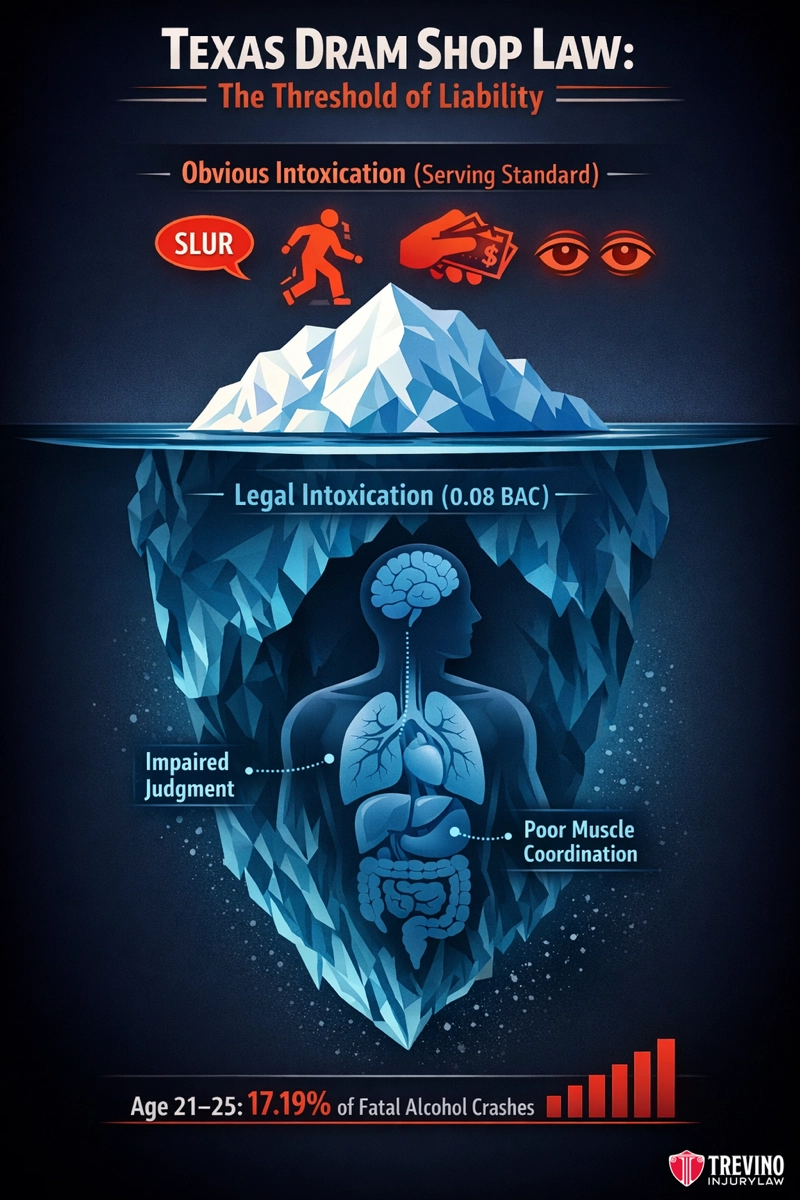
The prevalence of this issue is undeniable; in 2024, Texas recorded 960 drivers in fatal alcohol-related crashes, with those aged 21–25 accounting for 17.19% of the total (TxDOT, 2024). This legal standard separates “legal intoxication” (0.08 BAC), which applies to driving, from “obvious intoxication,” which applies to serving.
Federal data notes that while 0.08 g/dL triggers poor muscle coordination and impaired judgment, these internal markers are not always externally visible to a server (NHTSA, 2023). Conversely, fatal danger exists even below this legal limit, as evidenced by the 2,117 deaths in 2023 involving drivers with BACs of just 0.01 to 0.07 g/dL (NHTSA, 2023).
This discrepancy is why Texas law relies on visible signs rather than a chemical threshold alone. Defense attorneys will frequently use the “Safe Harbor” defense to argue that their servers were trained, but this defense fails if we can prove the server ignored visible signs.
In personal injury cases involving crashes on major arterials like Bandera Road, establishing this definition is the first step in dismantling the defense’s argument that the driver “looked fine.”
What Are the Legally Recognized Signs of Obvious Intoxication?
The legally recognized signs of obvious intoxication include distinct physical and behavioral indicators such as slurred speech, bloodshot or glassy eyes, unsteady balance, stumbling, fumbling with money, and aggressive or overly loud behavior. These are the specific “observable” traits that the Texas Alcoholic Beverage Commission (TABC) trains servers to look for, and a prudent server must identify them before pouring another drink.
When we depose bartenders or witnesses from a bar in Stone Oak, we do not ask if the person was “drunk”; we ask if they saw these specific signs.
Understanding the “four levels of intoxication” is essential here: a person moves from sober to euphoric, to excited, and finally to confused/stuporous. Liability typically attaches when a patron reaches the “excited” or “confused” stages, where their physical condition and coordination fail.
If a server ignores a patron spilling drinks or leaning heavily on the bar top, they have ignored the legally recognized signs of obvious intoxication. Understanding the behavioral definition is critical, but relying on chemical evidence alone leads to the next major challenge in these cases.
Does a High Blood Alcohol Concentration (BAC) Prove Obvious Intoxication?
No, a high blood alcohol concentration (BAC) alone is typically not sufficient to prove obvious intoxication in Texas civil court because it measures the internal level of alcohol, not necessarily the visible behavior displayed to a server. However, as demonstrated in Bruce v. K.K.B., Inc., 52 S.W.3d 250 (Tex. App.—Corpus Christi 2001, pet. denied), BAC evidence becomes critical when paired with expert testimony on retrograde extrapolation.
In Bruce, the court held that an expert’s testimony linking a specific BAC to inevitable physical manifestations of intoxication at the time of service can create a valid fact issue for a jury, proving that the bartender should have seen the signs.
A patron with a high tolerance might have a BAC of .15 yet appear relatively normal, creating a “relation back” problem where the defense argues the intoxication was masked. This is why relying solely on a breathalyzer result is a fatal mistake in Dram Shop cases. The “3-2-1 rule” for alcohol metabolism helps explain how alcohol accumulates, but it is an internal biological process.
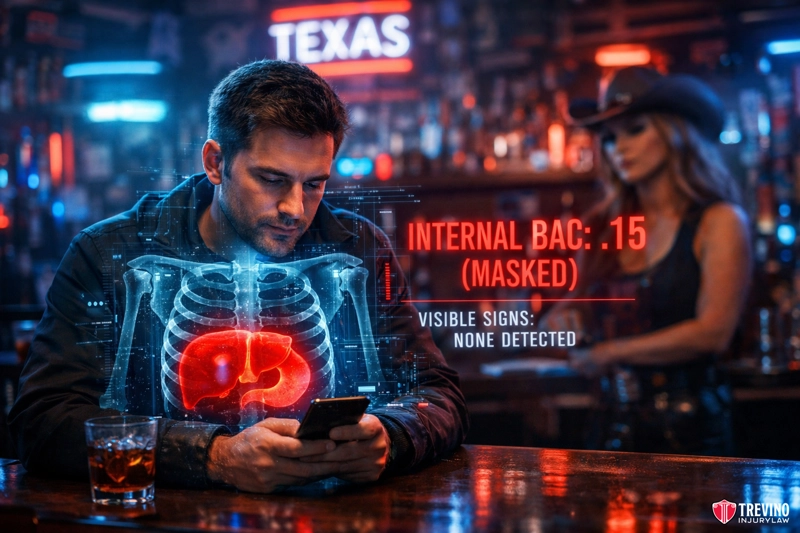
A driver who crashes on I-10 might blow a .20 an hour after the wreck, but the bar will argue they were only at a .08 and “acting sober” when served their last drink. To win, we must link the chemical information to specific physical behaviors that would have been visible at the time of service.
How Is Retrograde Extrapolation Used to Establish Liability?
Retrograde extrapolation is a scientific methodology used by toxicologists to mathematically map a person’s BAC from the time of a test back to the time they were served alcohol. This process allows an expert witness to testify that, based on the driver’s absorption and elimination rates, they would have had a specific number of drinks in their system at 10:00 PM.
Calculating this requires precision; recent technical notes suggest using expanded elimination rate ranges (e.g., 9 to 29 mg/100 mL/hour) to ensure scientific accuracy (Science & Justice, 2024).
The toxicologist can then correlate that BAC level with expected physical impairments, asserting that “at this level, the average person would have lost fine motor control and slurred their speech.” This scientific reconstruction bridges the gap between the crash and the bar. It allows us to present a timeline to a jury in San Antonio, showing that when the server handed over the final beer, the patron’s biology made it medically impossible for them to mask their intoxication.
If BAC provides the scientific timeline, we must then gather corroborating facts that satisfy the court’s strict evidentiary requirements in this case.
What Evidence Meets the “Clear Danger” Standard in Court?
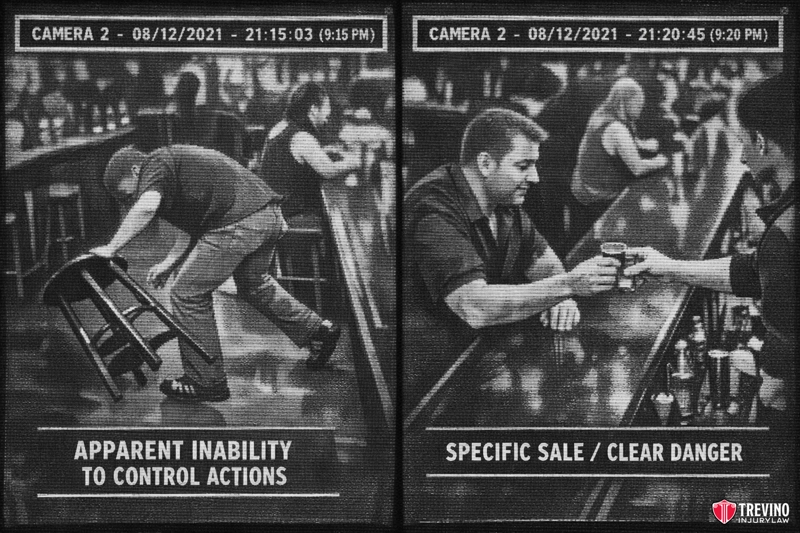
To meet the “clear danger” standard, evidence must directly link the service of alcohol to the patron’s apparent inability to safely control their actions, proving the provider knew or should have known of the risk. In San Antonio courts, generalized statements like “he looked drunk” are often dismissed as speculation; effective evidence must be specific, time-stamped, and corroborated.
We build this through a “circumstantial mosaic” that combines credit card receipts, witness affidavits, and digital data to identify every responsible party.
For example, an affidavit stating, “The driver knocked over his chair at 9:15 PM and was served a shot at 9:20 PM,” meets the standard because it connects a specific behavior to a specific sale.
We also look for evidence of volume and service speed. If receipts show a group at a Southtown bar ordered four rounds in 40 minutes, the sheer quantity provides evidence that the “clear danger” threshold was crossed. This detailed approach is necessary to overcome the skepticism often found in jury pools, requiring us to present irrefutable proof of the server’s negligence.
This rigorous standard for physical proof naturally leads to the most common question victims ask when they fear the “smoking gun” is missing.
Is Your Injury Claim Worth Pursuing Without Video Evidence?
Yes, you can successfully prove obvious intoxication without security footage by utilizing what courts recognize as sufficient circumstantial evidence.
Even without video, a ‘circumstantial mosaic’ built from credit card receipts showing rapid service and witness testimony can successfully meet the burden of proof in Bexar County courts.
We meticulously reconstruct the night using the “amount served” to create a rebuttable presumption of obvious intoxication. For instance, if a tab from a St. Mary’s Strip club shows a patron purchased ten drinks in ninety minutes, that volume alone suggests to a jury that no prudent server could have missed the signs of impairment.
By combining these hard numbers with expert testimony explaining the physical effects of that alcohol volume, we can paint a picture for the jury that is just as clear as a video recording.
Once we establish that liability can be proven through various types of cases and evidence, we must examine the specific factors that strengthen or weaken these claims in court.
How Does the “Temporal Proximity” of Service Prove Who is Liable?
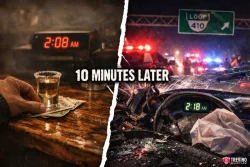
Temporal proximity refers to the short window of time between the service of alcohol and the patron’s display of intoxication, where a shorter gap creates a stronger legal inference that the patron was already obviously intoxicated when served. State data supports this risk window, showing that more DUI-alcohol crashes occurred between 2:00 a.m. and 2:59 a.m. in 2024 than any other hour (TxDOT, 2024).
In Texas Dram Shop litigation, if a driver causes car accidents, truck accidents, or motorcycle accidents on Loop 410 ten minutes after leaving a bar, it is highly probable they were visibly impaired when the bartender handed them their last drink.
This concept helps defeat the defense that the alcohol “hit them later,” as there is insufficient time for a sober person to become dangerously intoxicated in such a short span.
Is a .08 BAC Considered “Obviously Intoxicated” for Bar Liability?
No, a .08 BAC establishes legal intoxication for driving, but “obvious intoxication” typically requires a higher level of impairment visible to an observer.
Can a Bar Be Liable If the Patron Walked Out “Acting Fine”?
Generally no, unless we can prove through toxicology that they had consumed a lethal amount of alcohol that simply hadn’t hit their bloodstream yet.
Does the Number of Drinks Served Prove Obvious Intoxication?
Not automatically, but serving an excessive volume is strong circumstantial evidence that the server ignored standard safety protocols.
Does the Definition of “Obvious Intoxication” Change for Minors?
Yes, for minors, the standard of “obvious intoxication” is effectively replaced by the strict liability of serving a minor any amount of alcohol, regardless of their visible behavior. Under the Texas Alcoholic Beverage Code, an alcohol provider is liable if they serve a minor who subsequently causes an injury, even if that minor did not slur their speech or stumble.
When the dispute turns on which person or business legally counts as the alcohol seller or server, see who qualifies as an alcohol provider under the Texas Dram Shop Act.
This lowers the burden of proof significantly for families dealing with crashes involving underage drinkers near university areas like the UTSA district, as the plaintiff only needs to prove the service occurred, not the visible impairment.
When Is a Patron Intoxicated But Not “Obviously” Intoxicated?
A patron is intoxicated but not “obviously” so when their BAC is over the legal limit, but they have developed a high tolerance that effectively masks the standard behavioral signs of impairment.
This is the “functioning alcoholic” defense bars frequently use, arguing their server could not have known the patron was drunk because they “held their liquor well.”
To counter this, we analyze body cam footage for subtle “micro-signs” of impairment, like delayed responses or fixed gazes, that a trained server is required to spot, even in high-tolerance drinkers.
When Is the “Obvious Intoxication” Standard Not Met?
The standard is not met if the patron consumed alcohol elsewhere after leaving the bar, or if the bar can prove the patron’s intoxication was concealed by drugs not provided by the establishment. This “intervening cause” defense is common when a driver buys a six-pack at a gas station after leaving the club and drinks it on the way home.
If the defense can prove the intoxication that caused the crash happened after the service, or was caused by substances the bartender couldn’t see (like pills), the bar may escape liability for the injuries.
Why Hire a San Antonio Dram Shop Lawyer?
Proving “obvious intoxication” is the only way to pierce the corporate veil of a negligent bar and secure the justice your loved one deserves. The establishment will try to hide behind the “Safe Harbor” defense, claiming they did everything right while their customer destroyed your life on a San Antonio highway.
You need a personal injury lawyer in San Antonio to deploy forensic toxicologists and preserve security footage before the establishment erases those micro-signs of impairment.
Want to Protect the Full Value of Your Claim?
You’ve seen how this affects your case — but this is only one piece of the puzzle. Our Dram Shop Lawyer page breaks down what a trial-ready firm does differently.
Do not let them erase the evidence of their negligence. Whether it requires forensic toxicology, credit card receipt analysis, or witness testimony, Trevino Injury Law has the trial experience to expose the truth Bexar County juries need to see.
Call us at 210-TREVINO right now for a free consultation to evaluate your case. Se Habla Español.