Texas’s dram shop law forces bars and restaurants to pay for the catastrophic crashes they cause when they overserve visibly intoxicated patrons.
The establishment’s insurance company is already building a TABC Safe Harbor defense to shield the business, hide its aggressive sales quotas, and shift the blame entirely onto the drunk driver. According to a Forbes Advisor analysis, drunk drivers cause 42.37% of all traffic fatalities across the state. Behind that devastation is a corporate entity that prioritized profits over public safety, ignored obvious signs of intoxication, and failed to adequately train its staff.
What Could Your Dram Shop Accident Case Be Worth?
Answer a few quick questions about your accident. Takes about 60 seconds.
See What My Case Might Be WorthThe insurance company offered less than $20,000. I ended up with over $1 million. — Jackie Galindo
Video footage of the dangerous over-service disappears in days. A Spoliation Letter, a legal demand that prevents the property owner from destroying evidence, must be issued immediately to preserve the truth. Texas gives you time to file the lawsuit, but the itemized receipts and surveillance tapes you need to defeat the defense vanish in the first week.
A Trevino Injury Law dram shop attorney will subpoena the transaction records and lock the evidence down before it is erased. Call 210-TREVINO now for a free case review. You pay nothing unless we win. Se Habla Español.
What Evidence Proves Obvious Intoxication in Texas Dram Shop Cases?
To prove a bar’s liability, you must present specific evidence showing the establishment knew or should have known the patron was in a condition that presented a clear danger to himself and others, which is the legal standard in Texas.
In Raoger Corp. v. Myers, No. 23-0662 (Tex. Apr. 11, 2025), the Texas Supreme Court sharpened the proof standard for dram shop cases. The Court explained that “the relevant inquiry is the customer’s appearance to the dram shop when he was served,” not just what a BAC test showed hours later. That matters because a big bar tab, a high BAC, or expert math alone will not carry the case. We still have to connect the evidence to visible signs the staff could have seen at the time of service, like slurred speech, stumbling, poor balance, glassy eyes, or aggressive behavior that made the danger obvious.
This requires showing clear signs, such as slurred speech, stumbling, or aggressive behavior, that the staff knew about or reasonably should have known about.
For a more detailed look at the records, surveillance footage, witness accounts, and other evidence used to build that showing, see how to prove a bar served an obviously intoxicated patron in Texas.
This is the core of any successful Dram Shop case. ‘Obviously intoxicated’ is not a vague term; it has a specific legal definition under Texas Alcoholic Beverage Code § 101.63(b). Our job is to prove that the patron displayed clear signs of this danger and the bar served them anyway.
While a main drunk driving accident claim focuses on the crash scene, this supporting claim drills down into the bar’s procedural failures. Our firm immediately sends legal spoliation letters to San Antonio bars, whether in Stone Oak or along the River Walk, to prevent them from “accidentally” erasing security footage that proves over-service.
We then subpoena sales records to show how many drinks were purchased over a short period, and cross-reference them with police reports. This trial-first approach is essential, as critical evidence disappears within days, long before a “settlement mill” firm would even request it.
How Do You File a Dram Shop Lawsuit in Texas?
Filing a dram shop claim is a complex legal action. It requires formally notifying the establishment, identifying its legal corporate name and insurer, and filing a separate civil lawsuit against the business. This claim is distinct from the one against the driver. This is a complex process, not a simple insurance claim.
You must identify the bar’s legal corporate name, its insurance carrier, and its TABC license status. Our firm handles this entire investigation, including hiring investigators to locate servers who may have quit or moved, and securing affidavits from witnesses who saw the over-service before the crash.
What Evidence Proves Obvious Intoxication Under the Texas Dram Shop Law?
The primary evidence used to prove obvious intoxication falls into three main categories: direct evidence, such as eyewitness testimony; circumstantial evidence, like bar receipts; and expert evidence from a toxicologist who can establish the patron’s state at the time of service.
- Direct Evidence: Eyewitness testimony from other patrons or staff; high-definition security footage showing the patron stumbling, slurring, or being belligerent.
- Circumstantial Evidence: Credit card receipts or bar tabs showing a high number of drinks in a short period; social media posts from the patron at the bar.
- Expert Evidence: Testimony from a toxicologist who can review the evidence (receipts, DWI arrest time, BAC level) and determine that the patron would have been visibly intoxicated when they were served their last drink.
Securing this evidence is the first step in building your case, but you must also be prepared to dismantle the primary legal shield bars that are used to deflect all blame.
How Does the ‘Safe Harbor Defense’ Impact a Dram Shop Liability Claim?
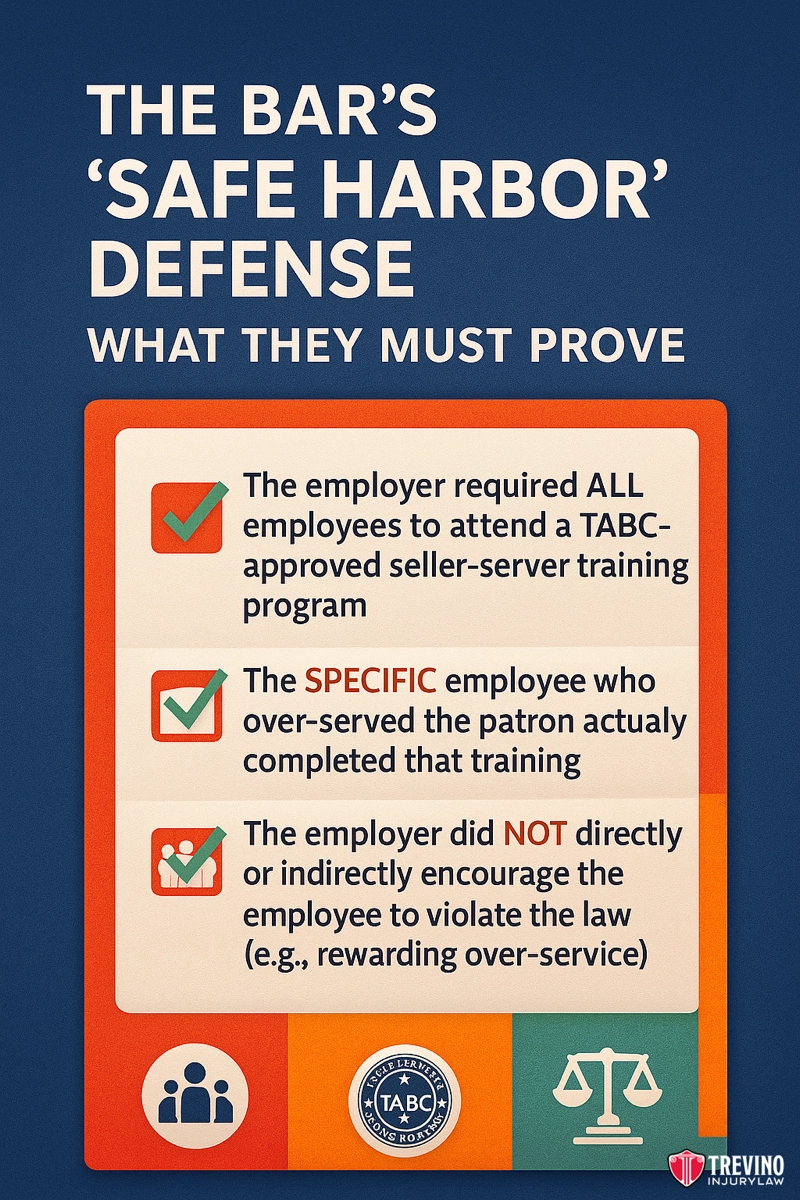
The TABC “Safe Harbor” defense, found in Texas Alcoholic Beverage Code § 106.14(a), is the primary tool bars use to escape liability. It is how a business may avoid liability by demonstrating that it has met specific requirements.
This defense is not absolute, and our job as trial lawyers is to prove it’s a sham. Under § 106.14, the bar has the burden to prove all three of these elements:
- The employer required all employees to attend a TABC-approved seller-server training program.
- The specific employee who overserved the patron actually completed that training.
- The employer did not directly or indirectly encourage the employee to violate the law (e.g., through sales quotas that reward over-service).
While many firms simply accept the defense, we dig deeper. We depose managers and other servers to find inconsistencies. Was the TABC training just an online video they clicked through? Did managers offer bonuses for high-volume sales, implicitly encouraging over-service? As Texas courts have affirmed in cases like Parker v. 20801, Inc., this is an affirmative defense the bar must prove with evidence, not just claims.
Can a Bar Be Sued for a DUI?
Yes, you can file a civil lawsuit against a bar for damages related to a drunk driving accident, and this claim happens in addition to the separate criminal (DUI/DWI) charges the state files against the driver. These are two different legal tracks.
The criminal case establishes the driver’s guilt “beyond a reasonable doubt.” Our civil case establishes the bar’s liability by a “preponderance of the evidence.” A criminal conviction, or even just the arrest report and BAC results, becomes robust evidence in our civil claim against the bar, as we used to secure a $1.4 million settlement for a spinal injury caused by a drunk driver.
These are not theoretical claims. For example, a 2023 lawsuit was filed against a Houston restaurant (“Thirteen”) alleging it overserved a driver before a crash that killed former NFL player D.J. Hayden and others. Similarly, civil suits were filed against two Dallas-area bars alleging they overserved a Dallas Cowboys player before a fatal crash, with families seeking over $10 million under the Dram Shop Act.
Can a Bar Be Sued or Held Responsible for a DUI Drunk Driving Accident?
Absolutely. Whether the criminal charge is a DWI (Driving While Intoxicated) or a DUI (Driving Under the Influence, typically for minors), a bar that overserved the driver can be held civilly liable for the crash they caused. In Texas, “DWI” is the standard charge for intoxicated adults, while “DUI” is often used for minors with any detectable amount of alcohol.
This distinction doesn’t matter for your civil claim. If a bar served a minor at all (which is illegal) or served an adult to the point of “obvious intoxication,” their liability is established. The legal standard for serving a minor is even stricter, strengthening the civil case against the bar.
Understanding the bar’s defense is key, but you must also understand how your own actions, or the actions of the drunk driver, are weighed by the court when assigning fault.
What Is the 51% Rule and How Do These Texas Liability Laws Affect Your Case?
The “51% Rule”, also known as modified comparative fault, is the single most perilous legal trap for victims in a Texas personal injury claim. This law, codified in the Texas Civil Practice & Remedies Code § 33.001, states that you cannot recover any damages if a jury finds you are 51% or more at fault for the accident.
This rule is critical in dram shop cases, as the Texas Supreme Court confirmed in Smith v. Sewell, which held that the proportionate responsibility statute applies to Dram Shop claims.
This isn’t just a legal technicality; it is the #1 defense tactic used by the bar’s insurance lawyers. They turn the trial into a “Blame Game.” In a simple car accident, it’s just your fault vs. the other driver’s. In a dram shop case, the jury must decide how all three parties may share responsibility by assigning a percentage of fault:
- The Drunk Driver
- The Bar that overserved them
- You, the Victim
The bar’s entire strategy is to argue that you were also negligent, speeding, inattentive, or had a brake light out, to push your percentage of fault as high as possible.
Here is how the math plays out in a Bexar County courtroom:
- The Payout: If your total damages are $1,000,000 and the jury finds you 20% at fault (with the driver at 50% and the bar at 30%), your award is reduced by your 20% ($200,000). You can still recover $800,000.
- The 51% Trap: If that same defense lawyer convinces the jury you were 51% at fault, your $1,000,000 in damages becomes $0. Instantly.
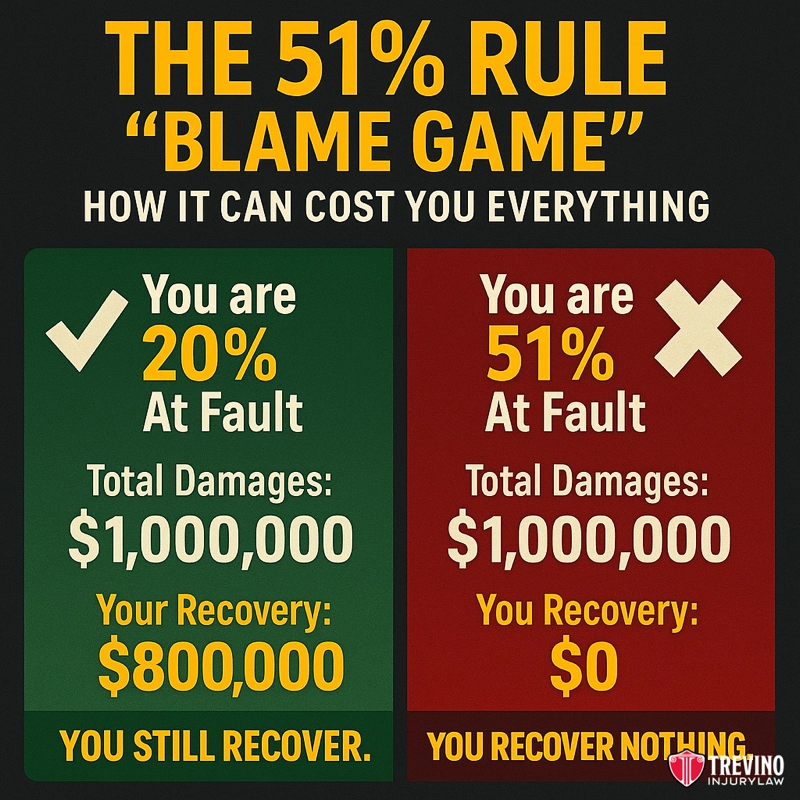
This is the “Blame Game,” and it’s why you need a trial-proven lawyer, not a “settlement mill” firm. Our experience, backed by over 80 cases taken to trial, is built to defeat this exact tactic by relentlessly proving the bar’s and the driver’s overwhelming responsibility for the harm they caused.
Are Bartenders Personally Held Liable or Responsible for Drunk Drivers in Texas?
No, in most Texas dram shop cases, the bartender is not held personally liable. The liability rests with the employer, the bar or restaurant that holds the TABC license and the commercial insurance policy. The law is designed to hold the “provider” (the licensed establishment) responsible. While the bartender is the one who physically serves the drinks, they are acting as an agent of their employer.
Our legal focus is on the establishment’s policies, training (or lack thereof), and insurance. Suing the bartender personally is generally not the most effective legal strategy to secure compensation for your injuries.
Can You Sue a Bar That Decided to Serve Alcohol to a Drunk Driver?
Yes. Texas has a specific law, the Dram Shop Act, that allows you to sue a bar for serving the driver who caused your accident. A successful suit requires proving that the bar served an ‘obviously intoxicated’ person and that this intoxication was a direct cause of your injuries. To be successful, you must demonstrate those two key elements.
This is precisely why we secured $1 million in a wrongful death case involving dram shop liability; we gathered the evidence to prove the establishment’s over-service directly led to the fatal crash, holding them accountable for their role in the tragedy.
Clearly establishing the bar’s liability and defeating the 51% rule are the mechanisms for holding them accountable, which directly leads to the crucial question of what compensation you can recover for your losses.
What Personal Injury Damages Can Car Accident Victims Recover Under Dram Shop Laws in Texas?
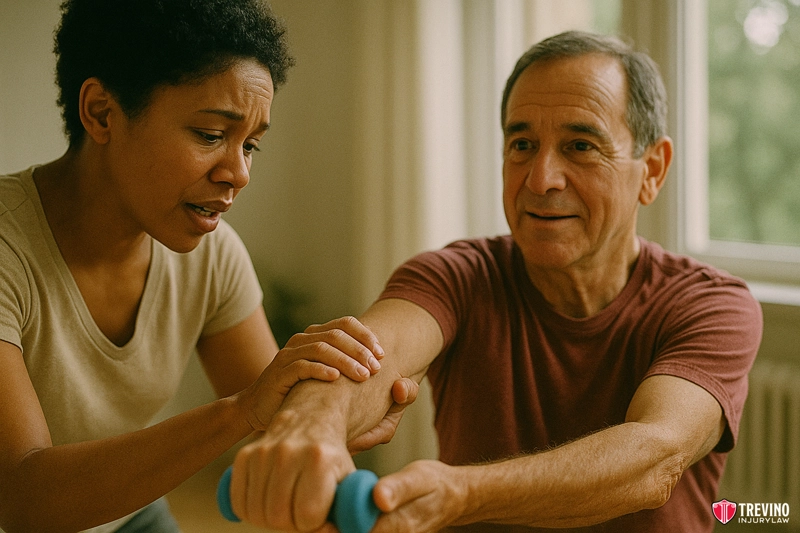
In a successful Texas dram shop case, victims hurt by a drunk driver can recover the same damages as in other personal injury claims, including economic damages, non-economic damages, and potentially exemplary (punitive) damages. This compensation is designed to cover all your losses, both tangible and intangible.
- Economic damages pay for quantifiable costs, such as past and future medical bills, lost wages and diminished earning capacity, and property damage to your vehicle.
- Non-economic damages compensate for the human toll of the crash, including pain and suffering, mental anguish, physical impairment, and disfigurement.
In cases where the bar’s conduct was especially reckless, a Bexar County jury may also award exemplary damages. Under Texas Civil Practice & Remedies Code Chapter 41, this requires showing “clear and convincing evidence” of “gross negligence“, meaning the bar was aware of the extreme risk and consciously disregarded it.
Juries take this very seriously; for example, in 2024, a Hays County jury returned an $831 million dram shop verdict against a bar that served minors and failed to check IDs, resulting in a crash that left a man permanently disabled.
We fight for every dollar you deserve, as evidenced by the $536,007 jury verdict we won for a client after the insurance company initially offered only $5,000.
Understanding what you can recover is vital, but so is understanding the specific rules and exceptions that can complicate your claim.
Can You Recover Punitive Damages in a Dram Shop Claim in Texas?
Yes, you can recover exemplary (punitive) damages in a Texas Dram Shop claim if the establishment’s conduct constitutes gross negligence.
Under Texas Civil Practice & Remedies Code Chapter 41, plaintiffs must provide clear and convincing evidence that the bar was aware of extreme risk yet consciously disregarded it.
Juries enforce severe penalties for such recklessness; for instance, a 2024 Hays County jury awarded an $831 million verdict against a bar that served minors without checking IDs, resulting in a crash that left a victim permanently disabled.
How Does Comparative Negligence Affect Dram Shop Recovery?
Comparative negligence, governed by Texas’s “51% Rule”, directly impacts recovery by reducing your final award in proportion to your assigned fault and completely barring compensation if you are found 51% or more responsible.
Defense attorneys aggressively attempt to shift liability by arguing the drunk driver is solely to blame or that the victim was speeding or inattentive. In a Bexar County trial, the jury assigns a specific percentage of fault to all parties; for example, if a jury apportions 60% fault to the driver, 30% to the bar, and 10% to you, a $1,000,000 award is reduced by your 10% share to $900,000.
However, if the defense successfully argues you bear 51% fault, your recovery drops to $0, making this the primary defense tactic that must be countered to preserve your claim.
Are Bars Held Liable for Liability in Drunk Driving Accidents in Texas?
Yes, Texas bars can be held liable for drunk driving accidents under the Dram Shop Act if they served alcohol to a patron who was already obviously intoxicated. That intoxication directly caused the victim’s injuries.
Can Insurance Refuse to Pay If You Were Drunk?
This question has two parts: the bar’s insurance and the driver’s. The bar’s insurance may attempt to refuse coverage by using the “Safe Harbor” defense, while the drunk driver’s auto insurance may try to deny the claim; however, they generally must cover the liability for the accident their insured driver caused.
Understanding Social Host Liability in Texas: Am I Liable If Someone Drinks and Drives from My House?
In most cases, no. Texas’s “social host” liability does not apply to adults serving other adults in a social setting. The key exception is for minors: Texas Alcoholic Beverage Code § 2.02(c) creates a cause of action against an adult (age 21 or older) who is not the minor’s parent and who knowingly provides alcohol to someone who is an unrelated minor (under 18) and then causes an accident.
Suing the Drunk Driver vs. Suing the Bar or Restaurant: What’s the Difference?
The primary distinction lies in the legal basis: a lawsuit against the drunk driver asserts negligence for unsafe operation, while a claim against the bar or restaurant alleges statutory liability for violating the Texas Dram Shop Act.
While suing the driver is standard, recovery is often capped by their auto insurance policy, frequently limited to the $30,000 minimum liability coverage required by Texas Transportation Code § 601.072.
Since this amount rarely covers catastrophic injuries or wrongful death, filing a dram shop claim is essential to access the establishment’s commercial liability insurance, which typically carries policy limits of $1,000,000 or more. Experienced attorneys pursue both claims simultaneously to ensure maximum recovery for your family’s losses.
What Happens If You Don’t investigate whether a Bar Is Liable Under the Dram Shop Act?
Suppose you only pursue the drunk driver and fail to investigate the establishment that served them. In that case, you may be leaving hundreds of thousands or even millions of dollars in compensation on the table that your family needs and deserves.
The drunk driver’s minimum-limits policy will be exhausted quickly by medical bills. If you don’t file a dram shop claim, you will have no other source of recovery. The bar that profited from the illegal over-service faces no financial consequences and is free to do it again. You effectively give the bar a free pass for its negligence.
When Is It Too Late to File a Dram Shop Liability Claim in Texas?
In Texas, the statute of limitations for a dram shop claim, like most personal injury cases, is generally two years from the date of the accident under the Texas Civil Practice & Remedies Code § 16.003(a). However, the practical deadline to preserve critical evidence, such as video footage, is just a few days.
If you wait two years, your legal right to file a dram shop claim expires. But if you wait even two weeks, the bar has already erased the security footage, the credit card receipts are lost, and the servers have “forgotten” what happened. Your case dies from a lack of evidence long before the statute of limitations runs out. This is why you must call an attorney immediately; we must send spoliation letters now to force them to preserve that evidence.
Why Hire a San Antonio Dram Shop Lawyer?
While bars along the River Walk erase security footage to hide their negligence, insurance adjusters use the “Safe Harbor” defense to deny your claim. You cannot trust a high-volume “settlement mill” to fight these powerful opponents; they often fold before subpoenaing the receipts necessary to prove over-service.
You need a personal injury attorney near me to send spoliation letters and subpoena bar receipts before the evidence vanishes.
Want to Protect the Full Value of Your Claim?
You’ve seen how this affects your case — but this is only one piece of the puzzle. Our Dram Shop Lawyer page breaks down what a trial-ready firm does differently.
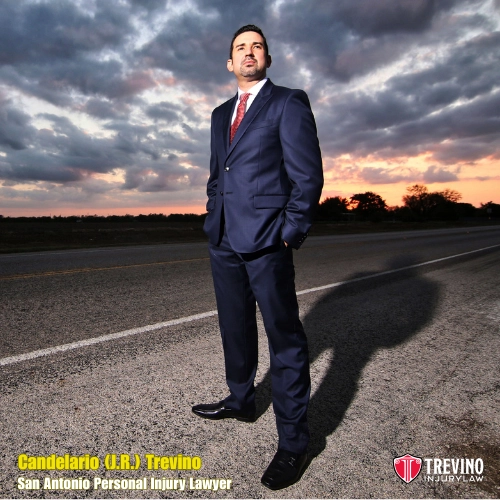
We act immediately to send spoliation letters and preserve evidence before it vanishes from Bexar County establishments. Contact a bar liability attorney who actually tries cases to protect your family’s future.
Call 210-TREVINO for a free case review. Se Habla Español. We fight on a contingency-fee basis: No Win, No Fee.