A legal alcohol provider in Texas is the commercial entity holding the permit, not the individual bartender pouring the drink. The moment the crash happens, the true corporate owner hides behind a generic trade name to avoid accountability.
The commercial liability insurer is already building a Safe Harbor defense, blaming its hourly staff to protect the actual business from a lawsuit. But Texas bar liability in a drunk driving accident does not end with the server who poured the drink. According to the TABC Strategic Plan, Texas oversaw 66,000 Licensed Businesses statewide in 2024. Behind those local neon signs are massive corporate networks prioritizing profits over safe alcohol service. That is not an accident. That is negligence.
What Could Your Dram Shop Accident Case Be Worth?
Answer a few quick questions about your accident. Takes about 60 seconds.
See What My Case Might Be WorthThe insurance company offered less than $20,000. I ended up with over $1 million. — Jackie Galindo
Evidence disappears rapidly. Credit card receipts get lost. Surveillance footage gets recorded over. A Spoliation Letter, a legal demand that prevents the property owner from destroying evidence, must be issued immediately to lock down the transaction history. Waiting gives the establishment time to erase the truth.
Trevino Injury Law’s team traces the actual permit holder and forces the negligent company to pay full compensation. Call 210-TREVINO now for a free case review. You pay nothing unless we win. Se Habla Español.
Who Is Legally Defined as a “Provider” Under the Texas Dram Shop Act?
In Texas, the term “provider” is explicitly defined by the Alcoholic Beverage Code as any person or entity that sells or serves an alcoholic beverage under the authority of a license or permit. This definition derives directly from Chapter 2 of the Texas Alcoholic Beverage Code, which defines “provision” broadly to include both the sale and service of an alcoholic beverage (Texas Constitution & Statutes, 2025).
This definition encompasses significantly more than just bartenders; it targets anyone who sells alcohol, including the corporate entity or business owner holding the TABC license. This makes them financially responsible if they serve a recipient who is obviously intoxicated and subsequently causes an injury. The legal concept of a provider is often narrower than the general public assumes, yet broader in its commercial application.
For the broader framework connecting provider identity with proof, defenses, and recovery, see how Texas dram shop liability works.
The state currently issues 37 Different Types of Licenses and permits, complicating the process of pinpointing the exact coverage applicable to a specific vendor (TABC Strategic Plan, 2024). In the context of Bexar County litigation, a provider of alcohol is not the individual server who pours the drink, but the commercial entity that profits from the sale. This includes traditional venues like nightclubs in Downtown San Antonio or restaurants at The Pearl, but it also extends to stadiums, hotels, and festivals. The phrase “dram distribution laws” refers to these specific statutes that govern commercial liability.
Without establishing that a defendant meets this statutory definition of a provider, the Dram Shop Act generally does not apply, and the avenue for holding a business accountable closes.
Can Convenience Stores Be Held Liable Under Dram Shop Law?
Yes, Convenience Stores and liquor stores are considered “providers” under the law and can be held liable if they sell alcohol to an obviously intoxicated person, even though the alcohol is intended for off-premise consumption. If a clerk at a Valero or H-E-B sells a six-pack to a customer who is slurring speech, stumbling, or exhibiting red eyes, that transaction creates liability just as serving a drink at a bar would.
The standard requires that the individual be a clear danger to themselves and others. For example, if a driver buys beer while intoxicated at a gas station on Bandera Road and minutes later causes a Crash on Loop 1604, the store can be sued for the resulting damages. Since the law covers anyone with a license to sell, distinct questions arise regarding businesses that offer alcohol without a direct price tag, creating a complex area of liability regarding the incident.
Can a Restaurant or Non-Bar Business Be Held Liable?
Businesses that do not primarily sell alcohol can still face liability if their service meets specific criteria that classify them as unpermitted providers, specifically when the alcohol is tied to a financial transaction. If a business offers alcohol as a perk for a paid service, the law may view this as a sale, stripping them of social host protection and subjecting them to the same obligation as a licensed bar.
This “gray area” frequently affects businesses in affluent areas like Alamo Heights or Terrell Hills, including luxury hair salons, barber shops, and boutiques that offer a “complimentary” glass of wine or champagne. The key legal test is “consideration.” If the alcohol is technically “sold”, meaning it is included in the price of a haircut, manicure, or clothing purchase, the business is acting as an “unlicensed provider” who otherwise sells alcohol illicitly.
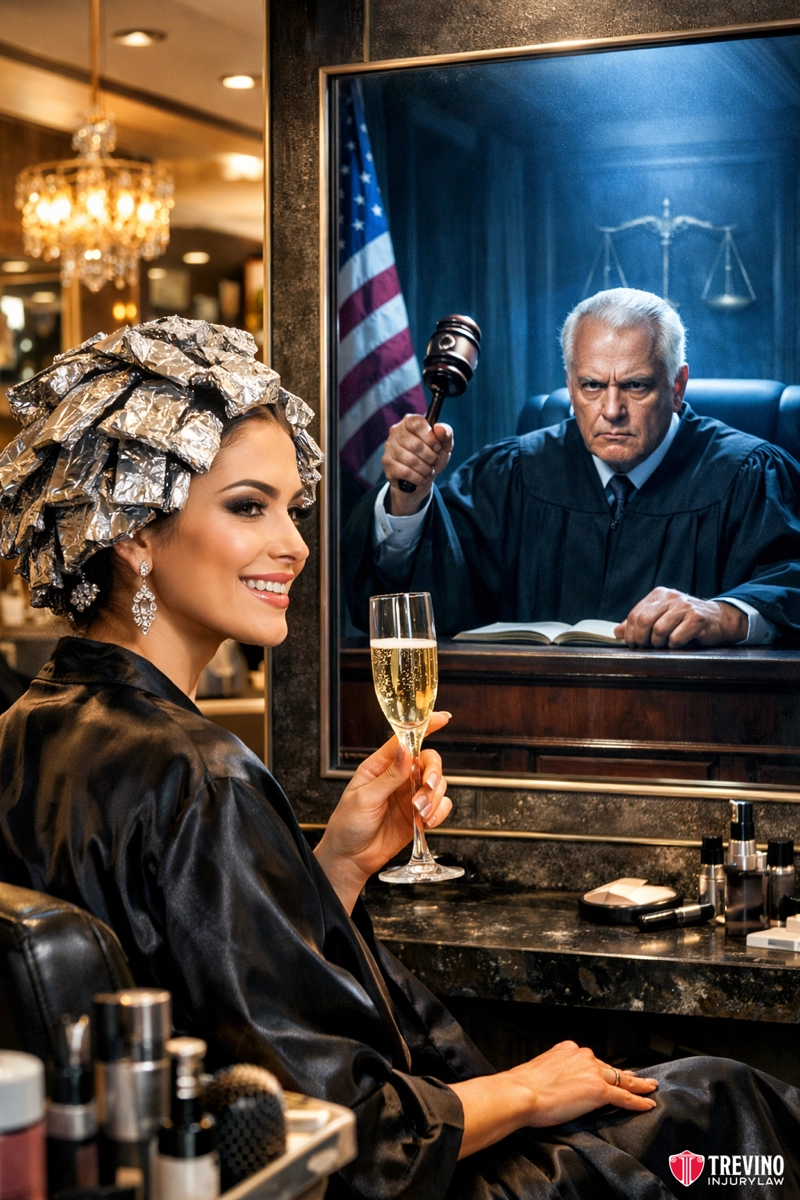
In the eyes of the TABC and the courts, acting as a provider without a license is a crime, and it establishes negligence per se in a civil lawsuit if that service leads to an intoxication-related injury. The TABC takes these violations seriously, as the agency collects approximately $300 Million Annually in taxes and fees from legitimate operations (TABC Strategic Plan, 2024).
Can I Serve Free Alcohol at My Business in Texas?
You can serve alcohol free of charge without a permit only if it is available to any adult who enters the premises, regardless of whether they make a purchase or browse your merchandise. The Texas Alcoholic Beverage Commission (TABC) enforces a strict interpretation: if the drink is reserved only for paying customers, it is not “free”, it is a sale without a license.
Consequently, if a business charges a “cover,” requires a tip, or mandates a service purchase to access alcohol, they are violating the law and exposing themselves to absolute liability for any accidents caused by their patrons. This Strict Liability for businesses contrasts sharply with the protections offered to private individuals, leading to critical distinctions between commercial sales and home gatherings.
Generally, Texas law protects social hosts from liability for the actions of their adult guests, even if those guests become intoxicated and cause an accident after leaving the property. Under the precedent set by Graff v. Beard, a private individual who serves alcohol to an adult friend, neighbor, or family member owes no duty to the traveling public to monitor that recipient’s consumption.
This exemption is a common defense that “Warrior” attorneys must navigate when investigating crashes involving private parties. For instance, if a homeowner in Stone Oak or Hollywood Park hosts a backyard BBQ or a football watch party and a guest drives home drunk, the host is generally shielded from civil lawsuits.
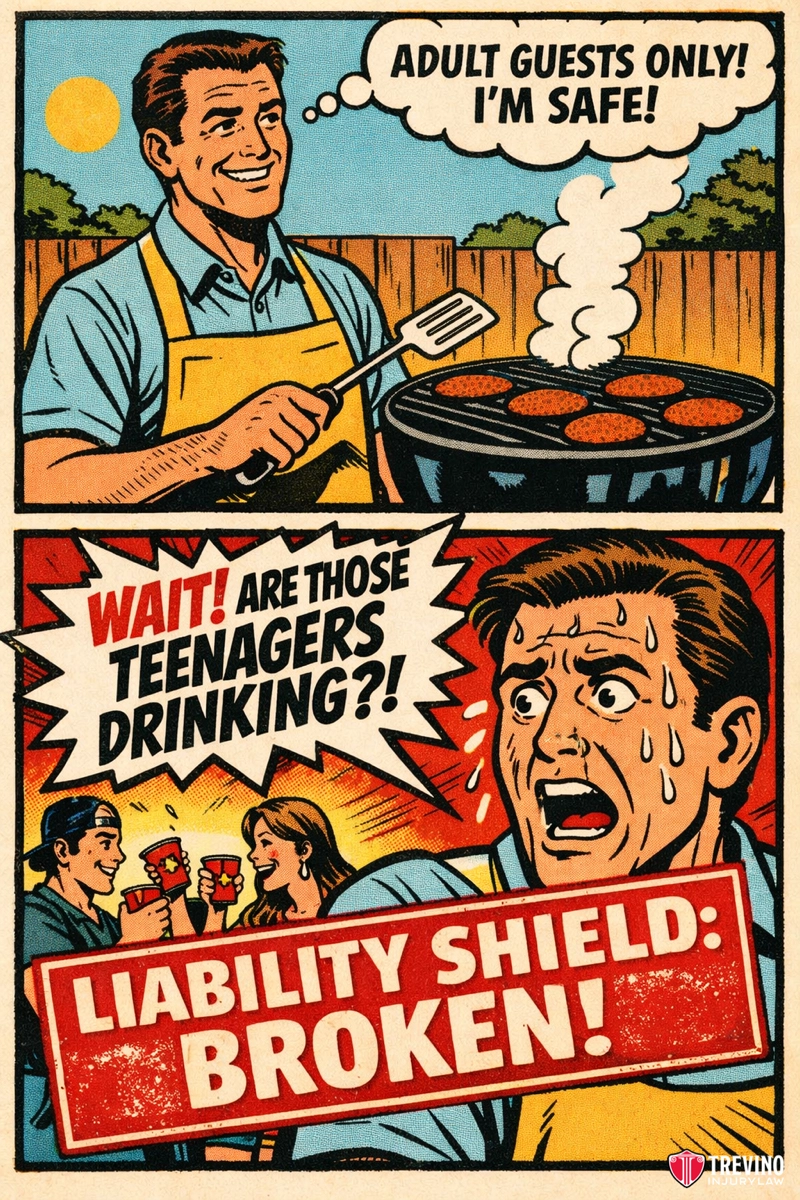
This distinction protects private social interactions from the heavy regulation imposed on commercial providers who profit from alcohol sales. However, this protection is not absolute and vanishes entirely when children’s safety is at stake.
While social hosts are protected regarding adult guests, that protection vanishes when minors are involved. As clarified in K.D.F. v. Rex, 878 S.W.2d 589 (Tex. 1994), a social host can potentially be held liable if they knowingly provide alcohol to a minor or allow a minor to consume alcohol on their property.
This strict standard means that adults hosting graduation parties or teenage gatherings cannot turn a blind eye; if they knowingly facilitate underage drinking, they are exposed to significant Civil Liability for any resulting injuries. Liability attaches because minors cannot legally consent to drinking; therefore, providing them with alcohol is a negligent act that pierces the corporate veil of social host protection usually afforded to homeowners.
Understanding who is liable leads to the practical challenge of identifying the correct defendant to sue in a chaotic post-accident investigation.
How Do You Identify the Correct “Provider” to Sue?
Identifying the correct provider requires tracing the alcohol to the specific TABC license holder responsible for the sale, which is often a corporate entity distinct from the brand name displayed on the sign. With the TABC approving more than 45,000 Licenses and permits annually, accurate identification is a complex but necessary task (TABC Strategic Plan, 2024).
This critical investigative step ensures that the law firm targets the actual insurance policyholder—such as a limited liability company (LLC) or corporation—rather than a “Doing Business As” (DBA) trade name that possesses no assets to pay a claim. In the aftermath of a severe crash on I-10 or Culebra Road, “Settlement Mill” firms often make the mistake of suing the name on the door, only to have the case dismissed or delayed because the defendant does not legally exist.
A “Warrior” attorney digs deeper, using credit card receipts, surveillance footage, and the TABC public database to identify the true owner. For example, a popular bar on the St. Mary’s Strip might be known to locals by one name, but its liquor license is held by a completely different investment group. Finding this corporate link is the only way to trigger coverage under a Commercial Liquor Liability Policy.
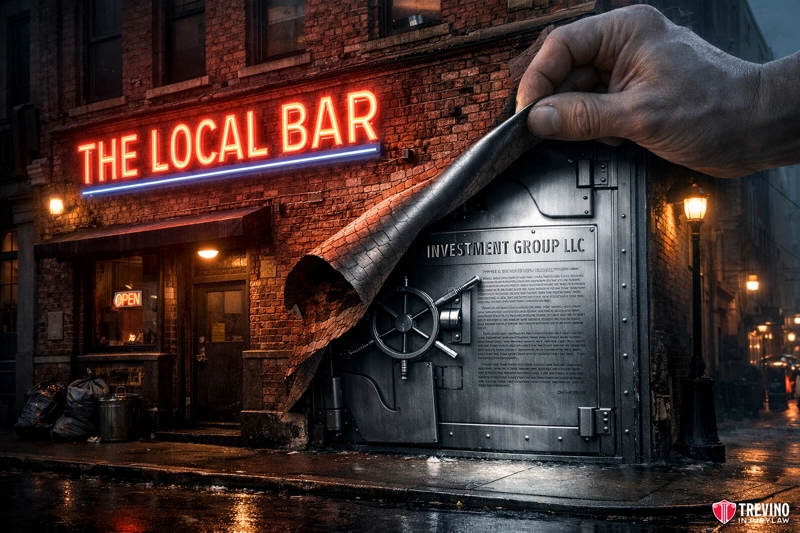
These operators generate massive revenue streams, such as the $12.4 Million in “Liquor by the Drink” revenue recorded by the City of San Antonio in FY 2024 (City of San Antonio OpenGov, 2024). A common misconception in this identification process is blaming the individual employee pouring the drinks rather than the company profiting from them.
Is the Bartender or the Business Owner the “Provider”?
Under the Texas Dram Shop Act, the commercial provider, specifically the employer or license holder, is the exclusively liable party, not the individual bartender or server who poured the drink.
While a server’s specific actions, such as ignoring slurred speech, serve as primary evidence of negligence, civil liability attaches to the business entity to ensure victims can access commercial insurance policies rather than the limited assets of an employee.
This distinction governs a massive industry where San Antonio businesses recently reported over $1 Million in mixed beverage taxes in a single month (Texas Comptroller, 2024).
In lawsuits involving venues in Southtown or King William, owners often attempt the ‘Safe Harbor’ defense citing staff TABC certification; however, under 20801, Inc. v. Parker, this protection fails if the employer encouraged staff to violate the law, allowing attorneys to prove management prioritized profits over safety.
Is a Bartender Considered a Provider Under Texas Dram Shop Act?
No, the individual bartender is generally not considered the “provider” for Civil Liability purposes; the lawsuit must be filed against the establishment holding the TABC license.
Do Dram Shop Laws Apply to Liquor Stores?
Yes, Liquor Stores are providers under the Act and are liable if they sell alcohol to an obviously intoxicated customer, even for off-premise consumption.
Can 16 Year Olds Drink with Parents in Texas?
Yes, minors can legally consume alcohol in Texas if they are in the visible presence of their consenting adult parent, guardian, or spouse.
Unlicensed Providers vs. Licensed Providers
Both licensed and unlicensed providers can be held liable, but the threshold for liability differs based on whether a legal sale occurred. A Licensed Provider, like a restaurant or bar, is liable only if they serve an obviously intoxicated person, a standard requiring proof of proximate cause under Alcoholic Beverage Code § 2.02(b) (Texas Constitution & Statutes, 2025).
However, an Unlicensed Provider faces liability simply for the act of selling alcohol without a permit, as this illegal act constitutes negligence per se. This distinction is critical when dealing with “pop-up” bars or underground warehouse parties in industrial areas like Brooks or near Port San Antonio. If a venue charges for entry, sells drink tickets, or requires a “donation” for a cup without a TABC license, they are acting as an unlicensed provider.
For a closer look at the visible-behavior standard and the evidence used to establish it, see the signs and proof of obvious intoxication.
In these cases, we do not need to prove the patron was already drunk when served; the mere fact that the business sold alcohol illegally makes them responsible for the subsequent crash.
When Is a Venue NOT Considered a “Provider”?
A venue is not a “provider” if it does not sell alcohol, does not hold a license, and creates no expectation of payment for beverages. This “negative space” in the law typically applies to pure venue rentals, such as wedding halls or event spaces in the Hill Country near Helotes, where the host supplies the alcohol (BYOB) and the venue merely provides the building.
In these scenarios, the venue acts as a landlord rather than a dram shop. Unless the venue staff actively took control of the alcohol service or required guests to pay for drinks, they generally cannot be sued under the Dram Shop Act. This is a common defense in wedding-related crash cases, where the facility argues they were only renting the “four walls” and had no role in the alcohol distribution.
Does the “Parental Consent” Exception Absolve the Provider?
While parents can legally allow their children to drink, this consent does not absolve a commercial provider from liability if they serve the minor to the point of obvious intoxication. The “parental consent” exception allows a restaurant to legally serve a minor in the parent’s presence, but it does not grant the business immunity from the laws governing safe service and over-consumption.
If a family dinner at a restaurant in Leon Valley results in a 19-year-old being served five margaritas before driving, the “provider” rules still apply to the quantity served. The restaurant cannot hide behind the parents’ permission to excuse the over-service. In such a tragic case, the commercial provider could still be held liable for the intoxication, while the parent might simultaneously face liability for negligent entrustment or supervision.
Hire a San Antonio Dram Shop Attorney to Hold Providers Accountable
Texas law defines a “provider” broadly to protect the public, but insurance companies fight relentlessly to narrow that definition and deny your claim. Whether the negligent party was a convenience store clerk on Bandera Road or a bartender at a River Walk hotel, identifying the correct corporate entity is the only way to secure the financial resources you need for recovery.
Want to Protect the Full Value of Your Claim?
You’ve seen how this affects your case — but this is only one piece of the puzzle. Our Dram Shop Lawyer page breaks down what a trial-ready firm does differently.
You need the best personal injury lawyer to send spoliation letters and preserve security footage before it vanishes.
Call Trevino Injury Law today at 210-TREVINO for a Free Consultation, and let us show you how we fight for families. We force negligent providers to pay. Se Habla Español.