A backward slip on a wet floor whips your skull into the polished concrete before you can even brace for impact.
The insurance adjuster is already exploiting the Texas Proportionate Responsibility statute to shift the blame onto you and dismiss your structural spinal damage as a simple sprain. According to the National Safety Council’s Injury Facts 2024 report, falls forced nearly 8.8 million people into emergency rooms in 2023. Behind most of those visits is a corporate landlord or store manager who ignored a hazard, skipped a safety sweep, and deferred maintenance to protect their bottom line.
What Could Your Slip and Fall Accident Case Be Worth?
Answer a few quick questions about your accident. Takes about 60 seconds.
See What My Case Might Be WorthThe insurance company offered less than $20,000. I ended up with over $1 million. — Jackie Galindo
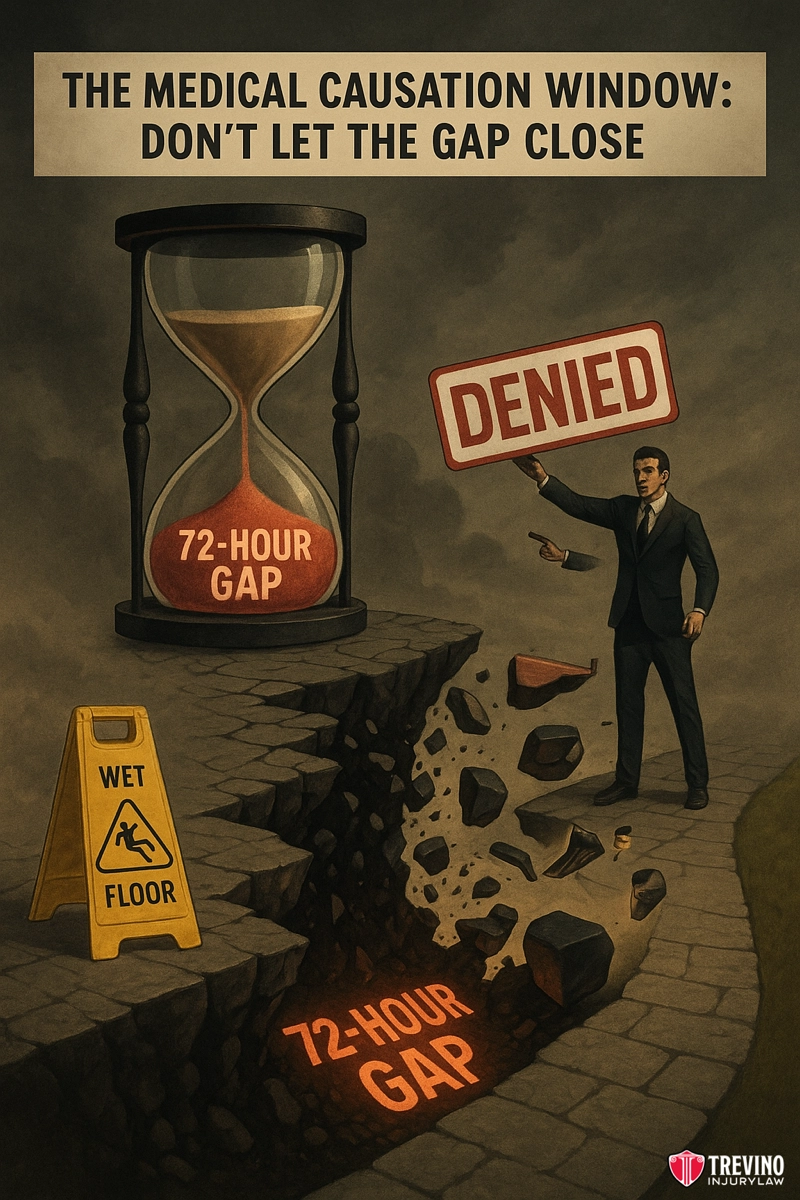
Surveillance video and sweeping logs vanish within days of the accident. A Spoliation Letter, a legal demand that prevents the property owner from destroying evidence, must be issued immediately to preserve it. Texas allows two years to file a lawsuit, but the critical window to medically connect your physical injuries to the property defect closes in seventy-two hours.
A Trevino Injury Law slip-and-fall injury lawyer will subpoena the security footage and force the insurance company to pay full value. Call 210-TREVINO for a free case review. You pay nothing unless we win. Se Habla Español.
How Do Slip and Fall Accidents Cause Traumatic Brain Injuries (TBIs)?
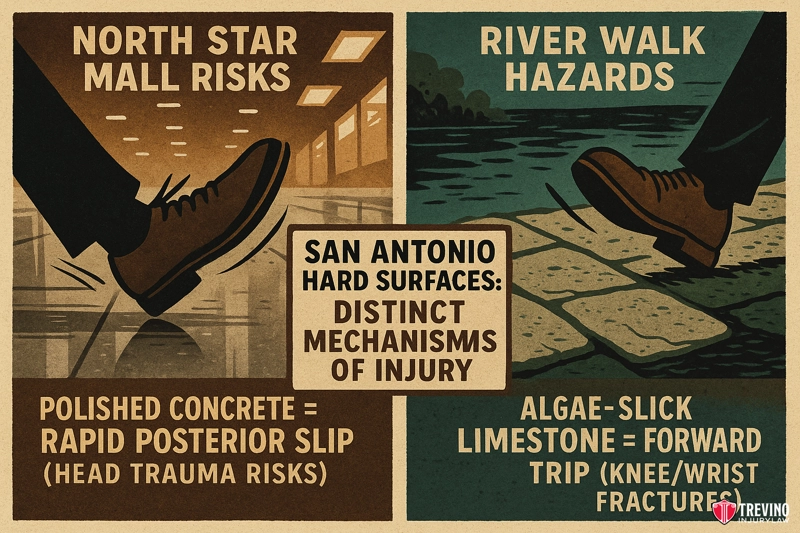
While accidents can happen anywhere, when a slip-and-fall occurs on a slick surface like the polished concrete found in North Star Mall, the head strikes the ground with a force equivalent to a 20mph car crash. These types of injuries cause the brain to rebound inside the skull in a mechanism known as “coup-contrecoup.”
In ‘Military City USA,’ we frequently see veterans whose lives are upended by a sudden fall. While local ERs often classify these as mild concussions, the national data proves the severity. The CDC’s 2024 TBI Data and Research report confirms that falls are the leading cause of Traumatic Brain Injuries, contributing to 2.8 million TBIs annually across the U.S.
Furthermore, 2021 CDC mortality data show that TBI-related deaths have reached nearly 70,000 per year. The scale of this crisis is terrifying when viewed daily. CDC data regarding 2020–2021 reveals that TBI-related events result in over 586 hospitalizations and 190 deaths every single day in the United States. For a San Antonio veteran, distinguishing this new, acute trauma from past service injuries is critical for a claim.
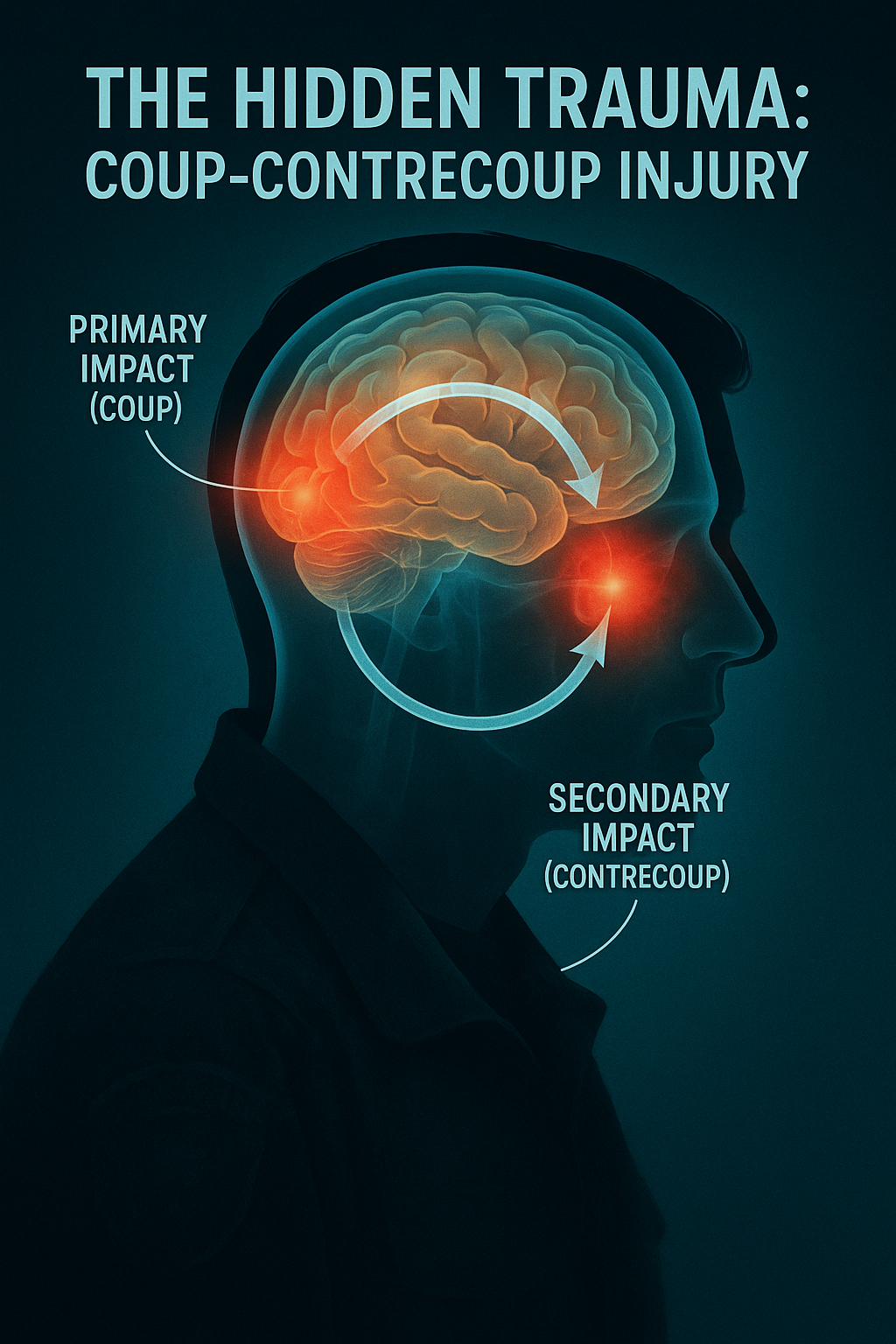
Slips typically result in backward “posterior falls,” in which the victim cannot break their fall. This differs from “trip and fall” accidents (common on uneven sidewalks), where victims fall forward and often suffer broken wrists or knees. In a backward slip, the head strikes the ground first, resulting in brain bruising and shearing forces that damage neural connections. This is a frequent outcome in grocery store slips, such as when spilled milk in the dairy aisle of a local H-E-B sends the feet shooting forward, whipping the head back into the hard floor.
Why Slip and Fall Injuries Like “Mild” TBIs Are Often Missed
Standard emergency rooms at facilities like Baptist Medical Center or Christus Santa Rosa primarily use CT scans to detect active bleeding, often missing Diffuse Axonal Injury (DAI), a shearing injury to the brain’s long connecting nerve fibers (white matter). A standard CT scan is designed to detect acute hemorrhage (bleeding) or skull fractures, but acts poorly in detecting the microscopic neural tearing distinct to DAI.
A “negative” CT scan does not mean the brain is healthy; it simply means there is no immediate hemorrhage, leading many patients to be discharged with a “mild concussion” diagnosis despite suffering significant cognitive damage. In “Military City USA,” defense attorneys often try to blame a veteran’s new symptoms on prior service-related concussions, which is why we utilize specialized Diffusion Tensor Imaging (DTI) to objectively prove the new neural pathway damage caused specifically by the fall.
What Is the Impact of a TBI on Your Slip and Fall Claim?
Proving a Traumatic Brain Injury (TBI) can shift a case from a standard insurance claim into a multi-million dollar lawsuit. This is not an arbitrary figure; medical cost estimates indicate that the lifetime care for a severe TBI can range from $85,000 to over $3 million.
We use these projected costs to demonstrate that if the victim can no longer return to their specialized profession in San Antonio’s medical, cyber, or manufacturing sectors. A diagnosis of “permanent cognitive deficit” establishes that the injury has stolen the victim’s future earning capacity. Key symptoms that prove this damage include:
- Memory Loss: Inability to retain new instructions or recall past events.
- Focus Deficits: Difficulty concentrating on code or complex tasks.
- Emotional Volatility: Sudden mood swings or irritability inconsistent with prior personality.
While a broken bone heals, a brain injury that prevents a cybersecurity analyst at Port San Antonio from concentrating on code represents millions in lifetime lost wages that must be included in the settlement demand.
For a deeper look at the financial and evidentiary issues that follow serious head trauma, see our guide to slip-and-fall traumatic brain injury compensation in Texas.
While understanding the mechanics of brain trauma is critical for head injuries, the most common disputes in Bexar County courts actually revolve around the structural integrity of the spine
Differentiating Soft Tissue Injuries vs. Herniations in a Slip and Fall Case
The legal value of a back injury in Texas turns strictly on the structural integrity of the spinal discs—specifically, whether the disc’s jelly-like center (nucleus) has burst through its tough outer wall to compress a nerve root (herniation).
For workers in the Eagle Ford Shale or Westover Hills, a back injury is a threat to their livelihood. This is not an isolated occurrence; 2023 data from the U.S. Bureau of Labor Statistics (BLS) shows that private employers reported over 2.5 million nonfatal workplace injuries nationally.
Specifically, 2021–2022 BLS data identifies over 250,000 cases involving back injuries and falls that required days away from work. For our city’s construction industry, the danger is even more acute. According to the BLS Census of Fatal Occupational Injuries (2023), the construction industry saw 1,075 worker deaths nationwide, and falls, slips, and trips accounted for 39.2% of these fatalities.
We use this data in personal injury cases to validate that your workplace injury is part of a recognized, serious category of industrial harm. Insurance adjusters will offer nuisance value for a “lumbar strain,” claiming it will heal in weeks, but a confirmed herniation represents a permanent structural failure that often requires surgical intervention to stabilize.
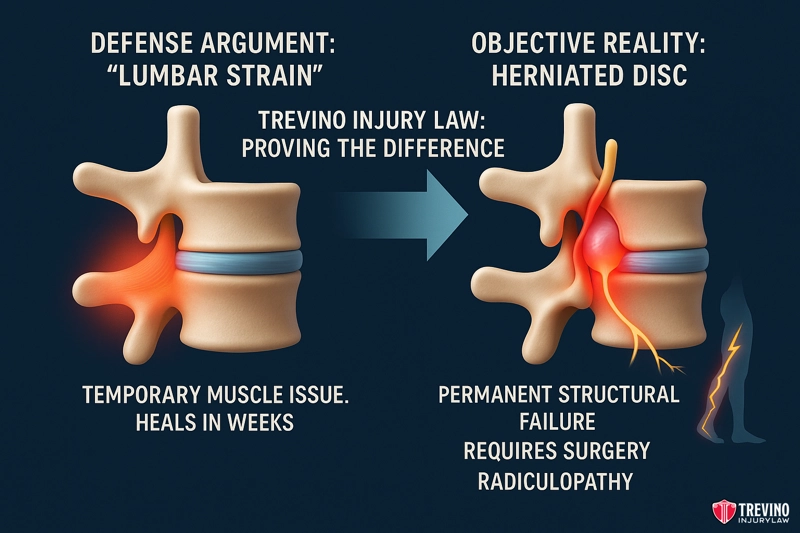
We established this distinction in Arriaga v. Montemayor, a case tried in Bexar County, where the defense offered only $5,000 for what they called a “soft tissue injury.” By presenting objective medical evidence that the injury was a structural defect caused by the incident rather than a simple sprain, we secured a $536,007 jury verdict—more than 100 times the initial offer. This verdict demonstrates to Texas courts that juries will award significant compensation when an injury attorney effectively distinguishes between temporary pain and permanent spinal damage.
How Does Radiculopathy Prove Personal Injury in Court?
Radiculopathy is the medical term for pain, numbness, or weakness radiating along a nerve path, often called “sciatica” in the lower back, and it provides powerful evidence that a disc is physically compressing a nerve.
We validate these subjective complaints using Electromyography (EMG) and Nerve Conduction Velocity (NCV) tests, which act as a “lie detector” for the nervous system by measuring the electrical signals in your muscles.
For our clients working in physically demanding jobs in Westover Hills construction or the Eagle Ford Shale, a positive EMG finding objectively proves they cannot safely perform their duties, directly validating their lost wage claims and medical bills.
How Does Surgery Affect Your Slip and Fall Law Case?
Insurance company reserves, the amount of money set aside to pay a claim, jump significantly the moment a board-certified San Antonio spine surgeon determines that conservative therapy has failed and recommends surgical intervention. A recommendation for a discectomy or spinal fusion transforms the case from a “pain management” claim into a “surgical” claim, forcing the adjuster to account for the high cost of the procedure and the permanent nature of the hardware implantation.
We ensure our clients have access to credible specialists who can testify in court, rather than “injury clinics” whose opinions may be easily dismissed by defense lawyers.
Once we establish the severity of spinal trauma, we must also consider how local demographics, specifically diabetes rates, turn minor bone fractures into life-threatening emergencies. While spinal injuries represent a long-term structural threat, other fall consequences are immediate and systemic.
In San Antonio, where underlying health conditions are common, a simple bone fracture can rapidly escalate into a life-threatening medical crisis.
Why Dangerous Conditions and Property Owner Negligence Are Risky for Diabetics
In San Antonio, a slip-and-fall is often a ‘perfect storm’ of high-impact physics and poor healing. According to University Health (2025), 72% of Bexar County adults are overweight or obese, far exceeding the national average. This added mass increases the kinetic energy of a fall, turning what might be a bruise for others into a shattered bone for our clients.
When you combine this high-impact trauma with one of the highest diabetes rates in the nation, a ‘minor’ slip frequently escalates into catastrophic complications. The risk of losing a limb after such trauma is measurably higher here than elsewhere in the state. University Health’s 2025 compiled data reveals that Bexar County suffers an amputation rate of 68.7 per 100,000 residents.
To put that in perspective, this is significantly higher than the Texas statewide average of approximately 52 amputations per 100,000, as reported by the San Antonio Express-News using 2022 Texas hospitalization data. In this environment, a foot fracture from a wet floor isn’t just a broken bone, it’s a potential path to amputation.
Due to delayed healing and poor circulation common in our community, a simple fracture can rapidly spiral into post-traumatic infection.
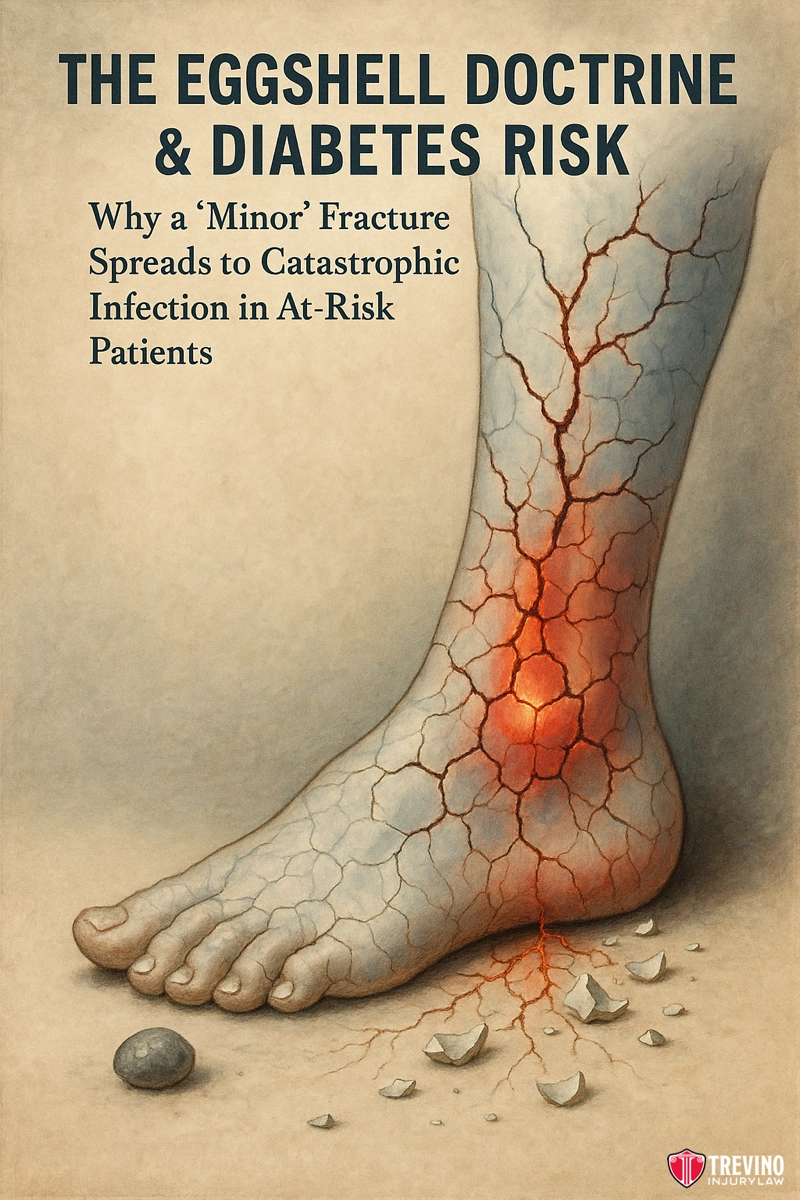
Texas premises liability law adheres to the ‘Eggshell Skull‘ doctrine, which dictates that a negligent property owner takes the victim as they find them. To succeed, we need to prove that the property owner knew, or the occupier knew or should have known, of the hazardous condition and failed to fix it or warn you.
Therefore, when they breach this duty of care, the defendant is liable for the full extent of the resulting damages, such as a diabetic foot ulcer leading to amputation, even if those injuries are more severe than what a healthy person would have suffered from the same fall.
This means if a simple fracture leads to gangrene because of a victim’s underlying condition, the property owner acts as the proximate cause for the entire medical cascade.
Can Common Types of Falls Lead to Amputation?
Yes, because Diabetic Neuropathy often numbs the feet, a victim may walk on a fractured bone without realizing the severity until a non-healing ulcer develops, leading to infection and potentially amputation.
In our firm’s case, Mendoza v. Farmers Best, a workplace crush injury led to an infected foot and eventual toe amputation because the tissue could not heal properly.
We secured a $7.9 Million verdict by proving that the initial negligence set this devastating chain of events in motion, successfully holding the defendant accountable for the full extent of the loss despite the medical complications.
Defense attorneys here often argue these breaks happen spontaneously due to age, but the statistics tell a different story. According to America’s Health Rankings (2025), 28.1% of Texas seniors reported falling in the past 12 months.
This data confirms that falls are a pervasive danger for our state’s elderly, not an anomaly. Furthermore, CDC data updated in 2024 confirms that nine out of ten hip fractures are caused by falls, resulting in nearly 319,000 hospitalizations nationwide (based on 2019 surveillance). This statistic is a powerful tool we use to prove the fall, not the victim’s age, was the true cause of the injury.
The required surgery and immobility carry high risks of pneumonia and blood clots, while the financial burden of 24/7 home health care can devastate a family’s savings. In these cases, we pursue compensation for pain and suffering, “Loss of Consortium,” and future care damages to cover the cost of the professional assistance now required to maintain the victim’s quality of life.
Understanding the severity of these injuries highlights the urgency of medical care, but a critical legal clock starts ticking the moment the diagnosis is made.
How Long Does Texas Law Allow to Diagnose Slip and Fall Injuries?
While the Texas Statute of Limitations allows you two years for filing a claim or file a lawsuit, the critical “medical causation window” effectively closes within 72 hours for those injured in a slip. Any delay gives insurance adjusters leverage to use the “Gap in Treatment” defense, arguing your injury happened after the fall. Immediate documentation is the only way to close this gap.
Adrenaline often masks pain immediately after a fall. If you wait two weeks because you “feel fine” or hope the pain will go away, the defense attorneys will argue that your herniated disc occurred while you were lifting groceries or doing yard work, not when you slipped on their client’s wet floor. Immediate medical documentation creates an indisputable timeline that connects your injury directly to the property defect, preventing them from shifting the blame to your daily life activities.
Once a medical professional confirms the extent of your injuries, the immediate challenge becomes securing the necessary treatment without paying upfront costs.
How a Slip and Fall Attorney Helps You Pay for Care
In Texas, a personal injury attorney can use a legal instrument called a Letter of Protection (LOP) to secure top-tier medical treatment for clients who are uninsured or underinsured, guaranteeing the doctor payment from the final settlement rather than requiring cash upfront.
This mechanism allows our clients to access advanced imaging centers and specialists in the South Texas Medical Center that typically refuse “third-party liability” patients who lack private health insurance. Without an LOP, many injury victims are stuck relying on emergency rooms that only treat immediate life threats, leaving the underlying injury undiagnosed and uncompensated.
Securing funding is the first step, but victims often face specific legal hurdles regarding their medical history and insurance obligations.
Does a Pre-Existing Back Injury Ruin My Case?
No, Texas law recognizes the “Aggravation of Pre-Existing Condition” doctrine, meaning the defendant is fully liable for the verifiable worsening of your condition caused by the fall, not just new injuries.
Can I Rely on an Urgent Care X-Ray?
No, urgent care X-rays only detect bone fractures and cannot show the soft tissue damage to ligaments or spinal discs that constitutes the majority of a slip and fall claim’s value.
Will My Health Insurance Take Part of My Settlement?
Yes, most health insurance policies and government programs like Medicare assert a “Subrogation Lien” under Texas law, requiring reimbursement for paid bills. However, we aggressively negotiate these liens down, ensuring that settlement money goes into your pocket for your future needs, not just back to the insurance company.
Navigating these initial hurdles leads to the ultimate goal of treatment: reaching a stable physical condition known as MMI.
Why Your Slip and Fall Lawyer Waits for “Maximum Medical Improvement (MMI)”
Maximum Medical Improvement (MMI) is the specific clinical designation reached when a treating physician determines that a patient’s condition has stabilized and no further medical intervention will result in significant physical improvement. It is critical not to settle a claim before reaching this milestone, as doing so often means waiving your right to compensation for future care costs.
Once the medical picture is clearer, those treatment needs feed into the broader analysis of slip-and-fall settlement value in San Antonio, including future care and other documented losses.
In San Antonio, insurance adjusters aggressively push for “quick check” settlements before MMI is reached, hoping to close the file before the victim realizes they need long-term therapy or surgery.
While reaching MMI is the goal, failing to follow the treatment plan to get there can destroy your case.
How Does Negligence in Treatment Affect Your Case?
‘Failure to Mitigate Damages‘ is a formidable legal defense grounded in Texas precedent, such as Moulton v. Alamo Ambulance Serv., Inc., 414 S.W.2d 444 (Tex. 1967). This ruling establishes that an injured party cannot recover damages for consequences that could have been avoided by the exercise of ordinary care. If you miss appointments or ignore medical advice, insurance attorneys will use Moulton to argue that your worsening condition is your own fault, not the result of the accident.
If you skip physical therapy sessions or return to work against the doctor’s orders, the defense will use those gaps to argue to the jury, “If the plaintiff were really hurt, they would have gone to the doctor”. Consistency in treatment is not just about health; it is about preventing the defense from dismantling your credibility and reducing your compensation.
Why Hire a Bexar County Slip and Fall Lawyer?
Do not let defense attorneys use a gap in your treatment history to dismantle your credibility. While insurance adjusters and “settlement mills” bank on you folding early to accept a lowball offer, we fight for families to force them to pay what you deserve. We know their playbook and counter their delay tactics with aggressive, trial-ready advocacy.
Want to Protect the Full Value of Your Claim?
You’ve seen how this affects your case — but this is only one piece of the puzzle. Our Slip and Fall Lawyer page breaks down what a trial-ready firm does differently.
We proved this at the Bexar County Courthouse by securing a $7.9 million jury verdict. To achieve this exact leverage, your South Texas personal injury lawyer issues a spoliation letter immediately to preserve vanishing surveillance video before the property owner destroys it.
Call 210-TREVINO for a free case review. Se Habla Español. We operate on a strict contingency fee basis, No Win, No Fee.