A San Antonio property owner becomes legally liable the moment they discover a hazard, or fail their strict legal duty to find it, and leave it broken until you get severely hurt.
Commercial insurance defense teams already classify your injury as personal clumsiness or claim the defect was an open and obvious danger to protect their bottom line. The local Medical Examiner recorded 1,399 total accidental deaths in 2023. Behind most of those incidents is a corporate landlord who ignored a structural defect or deferred essential maintenance to protect profits.
What Could Your Premises Liability Accident Case Be Worth?
Answer a few quick questions about your accident. Takes about 60 seconds.
See What My Case Might Be WorthThe insurance company offered less than $20,000. I ended up with over $1 million. — Jackie Galindo
Critical evidence vanishes in the first week. Maintenance logs disappear, and property managers overwrite security camera footage. A Spoliation Letter, a legal demand that prevents the property owner from destroying evidence, must be issued immediately. Texas gives you two years to file a lawsuit, but the window to secure video footage closes in days.
Trevino Injury Law premises liability attorneys will subpoena corporate records and secure critical evidence before it disappears. Call 210-TREVINO now for a free case review. You pay nothing unless we win. Se Habla Español.
San Antonio Premises Liability Claim: Key Takeaways
- Your San Antonio personal injury lawyer aggressively fights corporate landlords for accidents on corridors like Loop 410 across Bexar County.
- Our legal team issues a Spoliation Letter to legally force property owners to preserve crucial security footage and maintenance logs.
- Trevino Injury Law took over 80 cases to trial to force negligent corporations to pay maximum financial compensation.
- Your attorney actively defeats insurance adjusters who use inadequate warning signs to deny your legitimate financial recovery.
How Do You Prove the Property Owner Had Actual or Constructive Knowledge?
To establish legal responsibility in Texas, an injured victim must legally prove that the property owner either directly knew about the potential dangers or reasonably should have discovered them through routine inspections. The law requires owners to keep their premises safe, and this high standard of actual or constructive knowledge is anchored in landmark Texas Supreme Court decisions, such as Wal-Mart Stores, Inc. v. Reece. This means we must prove the hazard existed long enough for the corporate owner to have had a reasonable opportunity to find and fix it to prevent accidents.
While basic premises liability cases introduce the fundamental duty of care, proving explicit knowledge requires moving beyond accusations. We establish “actual knowledge” by securing internal maintenance requests, uncovering prior tenant complaints in Bexar County court filings, or proving an employee created the hazard.
For “constructive knowledge,” we demonstrate that a danger, like rotting wood at an older Southtown apartment complex, a dilapidated playground, or inadequate lighting in a Northwest Side parking lot, existed long enough that a responsible owner who would regularly inspect the premises would have found it.
With over 20 years of experience and more than 80 personal injury cases taken to trial, our expert legal team knows how to subpoena the exact documentation needed to defeat the insurance company.
Evidence That Proves “Constructive Notice” in Texas Commercial Properties
We establish that an owner should have known about a danger by subpoenaing specific corporate and property records that reveal a pattern of negligence. We rely on hard data to build your client case for maximum compensation, including:
- San Antonio Police Department call logs (CAP Index) for negligent security claims.
- Ignored repair orders submitted by tenants.
- Prior code violations documented by the City of San Antonio.
- Security camera footage establishes the exact timeline of the defect, capturing hazards that lead to slip-and-fall accidents.
Establishing this timeline of negligence is crucial, but it raises the question of what the law considers an acceptable timeframe for making those necessary repairs.
How Long Does a Property Owner Have to Fix a Dangerous Condition in Texas?
Texas law does not set a strict numerical timeline; instead, property owners must fix dangerous conditions within a “reasonable time” after discovering them, which varies widely by property type.
What is considered reasonable for a massive retail center near La Cantera is very different from what is reasonable for a small business in Alamo Heights. If a spill occurs in a high-traffic grocery store, the owner may only have minutes to cordon it off before a patron is severely injured.
Conversely, repairing a complex structural defect, such as a collapsing balcony, at a residential complex off Loop 410 might take days, but the owner must immediately restrict access and post warnings.
When negligent property owners fail to act promptly, we hold them accountable and fight to recover your family’s financial losses.
The Legal Inadequacy of Temporary Warning Signs
Simply placing a warning sign does not automatically grant a property owner total immunity from liability if the sign is hidden, inadequate, or left up permanently without addressing the underlying hazard.
If an apartment management company places a tiny, unlit sign near a massive sinkhole in a poorly lit parking lot along Culebra Road, that warning is legally insufficient. The warning must adequately and clearly communicate the specific risk to the visitor to effectively discharge the owner’s duty. We aggressively push back against insurance adjusters who attempt to use inadequate, temporary fixes as a shield against paying fair compensation.
While understanding these repair timelines protects your rights against direct property owners, identifying who can be sued for injuries on commercial or managed property in San Antonio becomes more complicated when tenants, property managers, or third-party vendors are involved.
Can a Commercial Landlord Shift Liability to a Tenant or Maintenance Contractor?
Yes, commercial landlords often try to shift liability through lease agreements or by hiring independent maintenance contractors, but they cannot contract away their fundamental duty to keep the property safe.
In complex commercial injury cases at shopping centers along I-35 or major office buildings Downtown, property owners frequently point the finger at their tenants, security firms, or third-party cleaning crews. However, if the landlord retained the “right of control” over the common areas, parking lots, or structural elements, they share proportionate responsibility.
We systematically untangle these corporate webs to identify every liable party, refusing to let them pass the blame. By holding all negligent parties accountable, we maximize the financial recovery available to your family.
Untangling these corporate relationships reveals the liable parties, establishing the foundation for understanding how commercial insurance policies dictate the financial compensation you can recover.
The “Right of Control” Doctrine in Corporate Leases
In complex commercial injury cases at shopping centers along I-35 or major office buildings Downtown, property owners frequently point the finger at their tenants, security firms, or third-party cleaning crews. However, if the landlord retained the “right of control” over the common areas, parking lots, or structural elements, they share proportionate responsibility.
We systematically untangle these corporate webs to identify every liable party and refuse to let them pass the blame. By holding all negligent parties accountable, we maximize your family’s financial recovery. The danger of these commercial environments is well-documented, as evidenced by the 50 fatal work injuries that occurred at business and communal areas in Texas in just one year.
How Do Commercial Liability Policies Differ From Residential Injury Claims?
Commercial properties utilize massive Commercial General Liability (CGL) policies defended by aggressive corporate legal teams. In contrast, standard residential injuries generally rely on individual homeowner’s insurance policies that carry significantly lower financial caps and less complex legal defenses.
| Feature | Commercial Properties (CGL) | Residential Properties (Homeowners) |
| Financial Caps | Multi-million dollar corporate limits | Significantly lower individual payout limits |
| Defense Strategy | Rapid-response corporate legal teams | Standard claims adjusters with fewer resources |
| Duty of Care | Highest standard: Must proactively inspect for hazards | Lower standard: General duty regarding known hazards |
When you are catastrophically injured at a massive retail hub or a corporate campus in Westover Hills, you are fighting commercial insurance giants backed by incredibly deep pockets.
These corporate entities deploy rapid-response defense teams immediately after an accident to secure evidence, interview witnesses, and systematically minimize their liability. Conversely, residential injury claims, such as a severe dog bite at a neighbor’s house in Shavano Park, typically involve standard homeowners’ insurance policies with much lower payout caps and fewer resources to fight your claim.
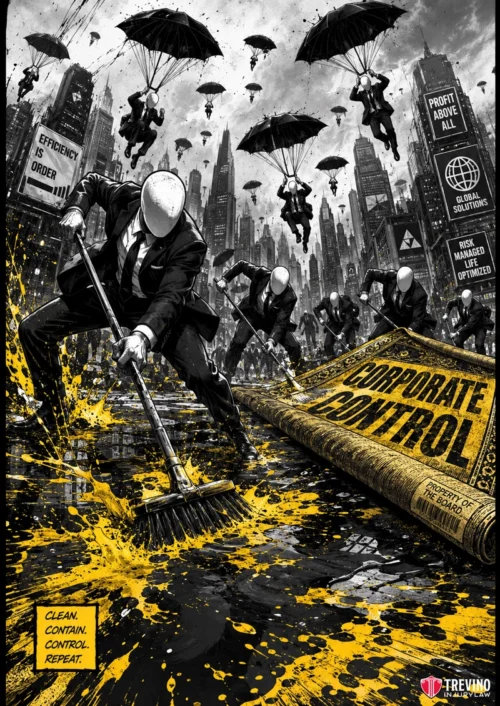
Because commercial entities profit from inviting the general public onto their premises, Texas courts hold them to the highest standard: a duty to proactively inspect their grounds for hidden dangers.
That commercial-visitor distinction is explored further in invitee vs. licensee status in Texas.
Understanding the aggressive tactics these commercial insurance policies fund is essential, but without immediate steps to preserve the scene, those corporate defense teams will quickly destroy the evidence you need to win your case.
The Chronological Process for Preserving Premises Liability Evidence
To prevent commercial property owners from destroying evidence, you must take immediate action. Follow this strict chronology to protect your claim:
- Immediately report the hazardous condition to management to generate an official incident report.
- Photograph the dangerous condition from multiple angles before anyone attempts to clean or repair it.
- Seek immediate medical attention to medically document how the defect directly caused your injuries.
- Contact a trial-ready personal injury lawyer to issue a Spoliation Letter before evidence disappears.
This early evidence preservation is the most critical step in protecting your case. At Trevino Injury Law, our trial-first mindset means we move immediately to send Spoliation Letters.
These are formal legal demands that strictly prohibit the corporate defendant from deleting electronic access logs, erasing CCTV video, or destroying internal maintenance records.
Do I Need a Police or Incident Report to Sue a Property Owner?
No, while an official incident report strongly supports your claim by establishing a timeline, it is not a strict legal requirement to file a lawsuit in Texas.
Can I Still Sue if There Was a “Wet Floor” Sign?
Yes, you can still sue if the warning sign was hidden, inadequate for the severity of the danger, or if the hazard was completely unavoidable. The danger of unaddressed slipping hazards is severe; between 2018 and 2022, Texas saw 1,957 fatal falls resulting from same-level slipping, tripping, and stumbling without striking an object.
Can You Sue a Property Manager in Texas?
Yes, you can sue a property manager in Texas if the property owner delegated the daily maintenance and safety inspections of the premises to them. If an apartment management company ignores a documented hazard—like a broken security gate or a collapsing staircase—their negligence makes them a directly liable party in your lawsuit.
Does the Landlord Have a Duty to Repair in Texas?
Yes, a commercial landlord maintains a non-delegable duty to repair known structural hazards and make common areas reasonably safe for invitees. They cannot use a lease agreement as an absolute shield to contract away their fundamental responsibility for public safety. Ignoring structural maintenance can have deadly consequences, such as the 192 fatal falls from stairs and steps recorded across Texas between 2018 and 2022.
Untangling these corporate relationships reveals the liable parties, establishing the foundation for understanding how commercial insurance policies dictate the financial compensation you can recover.
Actual Knowledge vs. Constructive Notice
The difference lies in the proof: actual knowledge requires evidence the owner explicitly knew of the danger, while constructive notice proves they reasonably should have discovered it through routine management before your injury occurred.
Actual knowledge is proven when a maintenance log shows a tenant reported burnt-out security lights weeks before an assault. Constructive notice is established circumstantially; if a security gate at a San Antonio apartment complex was rusted through and broken for six months, a jury can infer the owner “should have known” about it through basic property management.
| Concept | Definition | Evidentiary Standard |
| Actual Knowledge | The owner was explicitly aware of the dangerous condition. | Maintenance requests, internal emails, or tenant complaints. |
| Constructive Notice | The owner should have reasonably discovered the hazard. | Circumstantial evidence of long-standing disrepair, such as rusted metal or rotten wood. |
What Happens If You Don’t Document the Hazard Before It Is Repaired?
If you fail to document the hazard before the property owner repairs it, insurance adjusters will weaponize your lack of evidence to claim the defect never existed.
Property owners, especially large corporations and negligent apartment management companies, will immediately repair a broken lock or clean up a hazard after an injury occurs. Without photographs or witness statements from the time of the incident, adjusters from companies like State Farm or USAA will shift the blame entirely onto you, severely damaging your ability to secure compensation.
When Is It Too Late to File a Premises Liability Claim in Texas?
Under Texas law, you generally have exactly two years from the date of the injury to file a premises liability lawsuit against a private property owner.
If you miss this strict two-year statute of limitations, you are permanently barred from recovering any financial compensation, regardless of how catastrophic your injuries are. Furthermore, if you were injured on government-owned property, such as a city sidewalk near the San Antonio River Walk, the timeline is drastically shorter—often requiring a formal notice of claim within 90 days of the incident. This timeline applies to invitees, but if an individual is a trespasser who enters property without permission, the owner’s liability is generally limited to not causing intentional harm.
Why Hire a Premises Liability Lawyer?
You must hire a San Antonio injury law firm because corporate property owners and their insurance adjusters will immediately attempt to destroy evidence and blame you for the hazard. It requires an aggressive San Antonio trial attorney to preserve critical footage, prove negligence, and secure the maximum financial compensation.
Want to Protect the Full Value of Your Claim?
You’ve seen how this affects your case — but this is only one piece of the puzzle. Our Premises Liability Lawyer page breaks down what a trial-ready firm does differently.
We know their playbook, and we shut it down. Trevino Injury Law fights for families on a strict no-win, no-fee basis. Call 210-TREVINO for your free consultation. Se Habla Español.