
The timeline for a pedestrian accident claim in San Antonio spans from immediate evidence collection at the crash scene to a formal litigation phase extending through Maximum Medical Improvement.
The insurance adjuster is already manipulating this clock, executing a swoop and settle tactic to rush an inadequate offer before your doctors establish a Life Care Plan, or stalling negotiations until transit cameras overwrite their footage. According to recent state records, Texas recorded 6,077 pedestrian crashes in a single reporting period. Settlement mills use this volume to process victims quickly, but a plaintiff trial firm uses court deadlines to strip the adjuster of their stalling power.
What Could Your Pedestrian Accident Case Be Worth?
Answer a few quick questions about your accident. Takes about 60 seconds.
See What My Case Might Be WorthThe insurance company offered less than $20,000. I ended up with over $1 million. — Jackie Galindo
You must secure commercial dashcams and security loops along corridors like Culebra Road immediately by issuing a Spoliation Letter, a legal demand that stops defendants from deleting critical data. Texas imposes a strict two-year statute of limitations to formally file your lawsuit, and failing to execute this statutory requirement permanently destroys your right to financial recovery.
The best pedestrian accident lawyer at Trevino Injury Law will lock down the evidence before it vanishes and force the insurer to answer to a Bexar County jury. Call 210-TREVINO now for a free case review. You pay nothing unless we win. Se Habla Español.
What Are the Most Urgent Deadlines in the First 7 Days After a Pedestrian Accident?
Within the first seven days of a pedestrian accident, you must establish the foundation of your timeline by securing emergency medical documentation and issuing legal demands to preserve vanishing scene evidence before the insurance company exploits the delay.
While understanding who is at fault if a pedestrian is hit outside a crosswalk in San Antonio establishes liability, proving that fault requires acting urgently before transient evidence disappears.
Beyond standard fault rules, victims in Bexar County must navigate the 48-hour window for video deletion, the 10-day window for crash report availability, and the immediate ER documentation timeline. Texas law mandates that any crash involving injury or death must be immediately reported to law enforcement by the quickest means of communication.
At high-traffic intersections like S. Zarzamora Street and San Pedro Ave, the race to evidence begins immediately. While victims are often incapacitated in facilities like University Hospital, commercial businesses and VIA transit buses are already overwriting their 48-hour security loops.

If your case involves a hit-and-run, which is one of the most common scenarios for pedestrians, the timeline temporarily shifts as we coordinate with the San Antonio Police Department and initiate a first-party Uninsured Motorist claim under your policy to avoid delaying your medical care.
For the broader action sequence beyond the calendar, review what to do after a pedestrian accident in San Antonio.
Why Is the 48-Hour Window Critical for Securing Dashcam and Intersection Video?
Commercial surveillance footage and trucking dashcams along major roads like Loop 410 and I-35 are typically overwritten or permanently deleted within 48 to 72 hours unless legally secured by a Spoliation Letter. The technical reality of local business security systems is that storage space is limited, and without formal legal intervention, critical evidence of negligence is automatically lost.
This is exactly why hiring a plaintiff’s trial lawyer on day one alters the entire timeline, forcing the preservation of pedestrian accident evidence proving the driver’s fault.
Understanding these immediate investigative deadlines is critical, but the subsequent length of time your case will take to resolve will ultimately depend on the severity of your physical injuries and your doctors’ treatment plan.
How Long Does the Medical Recovery Phase Delay Your Pedestrian Settlement?
The longest phase of your claim timeline is dictated by your physical recovery, as your lawyer cannot accurately demand a fair settlement until your doctors determine your injuries have fully stabilized and future costs are completely known.
Understanding how much your San Antonio pedestrian injury case is worth requires acknowledging this 3-to-12+ month medical treatment timeline, as physical recovery dictates the legal timeline. The legal clock effectively pauses while the medical clock continues to run.

During this critical phase, Trevino Injury Law issues Letters of Protection (LOPs) so your treatment at the South Texas Medical Center can continue uninterrupted without immediate out-of-pocket costs. Rushing to settle before this phase concludes means the victim absorbs the cost of future surgeries, physical therapy, and ongoing care.
Why Does Reaching Maximum Medical Improvement (MMI) Take Longer for Pedestrians?
Because pedestrians lack the physical protection of a vehicle, they frequently suffer life-altering, severe injuries that require a year or more to reach Maximum Medical Improvement (MMI). The physical and emotional impact on victims who are struck on foot is devastating. MMI is the critical medical threshold where doctors determine that further significant healing is unlikely.
Settling your claim before reaching MMI is a catastrophic financial mistake. Once MMI is officially reached, this timeline must also allow medical experts to draft a Life Care Plan, a detailed roadmap of future medical costs over the victim’s lifetime.
Establishing your complete medical and financial needs through MMI lays the foundation for understanding the final timeframe required to force the insurance company to pay what you deserve.
How Long Does It Take to Negotiate and Litigate a Pedestrian Claim in Bexar County?
Once you reach MMI, a pre-suit settlement can be negotiated within 30 to 90 days, but if the insurer refuses to pay fair compensation, going to trial in Bexar County courts can extend the timeline by 1 to 3 years. Personal injury cases, particularly complex pedestrian cases in Texas, often take years when the defendant refuses to accept responsibility.
The decision about why to hire a plaintiff trial lawyer rather than a high-volume settlement firm becomes critical here, as trial lawyers use court deadlines to counter insurance company stalling tactics during this final phase. We map the 30-day Stowers Demand window against the aggressive Bexar County litigation docket timeframe to protect your claim’s value. Our experience includes over 80 jury trials and a history of holding corporate defendants accountable.
This aggressive legal strategy originates from the landmark decision G.A. Stowers Furniture Co. v. American Indem. Co., which holds that an insurance company can be held liable for an entire trial judgment, even amounts exceeding the policy limits, if they negligently refuse a reasonable settlement offer. By sending a comprehensive demand package outlining all litigation risks, we force the opposing party to either offer full compensation or face a lawsuit immediately.

During the discovery phase, we exchange crucial evidence, conduct interrogatories, schedule a deposition for the at-fault driver, and issue requests for admissions. The insurer has a strict window to respond; if they play games, we rely on the Bexar County jury to deliver a favorable verdict.
What Tactics Do Insurance Adjusters Use to Artificially Extend Your Timeline?
Insurance adjusters intentionally stall the timeline by repeatedly requesting duplicate medical records, disputing liability under modified comparative negligence laws, or forcing you to attend a biased Independent Medical Exam (IME).
They heavily rely on the delay, deny, and defend playbook to starve injured victims financially. They may also attempt to assign blame to your side to reduce the damage payout.
We combat this aggressive manipulation by leveraging strict court-ordered deadlines that strip the adjuster of their stalling power and force them to answer to a judge.
At What Point in the Timeline Should You Hire a San Antonio Pedestrian Lawyer?
You must hire a San Antonio personal injury lawyer on day one of your timeline, immediately after the crash and before you speak with any insurance representatives, because early intervention allows a trial-tested attorney to manage all subsequent legal deadlines and preserve vanishing scene evidence.
Transitioning from the strict chronological mechanics of an injury claim to broader legal protection requires immediate action. Every day you wait to secure representation from Trevino Injury Law is a day the insurance adjusters use to build a defense against you. When victims try to handle the initial phases themselves, they inevitably miss hidden deadlines or make recorded statements that adjusters twist to shift blame and minimize payouts.
Early intervention means we take over all communication and immediately dispatch investigators to secure proof of fault. Delays in hiring a plaintiff trial lawyer directly correlate to lost evidence, which severely degrades your overall claim value, especially for pain and suffering damages.

By putting a proven legal advocate between you and the insurance company, you can exclusively focus on the medical phase of your recovery while we handle the fight for maximum compensation.
Is the Timeline Different If You Are Hit by a City of San Antonio Vehicle?
Yes, if you are struck by a VIA Metropolitan Transit bus or a city-owned vehicle, the Texas Tort Claims Act drastically shortens your timeline, requiring you to file a formal Notice of Claim within exactly six months of the accident. While the Texas Tort Claims Act establishes a six-month deadline for state governmental units, claims specifically against the City of San Antonio have an even stricter window, requiring written notice of injury or death within just 90 days of the incident. Furthermore, once this claim is filed, the City’s internal processing time dictates that a General Liability Claims Adjuster will typically make contact within 5 to 7 days.
Missing this exact statutory requirement completely destroys your pedestrian accident claim, barring you from any future recovery regardless of how catastrophic your injuries may be. Government entities operate under entirely different legal frameworks than private citizens or commercial trucking companies. If your pedestrian injury occurred in Downtown San Antonio or near a major transit hub, identifying the exact ownership of the vehicle on day one is critical. Because municipal vehicles and city operations enjoy sovereign immunity protections, this strict temporal exception requires a plaintiff trial lawyer who understands how to immediately preserve evidence, bypass bureaucratic red tape, and execute the exact statutory requirements to hold the government fully accountable for your medical bills and ongoing losses.
Do I Have to Wait for the Police Report to Start My Claim Timeline?
No, you do not need to wait 10 to 14 days for the crash report before hiring a lawyer to immediately initiate your claim. While the investigating officer is legally required to file the crash report with the state no later than the 10th day after the collision, waiting for this official document only gives the insurance company a head start.
Can the Insurance Company Legally Delay My Final Settlement Check?
No, once a settlement agreement is finalized and signed in Texas, insurance companies are legally bound to disburse the funds within 15 to 30 days. Most settlement amounts are kept confidential.
Is There a Maximum Time Limit to File My Pedestrian Lawsuit?
Yes, under Texas law, you have exactly two years from the date of the pedestrian accident to formally file a lawsuit against the negligent driver. This strict two-year limitations period applies to both personal injury claims and wrongful death actions, where the clock begins ticking on the date of death. However, there are rare exceptions; for instance, if the injured victim is a minor or under a legal disability at the time of the crash, the period of disability is not included in the limitations timeline.
Fast-Track Settlement vs. Litigation Timeline Comparison
While a fast-track settlement can provide compensation within three to six months for minor injuries, formal Litigation extends the timeline to one to three years but ultimately forces stubborn insurance companies to pay full value for your catastrophic pedestrian losses.
Understanding these distinct pathways helps victims prepare for the financial road ahead. Our San Antonio personal injury law firm leverages aggressive, trial-ready strategies to push your case through these phases as efficiently as possible without leaving money on the table.
| Claim Phase | Fast-Track Settlement Path | Formal Litigation Path |
| Phase 1: Evidence & Investigation | Days 1-7: Immediate preservation of dashcams, scene photos, and witness statements. | Days 1-7: Immediate preservation, plus deeper investigation into corporate history if a commercial vehicle is involved. |
| Phase 2: Medical Recovery | Months 1-6: Treatment concludes quickly for minor injuries; reaching MMI is faster. | Months 1-12+: Extended physical recovery for catastrophic injuries; includes drafting comprehensive Life Care Plans. |
| Phase 3: Resolution Window | Months 3-6: Pre-suit Stowers Demand is accepted by the insurer within 30 to 90 days. | Years 1-3: Insurer denies fair value; lawsuit filed, discovery conducted, and case proceeds to trial in Bexar County. |
How Do “Gaps” in Your Medical Timeline Ruin Your Pedestrian Accident Claim?
If you create a chronological gap in your medical timeline by waiting weeks to see a doctor or missing physical therapy appointments, aggressive insurance companies will immediately argue your catastrophic injuries were actually caused by an unrelated event to deny your financial recovery.
The absence of continuous action within your recovery timeline is the number one weapon insurance adjusters use to destroy the causation link between your accident and your ongoing pain. When you delay care at facilities like Stone Oak Methodist or the University Health System, adjusters exploit these empty spaces on the calendar to drastically reduce settlement offers. A trial-ready attorney ensures your medical timeline remains completely unbroken, documenting every visit so the defense cannot claim your injuries magically healed during your absence from the doctor’s office.
Why Is It Dangerous to Resolve Your Claim Timeline Too Quickly?
Resolving your claim timeline prematurely by accepting an insurance company’s fast, early settlement offer is extremely dangerous because it permanently forces you to sign away your legal rights before the true, long-term medical and financial costs of your injuries are completely known by your doctors.
This failure often occurs when adjusters execute the Swoop and Settle tactic, intentionally rushing victims in the days following a crash. Once your timeline is officially closed via a signed release, it can never be reopened under any circumstances. If you discover months later that your spine requires surgery, you will be left to pay for those massive future medical expenses entirely out of pocket. Patience, combined with the aggressive leverage of a San Antonio trial lawyer with a history of multi-million-dollar verdicts, is the only way to protect your family’s financial future.
Why Hire a San Antonio Pedestrian Accident Lawyer?
When adjusters execute the “Swoop and Settle” tactic, their only goal is to pay you nothing. Settlement mills let them win by rushing claims and dodging the courtroom. Trevino Injury Law strikes back with a trial-first mindset and absolute Trial Authority. We do not fold. We fight for families. We force them to pay.
Want to Protect the Full Value of Your Claim?
You’ve seen how this affects your case — but this is only one piece of the puzzle. Our Pedestrian Accident Lawyer page breaks down what a trial-ready firm does differently.
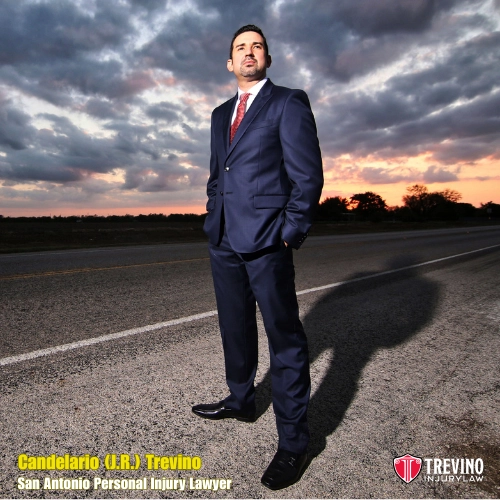
We proved this at the Bexar County Courthouse by securing a $7.9 million jury verdict. To build this exact leverage, you’ll need the personal injury claim attorney to immediately draft a spoliation letter to preserve vanishing intersection data before the defense destroys it.
Call 210-TREVINO for a free case review. Se Habla Español. We strictly honor our “No Win, No Fee” contingency promise.