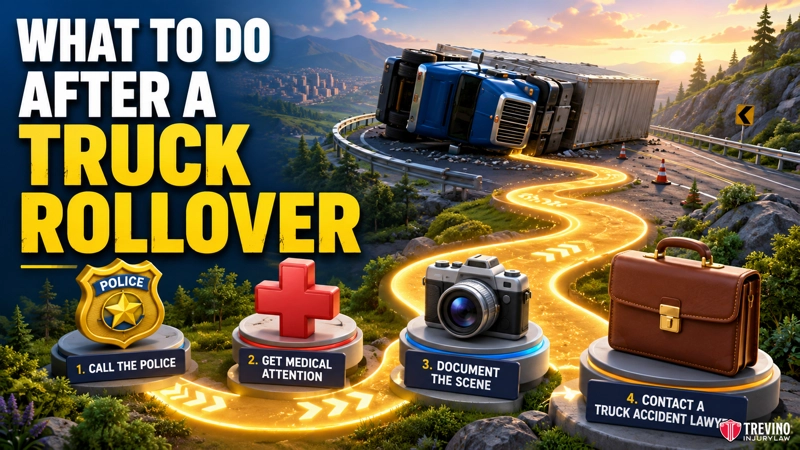
Secure emergency trauma care at a major hospital and photograph the scattered load-shift debris field before heavy highway wreckers clear the scene.
The commercial carrier’s rapid response risk team is already en route to the crash site to conceal snapped flatbed chains and extract the wrecked cab to an inaccessible private lot. According to TxDOT, Texas recorded 2,684 commercial motor vehicle-involved crashes in Bexar County alone in 2024. Behind most of these violent wrecks is a negligent freight loader who unbalanced a cargo pallet or a corporate dispatcher who forced a fatigued driver to take a corner too fast.
What Could Your Truck Rollover Accident Case Be Worth?
Answer a few quick questions about your accident. Takes about 60 seconds.
See What My Case Might Be WorthThe insurance company offered less than $20,000. I ended up with over $1 million. — Jackie Galindo
Electronic Control Module data loops continuously, and the negligent trucking company will legally overwrite this objective proof of their steering angles and sudden deceleration within three weeks. A Spoliation Letter, a legal demand that prevents the property owner from destroying evidence, must be issued immediately to freeze the telemetry data.
Trevino Injury Law truck rollover accident lawyers deploy specialized reconstructionists immediately to lock this critical evidence down before the corporation permanently erases it. Call 210-TREVINO for a free case review. You pay nothing unless we win. Se Habla Español.
What are the immediate legal and medical priorities following a truck rollover in San Antonio?
Your immediate priorities are to ensure physical safety against secondary pile-ups and fuel spills, request emergency medical transport for extrication trauma, and secure a formalized SAPD crash report without offering subjective apologies or theories on the cause.
Following the catastrophic loss of a commercial vehicle’s center of gravity, adrenaline frequently masks the symptoms of severe neurological trauma and injuries from extreme centrifugal forces. Check yourself and your passengers for injuries. If a loved one is injured, check for injuries and call 911 immediately.
Requesting an ambulance is not merely a medical necessity; it establishes an unassailable timeline of injury that prevents commercial insurance adjusters from later claiming your symptoms were caused by an unrelated event. You must seek medical attention right away, even if you feel fine. The extreme physical toll of these incidents is clear across the state, as records indicate there were 9,761 crashes where the first harmful event was an overturned vehicle in Texas in 2024, causing 1,524 suspected serious injuries (TxDOT, 2024).
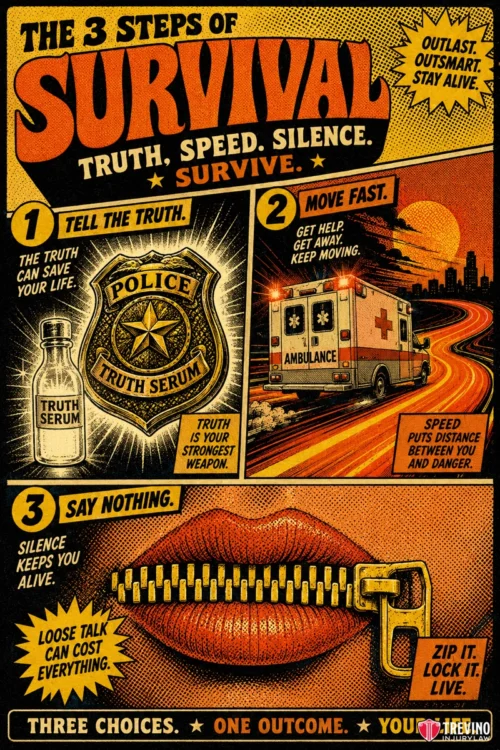
While awaiting first responders at dangerous intersections or the “Mixing Bowl” interchange, where I-35, I-10, and US-90 converge, safety remains paramount because of unique rollover hazards, such as pooling diesel fuel and hazardous cargo leaks.
The Texas Transportation Code requires you to move your vehicle to a safe location if it is operable and safe to do so; however, you must balance this with avoiding the immediate threat of secondary pile-ups. If the situation is highly unstable, avoid moving until emergency personnel arrive.
Once you are safely away from highway traffic, mentally prepare to document the accident scene.
How do you document a commercial truck rollover scene safely?
You must systematically take photos of the resting position of the commercial cab, the scattered load-shift debris field, and any visible broken securement straps before heavy wreckers arrive to clear the highway. Use your smartphone to take the following images:
- Photograph the trajectory: Capture the cab and trailer’s final resting position relative to the highway lanes to establish the trajectory.
- Capture pavement gouges: Take wide-angle images of pavement gouge marks and skid marks where the trailer’s roof or side dragged across Loop 1604 or US-90.
- Document liquid spills: Record specific liquid spill patterns (diesel or hydraulic fluid) that indicate exactly where the truck lost its center of gravity.
- Record securement failures: Photograph any broken cargo securement straps or snapped flatbed chains.
- Capture DOT placards and vehicle damage: Take wide-angle shots showing the commercial DOT placards and all structural vehicle damage before the scene is sterilized.
Scene documentation can vary with the roadway and crash environment. For location-specific context, review San Antonio truck rollover hotspots and causes.
What specific information must you provide to the SAPD responding officer?
You must provide the SAPD officer with only factual, objective observations of the commercial driver’s overcorrection or excessive speed prior to the rollover, strictly avoiding any speculation about your own actions. When you call the police, ensure you also gather contact information, information from other drivers, and critical witness information.
Defense law firms frequently manipulate early police reports to argue that a passenger vehicle “cut off” the commercial truck, forcing it to overcorrect and roll. When speaking to SAPD or the Texas Highway Patrol, utilize precise, factual language: state exactly what the truck did (e.g., “The trailer began to sway and tipped into my lane”) rather than what you failed to do.
Do not apologize, and do not minimize your injuries to the accident responders. Stick strictly to the physical facts of the commercial vehicle’s failure to maintain equilibrium. Be sure to obtain the police report number before leaving the scene.
After interacting with law enforcement, your window to secure independent evidence begins closing rapidly.
What critical physical evidence disappears within the first 24 hours of an 18-wheeler rollover?
Within the first 24 hours, crucial rollover evidence necessary for accurate accident reconstruction, such as pavement gouge marks, snapped load chains, and unbalanced cargo patterns, will permanently degrade or be intentionally obscured by the trucking company’s defense team.
The crash scene is highly volatile. South Texas road conditions, heavy traffic flow on major commercial corridors like I-35, and municipal cleanup crews will rapidly erase the physical indicators of exactly how the commercial motor carrier’s load shifted and caused the rollover.
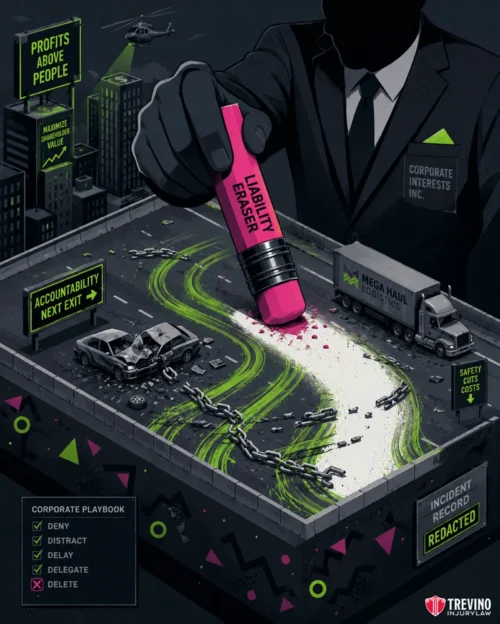
More critically, negligent trucking companies and carriers like Great West Casualty or Progressive Commercial immediately deploy specialized “rapid response” risk teams directly to the crash site. These corporate investigators often arrive on scenes like Loop 410 before the victim has even been cut from their vehicle by the San Antonio Fire Department, actively working to conceal overloaded trailers and extract the wrecked cab to private, inaccessible lots.
How trucking companies alter evidence at the rollover scene?
Commercial trucking companies deploy specialized risk teams to the crash site to quickly remove evidence of improperly loaded freight and minimize structural roof-crush damage in their controlled photographs.
These corporate defense teams exist to protect the bottom line. They manipulate the narrative by photographing the scene from angles that obscure driver negligence or third-party loading errors. They will quickly clear away snapped straps or unbalanced pallets to hide a center-of-gravity failure.
Combating this corporate erasure requires Trevino Injury Law‘s trial-first mindset, which instantly counters these tactics through aggressive evidence preservation and FOIA requests for unredacted dashcam footage before the scene is fully cleared.
Which commercial vehicle components need immediate photographic documentation?
Before the wrecker hooks the vehicle, you must photograph the cab’s DOT numbers, broken cargo securement devices, and the specific pavement gouge marks where the trailer tipped.
Target these specific attributes to build a foundation of liability regarding the rollover mechanics:
- Missing or illegible Department of Transportation (DOT) placards.
- Snapped flatbed chains, broken nylon straps, or burst pallet wrap indicating an unsecured load.
- Liquid spill patterns (fuel or hydraulic) showing where the center of gravity failed.
- Severely worn, mismatched, or blown commercial tire treads that may have triggered an overcorrection.
- Gouge marks and yaw lines etched into the pavement by the sliding trailer.
While the physical evidence is under attack at the scene, your legal rights will be attacked over the phone.
How should you handle calls from commercial trucking insurance adjusters after a rollover?
You must completely refuse to speak with the commercial trucking insurance adjuster, as they are highly trained interrogators seeking to extract recorded statements that shift the blame for the rollover onto your driving. Protect your rights and seek sound legal advice before engaging with them.
Adjusters representing massive commercial carriers like Northland Insurance or Lancer Insurance utilize psychological manipulation in the immediate 72 hours following a crash. They manufacture a false sense of helpfulness, attempting to secure a cheap release of liability before the victim fully comprehends the permanence of their roof-crush injuries and the true value of your claim.
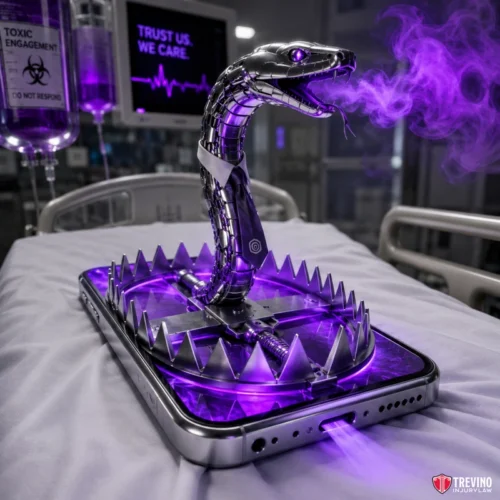
These predatory calls often happen while the victim is still heavily medicated or undergoing trauma evaluations at the UT Health San Antonio Multispecialty Hospital. Their primary goal during negotiation is to close the case for a fraction of its true trial value by tricking you into admitting you braked too quickly or changed lanes unexpectedly, causing their driver to overcorrect and roll.
The only safe action is to hang up and instruct them to speak directly with your accident attorney.
Why are recorded statements weaponized against truck rollover victims?
Recorded statements are weaponized by defense attorneys who meticulously parse your traumatized, medicated answers to argue that you triggered the commercial driver’s loss of control or that your injuries existed prior to the crash.
Commercial adjusters deploy conversational traps to manufacture comparative negligence under Texas law. A polite, reflexive “I’m doing fine, thanks” is immediately logged as a recorded admission that you did not suffer catastrophic extrication trauma. They will ask leading questions about your speed or braking distance to argue you “cut off” their heavy, articulated vehicle.
Our trial-tested framework mandates absolute silence with the opposition; we shut down their playbook by handling all communications.
Refusing this statement is your first line of defense, setting the stage for answering the most critical question on your recovery journey.
When should you hire a San Antonio personal injury lawyer after an 18-wheeler rollover?
You must hire a San Antonio personal injury lawyer immediately, ideally within the first 24 to 48 hours following the crash, to legally prevent the commercial trucking company from intentionally destroying or overwriting the electronic black box data that proves driver negligence. Navigating insurance claims without one can jeopardize your ability to recover damages.
The complex mechanics of a commercial rollover—often involving third-party freight loaders responsible for the center of gravity—demand aggressive early intervention. This aggressive preservation of evidence is how our trial attorneys secured a $17 Million settlement for a commercial trucking wrongful death case.
From day one at Trevino Injury Law, a trial attorney reviews your crash reports and dispatches accident reconstructionists. Securing fleet telematics, black box data, and driver logs is essential to exposing corporate negligence.
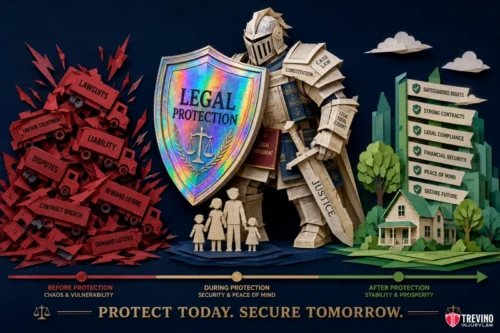
As highlighted in the recent landmark Texas Supreme Court decision, Werner Enterprises, Inc. v. Blake, 672 S.W.3d 505 (Tex. 2023), establishing a commercial carrier’s systemic failures and direct liability requires overwhelming, properly preserved technical evidence. Unlike volume-driven settlement mills, our trial-first mindset aggressively freezes this telemetry before the trucking company’s automated systems overwrite the objective proof of their negligence.
Furthermore, because we operate strictly on a contingency-fee basis, we front all expert and litigation expenses. This removes the financial burden of massive medical bills and lost wages from families recovering in Bexar County, allowing us to aggressively pursue a lawsuit for fair compensation without upfront costs.
Understanding this critical urgency requires examining the specific processes and deadlines that govern your claim’s survival.
What is the exact timeline for preserving ECM (black box) data after a rollover?
The timeline to preserve Electronic Control Module (ECM) data is immediate, as commercial trucks can legally overwrite their telemetry data within three to four weeks if your attorney does not force a freeze via a formal Spoliation Letter to protect the evidence.
The Electronic Control Module serves as the neurological center of the commercial truck, recording vital inputs such as steering angle, sudden deceleration, brake application, and engine RPM in the critical seconds preceding the rollover. This data shows exactly how the truck overcorrected or lost equilibrium. However, this data loop continuously overwrites itself.
To stop this, a plaintiff trial firm must rapidly issue a formal Spoliation Letter. This legally binding demand stops the trucking company from deleting or altering the black box data. If you delay hiring legal representation, the carrier will legally sanitize this unredacted engine data, effectively erasing the most objective proof of hours-of-service violations, speeding, or aggressive oversteering. Taking the right steps early on can make a big difference in your recovery.
This aggressive, early evidence preservation is the hallmark of a Trial Authority. Securing this technical data often dictates the answers to the most common legal uncertainties victims face.
Do I need a police report to file a truck rollover claim in Texas?
Yes, you absolutely need a formal SAPD or Texas Highway Patrol crash report to officially document the commercial driver’s identity, the corporate carrier’s insurance details, and the initial officer assessments of liability.
Under Texas law, an investigating officer must file an official report no later than the 10th day after the date of the crash for any accident involving injury, death, or apparent property damage of $1,000 or more (TxDOT, 2024).
Can a trucking company force me to move my vehicle before police arrive?
No, a commercial driver or their company cannot force you to move your vehicle if there are severe injuries or fatalities; however, Texas law requires moving operable vehicles out of major corridors like I-10 if it is safe to do so.
Will refusing an ambulance at the rollover scene ruin my injury case?
Yes, refusing immediate EMS transport at the scene creates a documented gap in your medical timeline that commercial insurers will exploit to claim your spinal or neurological injuries were caused by an unrelated event.
Emergency Room vs. Urgent Care for Rollover Trauma Comparison
Following the extreme physical impact experienced in a commercial rollover, you must prioritize a Level 1 Trauma Center over a local urgent care facility, as only major hospitals possess the advanced imaging technology required to properly diagnose internal hemorrhaging and subtle spinal fractures.
| Medical Facility Type | Diagnostic Capabilities | Legal Documentation Value | Case Value Impact |
| Level 1 Trauma Center (e.g., University Health System) | Advanced MRI/CT, immediate surgical intervention for spinal crush injuries and extrication trauma (e.g., SAFD Jaws of Life rescue). | Establishes an immediate, irrefutable link between the extreme centrifugal forces of the rollover and catastrophic trauma. | Drives case value higher by quantifying permanent rehabilitation and Life Care Plan needs immediately. |
| Local Urgent Care Clinic | Basic X-rays, treatment for minor lacerations and low-impact sprains. | Insufficient for complex commercial roof-crush trauma; creates gaps if deeper injuries surface later. | Adjusters use urgent care visits to argue injuries are “minor” and justify predatory lowball offers. |
Failing to secure this high-level documentation introduces the first major vulnerability in your case.
What happens if you do not immediately document the commercial truck’s DOT numbers?
If you fail to document the specific Department of Transportation (DOT) and Motor Carrier (MC) numbers located on the cab, you risk losing the ability to identify the true parent corporation, especially in crashes involving complex, multi-layered commercial logistics brokers.
Modern commercial trucking operates through convoluted logistics chains. The name painted on the trailer often does not match the company that owns the cab, nor does it identify the third-party freight loader responsible for the unbalanced cargo that caused the rollover’s center of gravity to fail.
The absence of scene photos capturing the DOT placards allows these domestic parent corporations to hide behind independent contractor shields, severely complicating the process of establishing corporate liability and identifying maximum insurance policies.
Just as physical evidence vanishes from the scene, your legal window to pursue accountability is also actively closing. In Texas, you generally have two years from the date of the accident to file a personal injury lawsuit due to the strict statute of limitations.
When is it too late to retrieve dashcam footage from the at-fault 18-wheeler?
It is permanently too late to retrieve commercial dashcam footage once the corporate retention policy expires—often in as little as 14 to 30 days—after which the trucking company will legally record over the footage unless stopped by a court order.
Video evidence is the ultimate silencer of corporate delay tactics. It provides direct visual proof of the load shifting or the truck taking a corner too fast. However, this evidence has an absolute expiration date. If you wait to see how your injuries heal before hiring a trial litigator, the negligent trucking company will allow its automated systems to overwrite the footage.
This permanent destruction eliminates the visual proof necessary to overcome the bifurcated trial rules in Texas, destroying your ability to hold the commercial carrier financially accountable for your trauma.
Why Hire a Truck Rollover Accident Lawyer?
In the aftermath of a commercial truck rollover, critical evidence such as black-box telemetry and unredacted dashcam footage vanishes rapidly. While you are recovering from severe trauma, corporate defense teams and insurance adjusters are already actively working to destroy this proof and manipulate the narrative to blame you.
You need a San Antonio personal injury trial attorney who will immediately deploy a Spoliation Letter to freeze the evidence and permanently shut down predatory insurance interrogations. At Trevino Injury Law, we counter corporate erasure tactics with aggressive, trial-first litigation. Hiring an experienced car accident lawyer or commercial truck litigator will be the main difference in the outcome of your case.
Want to Protect the Full Value of Your Claim?
You’ve seen how this affects your case — but this is only one piece of the puzzle. Our Truck Rollover Accident Lawyer page breaks down what a trial-ready firm does differently.
Do not let a negligent trucking company erase the truth or cheat you out of the maximum compensation for your injuries. Contact us immediately at 210-TREVINO for a free, confidential case evaluation. We front all expert costs and operate on a strict contingency fee basis—you pay absolutely nothing unless we win your case. Se Habla Español.