Most motorcycle accidents in San Antonio are caused by other drivers, not riders. A driver turns left across a rider’s path, changes lanes without checking a blind spot, or pulls out from a side street because they never saw the motorcycle.
After the crash, the insurance company often flips the story. Adjusters argue the rider was speeding, splitting lanes, or riding without a helmet, because shifting blame to the motorcyclist reduces what the insurer has to pay.
That blame matters under Texas law. Under the state’s proportionate responsibility rule, a rider found more than 50 percent at fault recovers nothing, so scene photos, witness statements, and vehicle data collected early can decide the outcome of the claim.
At Trevino Injury Law, our San Antonio motorcycle accident lawyers investigate how the crash happened and hold negligent drivers and their insurers accountable. Call 210-TREVINO for a free case review. You pay nothing unless we win. Se Habla Español.
What Could Your Personal Injury Case Be Worth?
Answer a few quick questions about your accident.Takes about 60 seconds.
See What My Case Might Be WorthThe insurance company offered less than $20,000. I ended up with over $1 million. — Jackie Galindo
Trevino Injury Law, San Antonio motorcycle accident lawyers, preserves crash evidence and pushes back when an insurer blames the rider. Call 210-TREVINO now for a free case review. You pay nothing unless we win. Se Habla Español.
What Are the Most Common Causes of Motorcycle Accidents in Texas?
Most motorcycle crashes in Texas trace back to a driver who failed to see the rider, failed to yield, or failed to give a motorcycle the space it needs to stop and maneuver. A rider has no steel frame, crumple zone, or airbag, so a mistake a car would walk away from can leave a motorcyclist with catastrophic injuries.
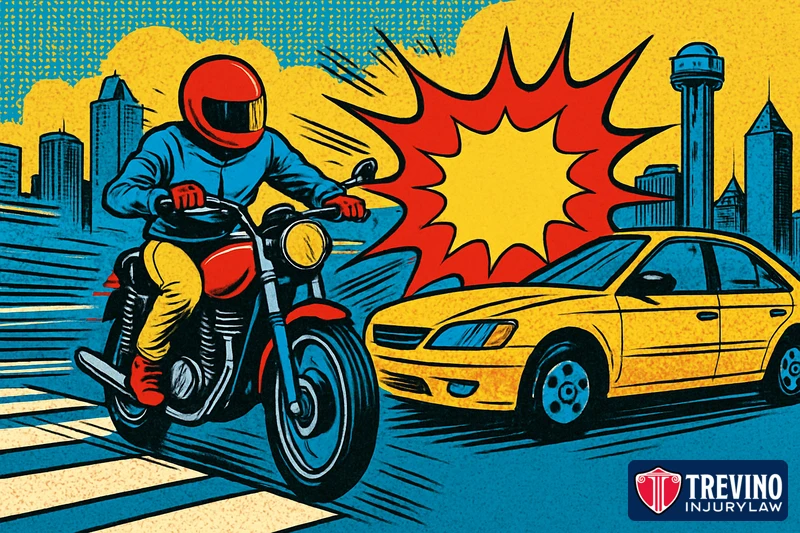
- Left-turn crashes: Texas Transportation Code §545.152 requires a driver turning left to yield to oncoming traffic. When a driver misjudges a motorcycle’s speed or never sees it, the rider is often struck head-on or broadside in the intersection.
- Failure to see the rider: A motorcycle’s narrow profile is easy to lose in glare, traffic, or a driver’s blind spot. “I never saw him” is not a defense when a driver had a duty to keep a proper lookout.
- Unsafe lane changes: Drivers who drift or cut over without signaling or checking mirrors force riders off the road. Texas law (§545.060) prohibits moving from a lane until the move can be made safely.
- Sudden stops and rear-end collisions: A driver who follows too closely, or brakes abruptly without reason, leaves a rider little room to react.
- Opening car doors: A driver or passenger who swings a door open without checking mirrors can throw a passing rider into traffic.
- Speeding and impaired driving: Speed and alcohol shorten reaction time for everyone on the road, and a motorcyclist absorbs the full force of the impact.
- Road hazards: Potholes, gravel, debris, and oil patches are far more dangerous on two wheels. A city, county, or contractor responsible for the road may share fault in some cases.
- Motorcycle defects: Brake failures, tire blowouts, and steering or frame defects can make a manufacturer or repair shop liable under Texas product liability law.
| Crash pattern | Evidence that proves fault | Who may be liable |
|---|---|---|
| Left turn across the rider’s path | Intersection video, skid marks, witness statements | Turning driver and their employer |
| Unsafe lane change | Dashcam footage, vehicle damage location, phone records | Driver who changed lanes |
| Rear-end collision | Event data recorder, brake-light evidence, police report | Following driver |
| Road hazard | Photos of the hazard, prior complaints, maintenance records | City, county, or road contractor |
| Mechanical failure | Inspection of the motorcycle, recall notices, repair history | Manufacturer or repair shop |
Where Do Motorcycle Crashes Happen in San Antonio?
Motorcycle crashes in San Antonio cluster on high-speed highways and busy intersections. Heavy traffic on I-10, I-35, Loop 410, and Loop 1604 creates constant lane changes and merging, where drivers often fail to check for a rider before moving over.
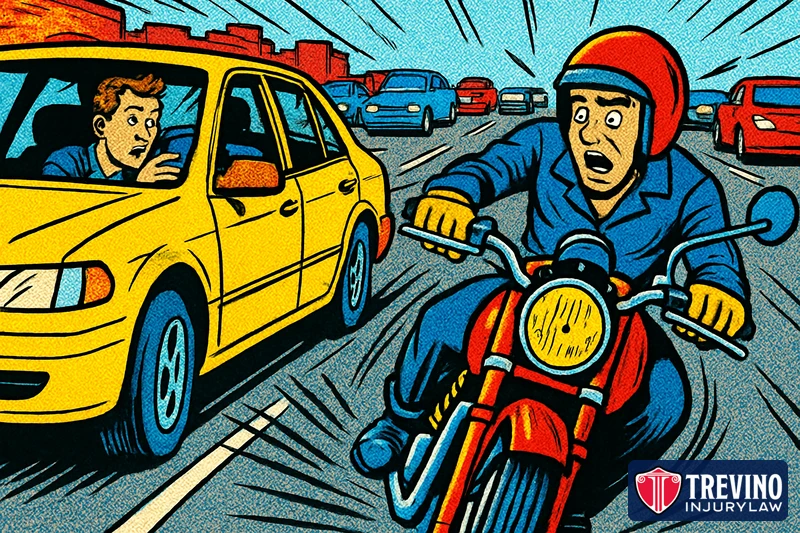
Intersections are just as dangerous. Left turns at busy surface streets and drivers pulling out of shopping centers and side streets account for many of the crashes we see. Rush-hour congestion shortens following distances and leaves riders little room to escape a driver’s mistake.
Which Riders Face the Highest Risk?
Every rider shares the road with drivers who may not see them, but some riders face added risk.
- Younger riders are more likely to ride high-performance sport bikes, ride without full protective gear, or lend a motorcycle to a less experienced friend.
- Returning riders who start riding again after many years may choose larger, heavier motorcycles and underestimate how much reaction time and strength have changed.
- Commuters who ride in rush-hour traffic face more lane changes, sudden stops, and distracted drivers every day.
None of these factors excuse a negligent driver. A rider’s age or experience does not change another driver’s duty to yield and keep a proper lookout.
What Should You Do After a Motorcycle Accident in San Antonio?
The steps you take after a motorcycle crash protect both your health and your claim.
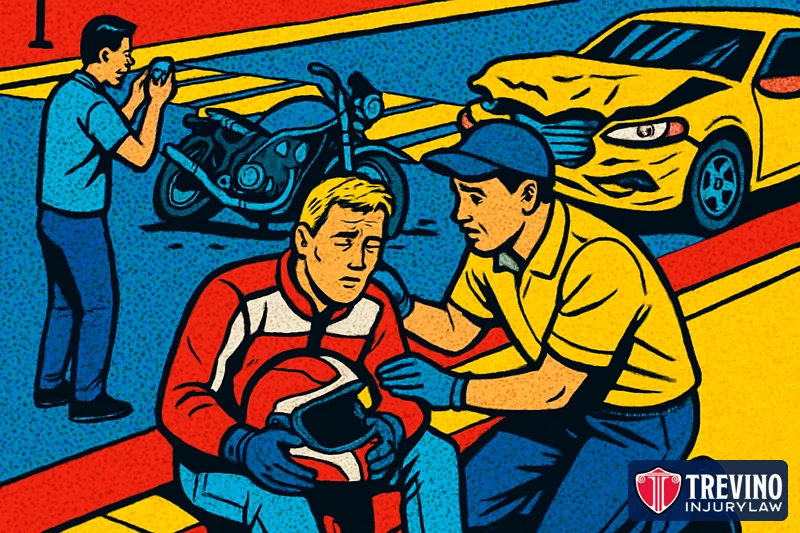
- Get medical care right away. Some serious injuries, including head and internal injuries, are not obvious at the scene.
- Call the police so a crash report documents the scene and the other driver’s information.
- Photograph everything, including your motorcycle, the other vehicle, road conditions, and your injuries.
- Get witness names and phone numbers before people leave the scene.
- Keep your gear. Your helmet, jacket, and boots can show the force and direction of the impact.
- Avoid recorded statements to the other driver’s insurer before you talk with a lawyer.
Motorcycle Accidents: Quick Answers
Is Lane Splitting Legal in Texas?
No. Texas has no law that permits lane splitting, and riding between lanes of traffic is generally treated as an unsafe lane movement. An insurer may raise lane splitting to argue the rider shares fault, but the other driver can still be held responsible for their own negligence.
Do I Have to Wear a Helmet in Texas?
Riders under 21 must wear a helmet. Riders 21 and older may ride without one if they have completed an approved motorcycle safety course or carry qualifying health insurance, under Texas Transportation Code §661.003.
Can I Still Recover If I Was Not Wearing a Helmet?
Generally, yes. Not wearing a helmet does not cause a crash, but an insurer may argue it made a head injury worse. Under proportionate responsibility, your recovery can be reduced by your share of fault, and you recover nothing only if you are found more than 50 percent responsible.
Why Hire a San Antonio Motorcycle Accident Lawyer?
Insurance companies start building a rider-blame defense the day of the crash. At Trevino Injury Law, we prepare every case for a Bexar County jury, and we secured a $17 million settlement in a head-on collision case involving three fatalities. Prior results do not guarantee a similar outcome.
Hurt in a Motorcycle Crash?
You’ve seen how this affects your case — but this is only one piece of the puzzle. Our San Antonio Motorcycle Accident Lawyer page explains how we fight rider-blame tactics and build your claim.
We investigate the crash, preserve the evidence insurers try to overlook, and fight back when the other side blames the rider.
Call 210-TREVINO for a free case review. We operate on a strict no-win, no-fee basis. Se Habla Español.
