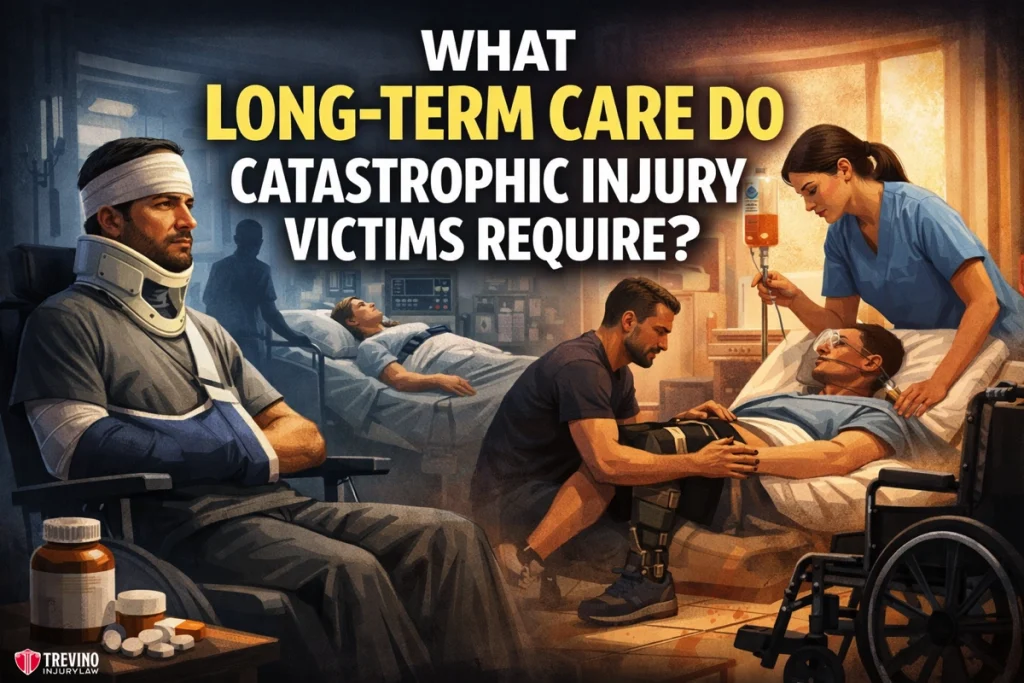
Catastrophic injury victims in Texas require a forensic Life Care Plan that funds continuous skilled nursing, architectural home modifications, and lifetime equipment replacement. Standard health insurance policies exclude this routine maintenance, forcing your family to absorb the full impact of medical inflation.
The insurance adjuster is already plotting to shift your daily custodial support into an excluded non-medical category, exploiting paid or incurred limits to cut off rehabilitation coverage the moment clinical progress plateaus. According to the American Medical Association Guides, proving a catastrophic injury legally requires establishing a Whole Person Impairment rating of 55% or greater. Reaching this objective scientific threshold removes subjective debate and establishes the need for lifetime support beyond standard policy caps.
What Could Your Catastrophic Injury Accident Case Be Worth?
Answer a few quick questions about your accident. Takes about 60 seconds.
See What My Case Might Be WorthThe insurance company offered less than $20,000. I ended up with over $1 million. — Jackie Galindo
The evidence required to hold the negligent party accountable for these lifelong costs disappears in the first week. A Spoliation Letter, a legal demand to stop the property owner from destroying evidence, must be sent immediately. Texas gives you two years to file a lawsuit before the claim vanishes completely.
Trevino Injury Law’s catastrophic injury attorneys calculate your exact future medical exposure and lock down the critical evidence. Call 210-TREVINO now for a free case review. You pay nothing unless we win. Se Habla Español.
What Is Included in a Catastrophic Injury Life Care Plan?
A comprehensive Life Care Plan must account for three critical components: future medical treatment, including surgeries and therapies; personal supportive care for activities of daily living; and environmental modifications to ensure independence within the home.
This dynamic legal document serves as a roadmap for the victim’s entire life expectancy, projecting specific costs for items ranging from prescription medications to accessible transportation in the San Antonio area. While a standard injury claim might list past medical bills, a catastrophic injury case requires a forensic Life Care Plan that drills down into the lifelong reality of the disability.
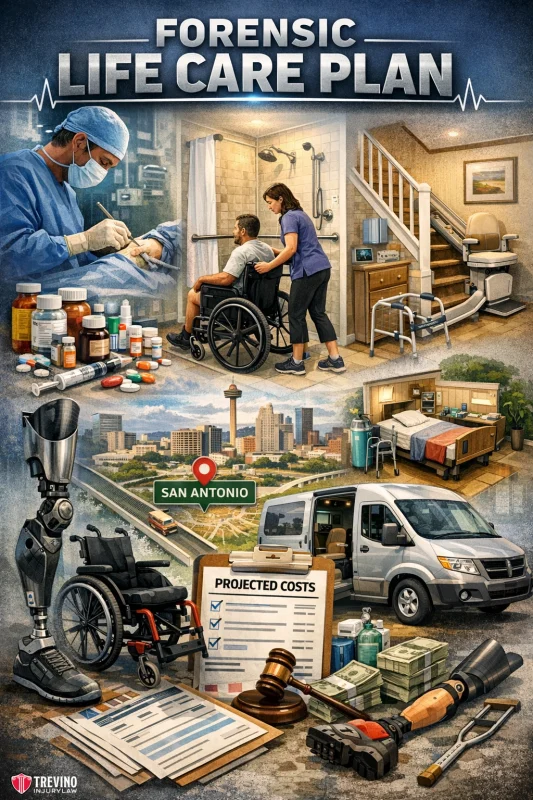
It is not enough to simply state that ‘surgeries and prosthetics’ may be needed; Texas law requires us to prove these future needs by a ‘reasonable probability.’ As established in Pilgrim’s Pride Corp. v. Cernat, we must provide concrete evidence, such as itemized replacement schedules for prosthetic limbs and specific local servicing costs, to demonstrate that these future expenses are more likely than not to occur.
This plan accounts for the replacement of durable medical equipment every few years and adjusts for increasing care needs as the victim ages, translating the general concept of “future needs” into a concrete financial requirement.
Understanding these categories clarifies your family’s needs, but determining who pays for it raises a critical question: where this care occurs and why standard insurance often denies coverage.
What Are the Three Major Components of Long-Term Care?
- Future Medical Treatment: This category encompasses all clinical needs, including planned surgeries, routine specialist visits at the Medical Center, ongoing physical, occupational, and speech therapies, and annual diagnostic screenings to monitor for complications.
- Personal Supportive Care: This includes the daily human labor required for safety, which is particularly vital when the victim is a minor. The 2024 Texas Department of Transportation injury statistics document passengers as young as 8 and 9 years old sustaining injuries, often in cases where safety equipment was not utilized. For these pediatric victims, ‘supportive care’ must be dynamic, evolving to address developmental milestones and educational needs that standard adult plans often overlook.
- Environmental & Equipment Needs: This covers the physical tools for independence, such as power wheelchairs with custom seating, architectural home modifications (e.g., widening hallways or installing roll-in showers), and accessible vans for transport to appointments.
What Type of Care Would Be Best for Someone Recovering from a Severe Accident?
For most catastrophic injury victims in San Antonio, in-home care is vastly superior to residential facilities because it maintains the family unit and reduces the risk of institutional infections, provided that adequate funding is secured to pay for private nursing.
While the ER at Brooke Army Medical Center (BAMC) is essential for immediate stabilization, long-term recovery often requires “custodial care,” which can be effectively managed at home with the right modifications. However, insurance companies often push for cheaper nursing home facilities. We fight for the funding necessary to keep your loved one in their own home in communities like Alamo Heights or Helotes.
In cases of severe Traumatic Brain Injury (TBI), a specialized transitional living center might be required initially, but the ultimate goal of a Life Care Plan is to facilitate a return to a home environment that supports maximum independence and family integration.
Why Does Standard Health Insurance Fail to Cover Long-Term Needs?
Most private health insurance policies exclude ‘custodial care,’ and relying on them is risky due to Texas’s strict ‘paid or incurred’ limitation. The landmark Texas Supreme Court decision in Haygood v. De Escobedo, 356 S.W.3d 390 (Tex. 2011), firmly established that recovery for medical expenses is limited to the discounted rates that insurers actually pay, rather than the full billed amount.
This makes it critical to secure a settlement that fully accounts for future non-medical custodial needs, which insurance denials often leave unpaid. Even “comprehensive” policies focus on acute medical treatment to fix a problem, not the lifelong maintenance care required to support a permanent disability, creating a coverage gap that can reach millions of dollars over a victim’s lifetime.
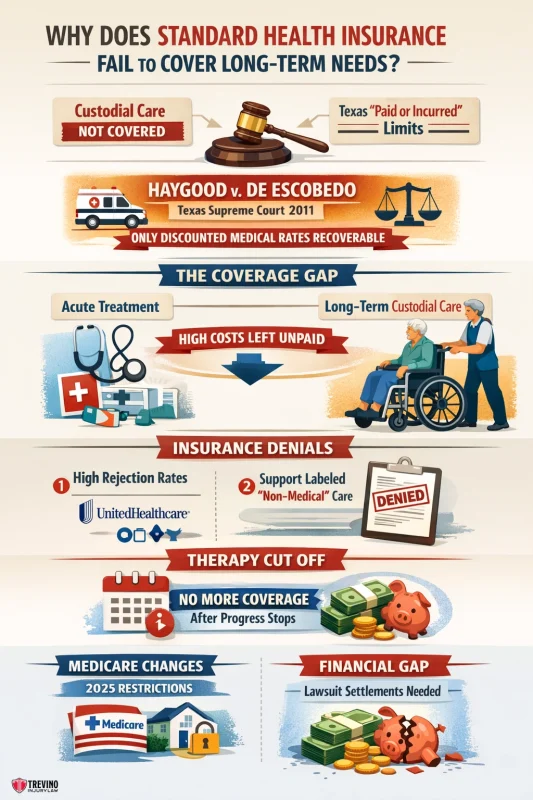
While identifying layers of commercial coverage is a standard part of our legal strategy, it is critical to recognize that these policies have significant limitations. Major insurers like UnitedHealthcare often have high denial rates for long-term rehabilitation, categorizing essential daily support as “non-medical” custodial care.
Once a patient plateaus in therapy and is no longer showing “significant clinical improvement,” insurance typically stops paying for sessions, leaving families with the bill. Furthermore, changes to Medicare rules, such as the caps and adjustments slated for 2025, can further restrict access to home health services for seniors and people with disabilities, making a lawsuit settlement the only reliable safety net.
These exclusions create a significant financial gap, often defined by specific policy rules, which leads to the medical definitions used to compel insurers to pay.
What Does Catastrophic Coverage Not Cover?
- Custodial Care: Routine assistance with activities of daily living (ADLs), such as bathing, dressing, eating, and toileting, is almost universally excluded, yet it is often the largest expense.
- Home Modifications: Health insurance will not pay for ramps, widened doorways, or the installation of a roll-in shower in your home in Leon Valley or Converse to accommodate a wheelchair.
- Non-Emergency Transport: The cost of an accessible van or specialized transport to therapy appointments is rarely covered.
- Routine Maintenance: Ongoing costs for non-prescription supplies, over-the-counter medications, and routine vision or dental care, often needed after facial trauma, are typically out-of-pocket expenses.
What Is the 80/20 Rule in Insurance?
In the context of catastrophic liability claims, the “80/20 rule” refers to the devastating co-insurance burden, where a victim might be responsible for 20% of the total medical costs, which can push them into bankruptcy when the claim value reaches millions of dollars.
While the term is sometimes used in healthcare to describe the Medical Loss Ratio, for a family facing a $5 million lifetime care bill, a 20% responsibility means finding $1 million out of pocket.
This gap highlights why relying on health insurance is impossible. Even with coverage, deductibles, copayments, and coinsurance caps can deplete a family’s savings.
We structure settlements to cover these “co-insurance” gaps and ensure that the compensation package accounts for the full 100% of your financial exposure, preventing the insurance company’s math from destroying your financial future.
How Is “Catastrophic Impairment” Medically Determined?
Medical experts use the AMA Guides to the Evaluation of Permanent Impairment to assign a specific percentage rating to your disability, quantify the loss of function for a jury, and establish the medical necessity of long-term care.
This objective scoring system moves beyond subjective pain complaints and provides a concrete, undeniable metric that insurance adjusters and Texas courts must respect when calculating damages.
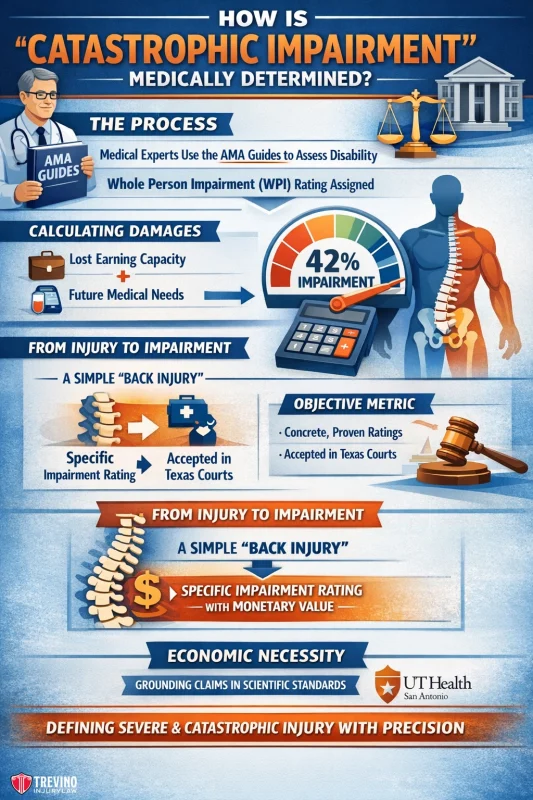
We expand on the general definitions of injury by applying these rigorous technical criteria. In San Antonio courts, we use these Whole Person Impairment (WPI) ratings to calculate “Lost Earning Capacity” and “Future Medical Needs” with precision. A simple diagnosis of a “back injury” is not enough; we must establish a specific impairment rating that correlates with a dollar amount for lifetime care.
This transforms the argument from a debate about sympathy into a calculation of economic necessity, grounded in widely accepted medical standards used by experts at institutions such as UT Health San Antonio.
Specific criteria are often used to draw the line between severe and catastrophic, establishing the foundation for understanding the full compensation you’re entitled to recover.
What Is Criterion 6 for Catastrophic Impairment?
Criteria 6 defines a catastrophic impairment as a physical injury resulting in a 55% or greater Whole Person Impairment (WPI) rating under the AMA Guides to the Evaluation of Permanent Impairment.
This threshold is crucial in legal arguments because it objectively determines whether the injury is severe enough to exceed standard policy limits and justify lifetime income and medical benefits.
Reaching this 55% threshold provides a powerful negotiating lever, signaling that the injury has fundamentally altered the victim’s ability to live without significant support.
What Are the 5 Signs of Injury Trauma That Necessitate Long-Term Care?
- Continued Bleeding or Non-Healing Wounds: Persistent issues that require ongoing wound care nursing or surgical intervention.
- Signs of Infection: Chronic infections, particularly at post-surgical sites or associated with hardware, require long-term antibiotic therapy.
- Loss of Use: Complete or partial paralysis, amputation, or loss of motor control that necessitates adaptive equipment and attendant care.
- Moderate to Severe Chronic Pain: Pain that requires long-term management strategies, including pain pumps or ongoing medication management, and that impacts daily function.
- Pre-Existing Conditions Complicating Recovery: Conditions such as diabetes or heart disease that interfere with the healing process and necessitate specialized long-term monitoring.
How Do Settlements Account for Rising Medical Inflation?
Catastrophic injury settlements must use a “medical CPI” (Consumer Price Index) rather than standard inflation rates, as healthcare costs rise significantly faster than the general economy, meaning a dollar today will purchase far less medical care in twenty years.
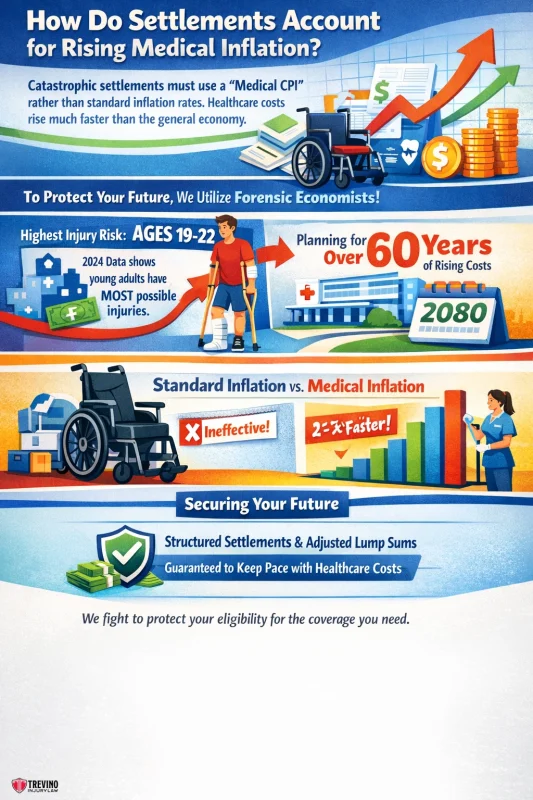
To protect your future, we utilize forensic economists who calculate the ‘future value’ of your care plan. This is critical because catastrophic injuries disproportionately affect young adults with decades of life ahead of them. According to 2024 Texas Department of Transportation data, the highest frequency of ‘possible injuries’ occurs among adults aged 19 to 22.
For a 19-year-old victim, a settlement must account for more than 60 years of economic shifts, ensuring funds secured today will still cover nursing and equipment well beyond 2080.
A fixed settlement amount that appears large today is risky if it fails to account for this type of inflation. For example, the cost of a customized wheelchair or an hour of skilled nursing in San Antonio has historically outpaced the overall inflation rate by 2-3 times. If your settlement is calculated using standard economic models, you effectively accept a pay cut every single year for the rest of your life.
We fight to secure a structured settlement or a lump-sum payment adjusted for this aggressive “medical inflation,” ensuring your ability to pay for care does not erode as prices rise over the coming decades. That inflation adjustment is only one part of how catastrophic injury settlements are calculated in Texas, alongside the other damages and payout considerations that shape valuation.
This financial planning is critical, but it depends on your eligibility for coverage, which means strict rules on what disqualifies you.
What Disqualifies a Person from Long-Term Care Insurance?
Pre-existing conditions, such as the catastrophic injury itself, recent strokes, or the current use of physical aids like wheelchairs, will almost certainly disqualify a victim from purchasing a new long-term care (LTC) insurance policy after a crash. Because insurance companies operate for profit, they view a person who already requires daily assistance as a guaranteed loss and will immediately deny coverage.
This reality makes the personal injury lawsuit the only viable source of funding for your future care, as the private market effectively closes its doors the moment the accident occurs.
Does Health Insurance Cover 24-Hour Home Nursing?
No, standard health insurance typically classifies 24-hour home nursing as “custodial care” and excludes it from coverage, leaving families to pay out of pocket.
Can I Buy Long-Term Care Insurance after an Accident?
No, standard health insurance typically classifies 24-hour home nursing as “custodial care” and excludes it from coverage, leaving families to pay out of pocket.
Is a Life Care Plan Required for a Lawsuit?
Yes, a certified Life Care Plan is essential for demonstrating the specific costs of future needs to a San Antonio jury and for avoiding undercompensation.
What Happens If You Underestimate Future Care Costs?
If you settle your claim for a specific amount, such as $500,000, but your actual lifetime care costs total $3 million, you will face personal bankruptcy within a decade as the funds run dry.
Once you sign a release of liability to receive that settlement check, the case is closed forever; you cannot go back to the insurance company or the defendant to ask for more money when complications arise or costs increase.
This is why “guesstimating” your damages is a fatal error; without a forensic evaluation of your life expectancy and specific medical needs, you risk accepting a fraction of what your family actually needs to survive.
What are the 4 classifications of injuries requiring long-term support?
The four primary classifications of injuries that necessitate lifelong support are physical injuries, catastrophic permanent disabilities, financial injuries, and emotional or psychological trauma.
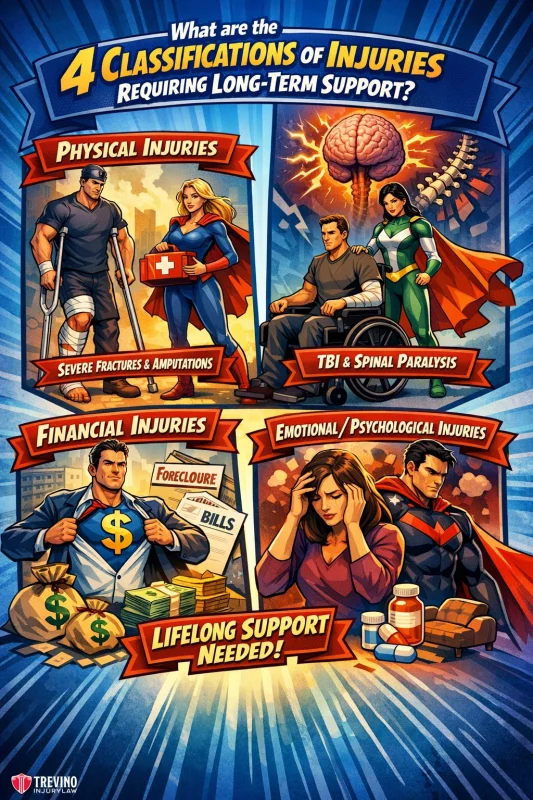
- Physical Injuries: These are tangible, structural injuries to the body, such as complex fractures requiring multiple surgeries or limb amputations.
- Catastrophic Injuries: These involve permanent loss of function, such as Traumatic Brain Injury (TBI) or spinal cord paralysis, which permanently alter the victim’s way of life.
- Financial Injuries: This category tracks the economic devastation caused by medical debt, including lost earning capacity and the destruction of the family’s financial stability.
- Emotional/Psychological Injuries: Often overlooked, severe PTSD and depression require decades of therapy and medication, which must be accounted for in the settlement.
When Is It Too Late to Document Long-Term Needs?
It is “too late” to document your long-term needs if you settle your case before reaching “Maximum Medical Improvement” (MMI) or if you fail to file a lawsuit before the two-year statute of limitations expires.
Settling before a doctor confirms that your condition has stabilized and is permanent means you surrender the right to claim damages for future complications that haven’t been diagnosed yet.
In Texas, if you miss the strict two-year filing deadline, you lose your legal right to seek compensation entirely, regardless of how severe your long-term care needs may be.
Why Hire a San Antonio Catastrophic Injury Lawyer?
Surviving initial trauma at University Hospital is only the beginning; protecting your family from medical inflation requires aggressive legal warfare. While settlement mills rush to accept lowball checks, Trevino Injury Law prepares for battle. We fight for families and force insurance adjusters to pay.
Want to Protect the Full Value of Your Claim?
You’ve seen how this affects your case — but this is only one piece of the puzzle. Our Catastrophic Injury Lawyer page breaks down what a trial-ready firm does differently.
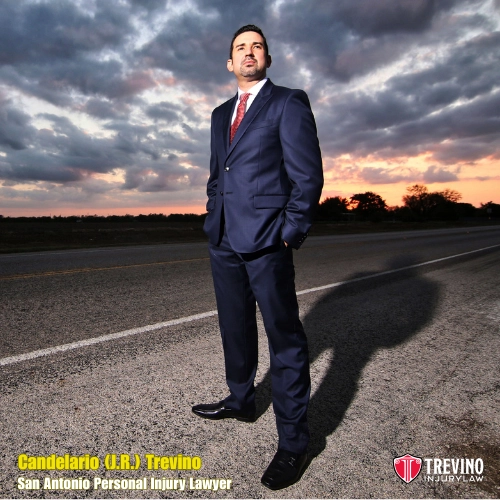
By retaining forensic economists to calculate future damages, our trial-first approach secures justice in Bexar County. We force insurers to deliver maximum compensation, including a $17,000,000.00 recovery. To present a forensic Life Care Plan before time expires, partner with a San Antonio injury compensation attorney.
Call 210-TREVINO for a free case review. Se Habla Español. We operate on a strict No-Win, No-Fee basis.