When you hire a San Antonio premises liability lawyer at Trevino Injury Law, we prove the property owner knew or should have known about the hazard that injured you and failed to fix it. Your status as an invitee, licensee, or trespasser sets the duty the owner owed, and invitees, such as store customers, receive the highest protection.
Negligent security claims arise when an apartment complex or business ignores a known pattern of crime, a broken gate, or poor lighting. Adjusters label a foreseeable assault a random crime and a fall as clumsiness, so maintenance logs, prior complaints, police call logs, and incident reports prove the owner had notice.
What Could Your Premises Liability Accident Case Be Worth?
Answer a few quick questions about your accident. Takes about 60 seconds.
See What My Case Might Be WorthThe insurance company offered less than $20,000. I ended up with over $1 million. — Jackie Galindo
We secured a $7.9 million jury verdict in a workplace premises defect case involving a crushed foot. Prior results do not guarantee a similar outcome. We send a Spoliation Letter, a legal demand that stops the property owner from destroying evidence, before surveillance systems overwrite their footage.
At Trevino Injury Law, our San Antonio personal injury lawyers follow that demand by subpoenaing electronic access logs and maintenance records, documenting your injuries, and preparing your claim for trial when the owner denies notice. Call 210-TREVINO for a free case review. You pay nothing unless we win. Se Habla Español.
When Is a Property Owner Liable Under Texas Premises Liability Law?
Texas premises liability law holds property owners accountable when they fail to maintain safe premises. Indeed, liability law holds property owners liable only when they breach the specific ‘Duty of Care‘ owed to you.
Liability is not automatic simply because you were hurt on someone else’s land; you must prove negligence. To win, we must prove they knew, or should have known, about the hazard and failed to fix it.
The details of that liability question often turn on what the owner knew, what a reasonable inspection should have revealed, and how the property was controlled. See when a property owner can be liable for injuries in Texas for a deeper breakdown of actual and constructive knowledge, repair timing, warnings, and control issues.
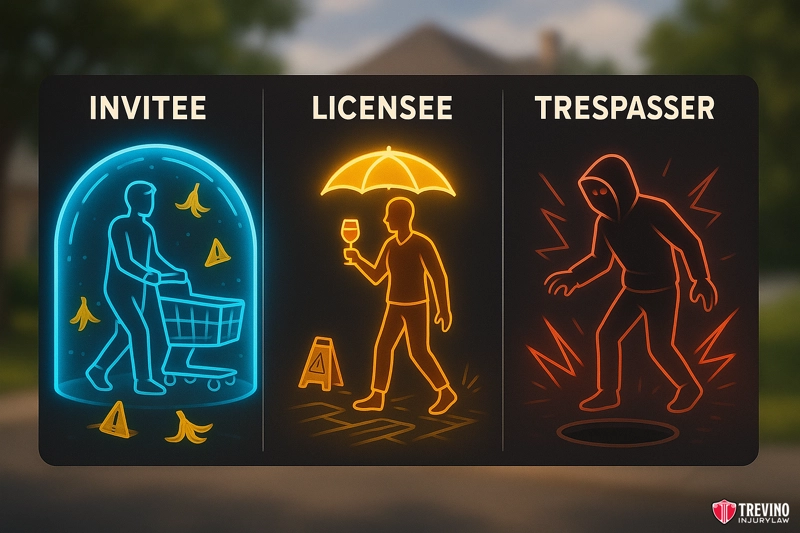
Establishing this liability begins with determining why you were on the property. Texas law divides visitors into three distinct categories, and the level of protection you are entitled to depends entirely on which category you fall into. Insurance companies often try to downgrade your status to minimize what they owe you, which is why establishing your correct legal status is our first priority.
How Does the Duty of Care Differ for an Invitee, Licensee, and Trespasser?
- Invitee (Highest Duty): You are an invitee if you enter a property for a commercial purpose that benefits the owner, such as shopping at North Star Mall, dining at a River Walk restaurant, or visiting a grocery store.
- The Duty: Property owners must not only warn you of known dangers but also actively inspect the premises to discover hidden hazards and fix them. If a railing is loose at a hotel, the owner is liable even if they claim they “didn’t know,” because a reasonable inspection would have revealed it.
- Licensee (Moderate Duty): You are a licensee if you enter property with permission but for your own benefit, such as a social guest visiting a friend’s home in Alamo Heights or a salesperson entering an office.
- The Duty: Owners owe licensees a duty to warn of known dangers (like a broken step they know about) but do not have a duty to inspect the property for new hazards.
- Trespasser (Low Duty): A trespasser enters without permission. Generally, owners owe no duty of care to trespassers, meaning you cannot sue for ordinary negligence.
- The Exception: Liability exists for “Gross Negligence” (setting booby traps) or under the “Attractive Nuisance” doctrine, which holds owners liable if dangerous features like swimming pools attract and injure children.
How Do You Prove “Constructive Notice” in a Premises Liability Case in San Antonio?
Proving “Constructive Notice” means demonstrating that the property owner should have known of the dangerous condition if they had been properly maintaining the property, even if they claim they were unaware. This is critical in cases involving structural defects like rotting balconies or broken security gates.
We prove this by obtaining maintenance logs, prior tenant complaints, and code violation records from the City of San Antonio. If a security gate at an apartment complex was broken for three months, the owner has constructive notice of the danger, regardless of whether they admit it.
Can You File a Bystander Claim After Witnessing a Premises Liability Accident?
Premises liability accidents often happen during family outings, at a restaurant, a store, or a community pool. Texas law recognizes that the trauma of watching a child, spouse, or parent suffer a catastrophic injury can be just as debilitating as the physical injury itself. This is known as a Bystander Claim.
If you were present at the scene, closely related to the victim, and suffered severe emotional distress from contemporaneously perceiving the accident (seeing it happen), you have a separate legal right to compensation. We fight to ensure that the mental anguish of the entire family is recognized by the insurance carrier.
How Does the “Open and Obvious” Defense Affect Pursuing a Premises Liability Claim in Texas?
Insurance companies frequently argue that if a hazard was visible, they owe no duty to fix it. However, in Austin v. Kroger Texas, L.P. (2015), the Texas Supreme Court recognized critical exceptions to this ‘open and obvious’ defense.
Specifically, a property owner remains liable if the invitee’s use of the premises was ‘necessary’, meaning the hazard was unavoidable, or if the danger arose from foreseeable criminal activity. For example, if the only exit from a building is blocked by debris, the danger may be obvious, but using that path is necessary, making the owner liable.
Can You Sue for Negligent Security as a Type of Premises Liability Claim in San Antonio?
Yes, Texas law holds property owners liable for violent crimes committed by third parties if the crime was “foreseeable” based on past activity and the owner failed to implement adequate security measures to protect tenants and guests.
This legal concept, known as “Negligent Security,” is frequently the only path to justice for victims of shootings, sexual assaults, or robberies in apartment complexes or commercial parking lots. San Antonio’s rapid expansion has led to a rise in “profit-over-safety” management, particularly in high-density areas like the Medical Center and the West Side.

When landlords cut costs by firing security guards or ignoring broken gates, they invite this criminal activity. We hold them accountable by proving that they knew their property was a target and chose to do nothing.
How Do “Crime Grids” Prove the Owner Knew of the Danger?
To win a negligent security case, we must prove the crime was foreseeable. We do this by building a “Crime Grid.”
As the Texas Supreme Court explained in Timberwalk Apartments, Partners, Inc. v. Cain, “Foreseeability requires only that the general danger, not the exact sequence of events that produced the harm, be foreseeable.” 972 S.W.2d 749, 756 (Tex. 1998). Texas courts look at whether prior crimes were close enough, recent enough, frequent enough, similar enough, and public enough to put the property owner on notice of the danger. That is why crime grids, SAPD call logs, prior incident reports, and tenant complaints are so important in negligent security cases against apartment complexes, hotels, and commercial properties.
We’ll subpoena San Antonio Police Department (SAPD) call logs for the property and the surrounding one-mile radius for the past 24 months. If these logs show a pattern of similar crimes, such as 50 calls for assault or robbery in the last year, the owner cannot claim ignorance. High crime rates in the immediate vicinity create a legal duty for the owner to upgrade security measures, such as installing cameras or hiring patrols.
What Common Types of Premises Liability Failures Lead to Lawsuits?
When we investigate a premises liability lawsuit regarding negligent security, we look for specific failures that contributed to the attack:
- Broken Access Gates: The most common failure in San Antonio gated communities; when gates are left open for weeks, they provide a false sense of security while allowing criminals easy access.
- Inadequate Lighting: Dark parking lots, breezeways, and stairwells invite criminal activity and prevent victims from seeing attackers.
- Lack of Patrols: Firing security guards or reducing patrol hours to save money, despite knowing crime rates in the neighborhood are rising.
- Broken Locks: Windows or doors that do not lock properly, often violating the Texas Property Code and allowing intruders direct access to homes.
Those security failures are one category within a broader range of unsafe-property incidents.
How an Attorney Can Help Determine if the Apartment or Security Company Is Liable
Often, liability is a matter of “Vicarious Liability” or contractual indemnity, meaning both the property owner and the private security company may be responsible.
We examine the contract between the complex and the security firm to see who was responsible for specific duties. For instance, if the complex paid for 24/7 patrols but the security guard was asleep or absent during the attack, the security company may be liable. This ensures that all negligent parties contribute to your compensation.
How Does San Antonio Premises Liability Apply to Commercial Events?
Event organizers of massive gatherings, like Fiesta San Antonio or the San Antonio Stock Show & Rodeo, have a non-delegable duty to manage crowd safety and ensure the stability of temporary structures.
With the Fiesta Commission reporting approximately 2.5 million attendees in 2024, and the Stock Show & Rodeo drawing 1.5 million visitors annually, the potential for crowd-related catastrophe is immense. Liability often arises from “crush injuries” caused by inadequate security staffing at bottlenecked exits or from the collapse of temporary bleachers, stages, or food tents.
If organizers sell more tickets than a venue can safely hold or fail to provide clear evacuation routes, they are liable for the resulting chaos and injuries.
What Are Common Residential Causes of Premises Liability?
Premises liability extends far beyond retail stores to include homeowners and landlords who fail to secure their property against predictable dangers. Whether you are visiting a friend’s home in Stone Oak or renting an Airbnb near Southtown, the person in control of that property has a duty to prevent unreasonable risks.
Who Is Responsible for a Dog Bite in San Antonio?
The dog’s owner is strictly liable if the dog has bitten someone before (the “One Bite Rule“) or if the owner was negligent in controlling the animal, such as violating San Antonio Leash Laws.
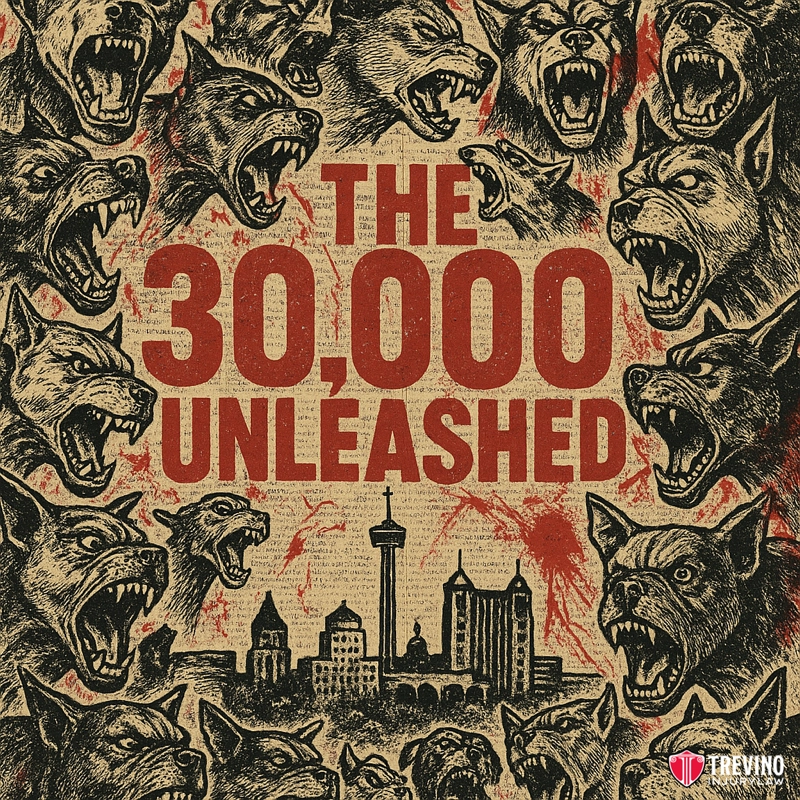
This is a severe local crisis; a 2024 survey by Animal Care Services estimated there are 30,000 roaming dogs in San Antonio, contributing to a 70% increase in serious bites recorded between 2018 and 2022. Additionally, landlords can be held liable if they knowingly allowed a tenant to keep a dangerous breed on the property despite having knowledge of the dog’s aggression.
What Are Your Rights After Premises Liability Accidents in San Antonio Pools?
Pool owners in Texas must strictly comply with Chapter 757 of the Health & Safety Code regarding pool yard enclosures. This is especially critical during San Antonio’s long swimming season, which typically runs from April to October.
Apartment complexes are liable for drownings or injuries caused by broken latches on gates, cloudy water that prevents visibility of a swimmer in distress, or a lack of required safety equipment like a shepherd’s hook. Under the “Attractive Nuisance” doctrine, pool owners are also liable for injuries to trespassing children if they failed to properly secure the pool area with a compliant fence and self-latching gate.
Can You Sue for Injuries at an Airbnb or Short-Term Rental?
Yes, but these cases are complex due to insurance gaps between the host’s personal homeowners policy (which often excludes business use) and Airbnb’s “Host Protection Insurance“. Liability often stems from hidden defects like collapsing decks, gas leaks, or privacy violations such as hidden cameras. We navigate these coverage disputes to ensure you are compensated by the correct policy.
When Does Poor Maintenance Become “Gross Negligence”?
Poor maintenance rises to the level of ‘Gross Negligence‘ when it meets the high threshold defined in Transportation Insurance Co. v. Moriel (1994). Under Moriel, we must prove two distinct elements: first, that the condition posed an extreme degree of risk (objective), and second, that the owner had actual, subjective awareness of that risk yet proceeded with ‘conscious indifference’ to your safety.
Unlike ordinary negligence, which is a simple failure to act, gross negligence implies a willful disregard for human life. Proving this allows us to seek punitive damages, which are designed to punish the defendant and deter future misconduct.
How Do Falling Objects Cause Common Premises Liability Injuries?
Gross negligence often appears in commercial settings where heavy merchandise is improperly secured on high shelves, known as “sky shelves,” at big box stores like Home Depot or Lowe’s. It also applies to elevator failures where maintenance logs show repeated warnings of a defect that were ignored to save money.
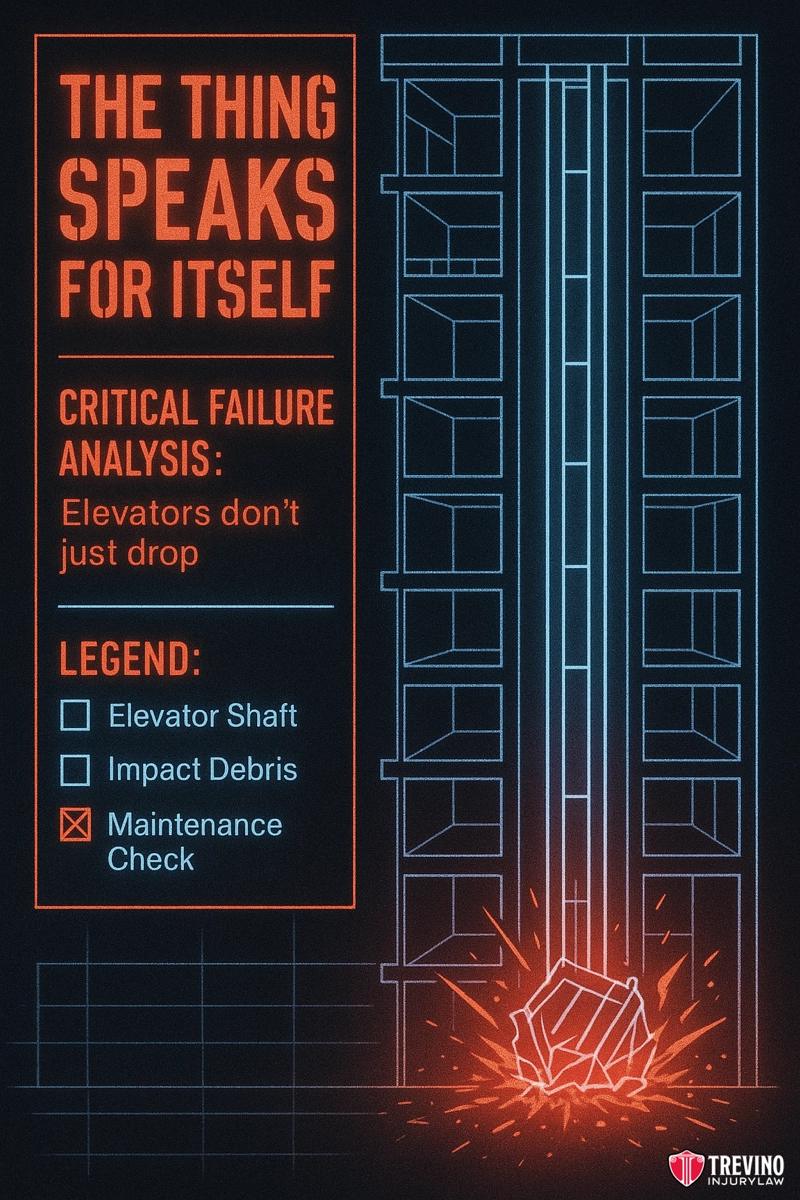
We hold property owners and maintenance contractors accountable under the doctrine of Res Ipsa Loquitur, the principle that the accident itself implies negligence because elevators do not simply drop without failure.
What Damages in Premises Liability Are Available for Catastrophic Injuries?
Victims of violence, structural collapse, or dog attacks often suffer life-altering trauma requiring compensation that extends far beyond simple medical bills to include long-term psychological care and loss of earning capacity. Texas law allows you to recover economic damages for direct financial losses, non-economic damages for pain and suffering, and in cases of gross negligence, punitive damages.
Calculating Damages for PTSD and Mental Anguish
In negligent security cases involving assault or sexual violence, the emotional trauma is often the most significant injury. We work with forensic psychologists to quantify the lifetime impact of Post-Traumatic Stress Disorder (PTSD), ensuring that your compensation covers the cost of therapy and the loss of enjoyment of life. Physical scars may heal, but the mental anguish of an attack in your own home requires substantial financial justice.
Beyond Medical Bills: The Role of Life Care Plans
In cases involving catastrophic injuries, such as traumatic brain injuries (TBI) from a structural collapse or complex regional pain syndrome (CRPS) from a crush injury, a simple stack of medical bills does not represent justice.

To ensure you are compensated for the lifetime impact of the negligence, we collaborate with certified Life Care Planners and vocational economists. A Life Care Plan is a comprehensive medical-economic report that projects your needs for the next 20, 30, or 40 years. It accounts for inflation on future surgeries, the cost of home modifications (like wheelchair ramps), and annual replacement of prosthetic devices.
Case Examples: Verdicts in Premises & Workplace Liability
Our firm has a proven track record of securing massive verdicts in serious injury cases when property owners refuse to take responsibility.
- $7.9 Million Verdict (Mario Trevino Mendoza): For a workplace premises defect that led to a crushed foot, far exceeding the initial settlement offer.
- $536,007 Jury Verdict (Arriaga v. Montemayor): Where the defense offered only $5,000 for a severe spinal injury, we took the case to trial and won a verdict over 100 times the offer.
These results demonstrate our willingness to fight corporate denial all the way to a verdict.
Why Do You Need an Experienced Premises Liability Lawyer to Fight Insurance Companies?
You need an experienced San Antonio premises liability lawyer because insurance companies use algorithmic software to undervalue claims handled by high-volume “settlement mills,” but they are forced to pay significantly more to avoid facing a proven litigator in court.
A trial-ready attorney fronts the substantial costs for security experts, engineers, and crime data analysts needed to prove negligence. If a firm isn’t willing to spend $50,000 or more on experts to build your case, they will pressure you to take a lowball offer.
At Trevino Injury Law, we operate on a true Contingency Fee basis. We advance all case expenses—hiring the best engineers to inspect the structural collapse or former police chiefs to analyze security failures. You pay $0 out of pocket, and we only get paid if we win your case.
Premises Liability FAQs
The Insurance Playbook: How They Deconstruct Your Life
Having spent over 20 years with insurance defense experience on our team, we know exactly how corporate defendants prepare to fight your claim. Their strategy is rarely about the accident itself; it is about attacking your credibility.
They will deploy the “Delay, Deny, Defend” tactic. They will scour your medical records for ten years back, hoping to argue your crippling spinal injury from the balcony collapse is just a “flare-up” of an old problem. We proactively block these tactics by using forensic medical experts who can clinically distinguish between degenerative changes and acute traumatic injury.
The “Preservation Race”: Securing Digital & Physical Evidence
In the digital age, evidence of premises negligence is rarely just a broken piece of concrete; it is often a line of code or a deleted video file.
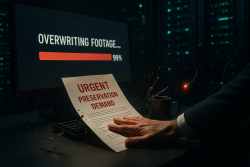
Property owners and their insurance carriers know that digital evidence is fragile. Most commercial security systems are set to “loop” or overwrite footage every 7 to 14 days to save server space. If your attorney sends a generic letter instead of a specific Spoliation Demand referencing the exact DVR make and model, that footage, and your proof of the attack, will be lost forever.
We also secure Electronic Access Logs (Key Fob Data). In gated communities, these logs reveal exactly when gates were opened and when they stopped working. If the logs show the “Main Entry Gate” registered “Error: No Power” for three weeks prior to your assault, the management company cannot claim they “didn’t know”.
Can I Sue If I Was Injured at a Friend’s Rental House?
Yes, you can generally sue the landlord’s insurance policy for defects like unsafe stairs or gas leaks. The claim is against the property owner’s negligence, not your friend personally.
Does “Trespassing” Always Bar a Claim?
No. Trespassing does not bar a claim if the owner knew trespassers were common (“Known Trespasser”) or if the victim was a child injured by an “Attractive Nuisance” like an unsecured pool.
Can I Sue for a Fall on a City Sidewalk?
Yes, you can sue for a fall on a city sidewalk, but the Texas Tort Claims Act creates strict deadlines. You must file a formal notice of claim with the City of San Antonio within 90 days.
From Victim to Plaintiff: Holding the Defendant Liable
When an insurance adjuster reviews your premises liability claim, their primary goal is to argue the property owner is not liable. They are trained to blame you for the hazard to protect their corporate profits. We step in to shift the balance of power aggressively. We transform you from a victim into a plaintiff taking direct action against the negligent defendant. We secure the necessary maintenance logs and police reports to prove they are fully liable for your catastrophic injuries.
Why We Prepare for Trial When They Push for a Settlement
High-volume law firms often operate as settlement mills. They push clients toward a fast, cheap settlement because they lack the resources or desire to fight in court. At Trevino Injury Law, we take the exact opposite approach. We prepare every single case for a relentless trial. With a proven track record of over 80 cases taken to trial, we know that insurance companies will only offer maximum financial justice when they are terrified of facing a proven trial authority.
Demand Justice: Contact Trevino Injury Law Now
Negligent landlords and insurance adjusters prioritize corporate profits over your safety. They refuse to pay for the hazards they ignored and the broken security. They rely on high-volume settlement mills that rush cases and fold under pressure. We do not fold. As the Trial Authority, we fight for families. We force negligent property owners to pay.
Don’t Guess About Your Rights. Get a Definite Answer.
The insurance company is already evaluating your accident. Call 210-TREVINO Now to level the playing field, or choose your next step below. It’s confidential and you pay nothing unless we win.

A dedicated premises liability lawyer takes immediate action. We subpoena access logs and send a Spoliation Letter to lock down deleted surveillance footage. Our trial-first aggression secures results, like when we won the $536,007 Arriaga verdict after the defense offered a pathetic $5,000. Schedule a free case review
today. We fight on a strict No Win, No Fee basis. Injured families across South Texas trust a Bexar County trial firm representing injured families to fight for them.
Call 210-TREVINO for a free, confidential consultation. Se Habla Español.

FREE CASE REVIEW 24/7 | NO WIN. NO FEE. | MAXIMUM COMPENSATION