When you hire a San Antonio dram shop lawyer at Trevino Injury Law, we pursue the licensed bar, restaurant, or store that served alcohol to an obviously intoxicated patron who then caused your injury or a loved one’s death.
Under the Texas Dram Shop Act, the claim turns on what the server could see before the sale and whether that service caused the harm.
What Could Your Dram Shop Accident Case Be Worth?
Answer a few quick questions about your accident. Takes about 60 seconds.
See What My Case Might Be WorthThe insurance company offered less than $20,000. I ended up with over $1 million. — Jackie Galindo
Surveillance footage of stumbling or slurred speech, drink receipts, staff testimony, and Texas Alcoholic Beverage Commission (TABC) records prove obvious intoxication. Establishments raise a safe harbor defense by claiming their staff completed TABC seller training, so we test whether the specific server was certified at the time.
We secured a $1.4 million settlement in an intoxicated driver case involving a wrist fracture and low back injuries. Prior results do not guarantee a similar outcome. We send a Spoliation Letter, a legal demand that stops the establishment from destroying evidence, before surveillance video is overwritten.
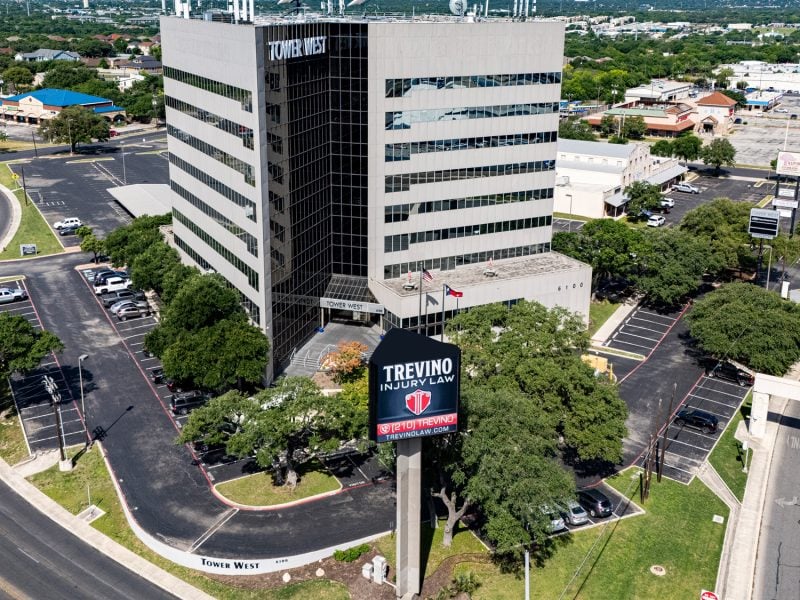
At Trevino Injury Law, our San Antonio personal injury lawyers follow that demand by deposing staff, obtaining receipts and TABC records, and preparing your claim for trial against the establishment and its commercial insurer. Call 210-TREVINO for a free case review. You pay nothing unless we win. Se Habla Español.
What Is the Texas Dram Shop Act?
The Texas Dram Shop Act, found in the Texas Alcoholic Beverage Code § 2.02(b), is the state law that allows victims of drunk driving accidents and their families to hold a licensed establishment financially liable for serving alcohol to a patron who was already “obviously intoxicated”. This law is crucial because Texas is facing a devastating crisis. In 2024 alone, 1,053 people died in alcohol-related crashes in the state, accounting for more than one in every four traffic fatalities.
This law establishes a crucial “second path to compensation.” Its importance is essential: in many catastrophic injury or wrongful death cases, the at-fault driver is uninsured or underinsured. In 2023, 14.5% of all Texas drivers were uninsured; that is, 1 in every 7 drivers on the road.
Their minimum auto policy cannot cover the massive, long-term medical bills from a spinal cord injury or TBI. The dram shop claim against the bar’s commercial insurance policy is often the only viable path to securing the maximum compensation the family needs. This law also serves as a powerful tool for justice and accountability.
It exists to punish establishments that “prioritize profits over safety” and holds them accountable for their negligent decision to overserve a patron. This applies to any TABC-licensed business, from a popular bar on the River Walk to a restaurant in Alamo Heights or a convenience store in Leon Valley.
For a deeper breakdown of how the legal standard, evidence, defenses, fault issues, and damages fit together, see our guide to Texas dram shop liability.
Who Can Be Sued in a Dram Shop Case? (Licensed Vendors)
Under the Texas Dram Shop Act, you can file a lawsuit against any licensed vendor that provided, sold, or served alcohol, which includes bars, restaurants, nightclubs, convenience stores, liquor stores, and even sports stadiums. The key distinction is that a licensed vendor is a commercial entity engaged in selling or serving alcohol for profit.
This broad category encompasses most establishments that sell alcohol, including local bars, restaurants, nightclubs, and liquor stores. It also includes less obvious examples, such as sports venues like the Alamodome or Frost Bank Center, and even a licensed caterer at a wedding or corporate event.
In most cases, no. Texas law, affirmed in the landmark case Graff v. Beard, 858 S.W.2d 918 (Tex. 1993), draws a clear line between licensed vendors (dram shop) and social hosts (private individuals) for adult guests. The law targets commercial businesses that profit from alcohol sales and generally does not apply to a private individual hosting a party for adult guests.
The legal reasoning is that the law targets commercial businesses that profit from alcohol sales, not private individuals hosting a barbecue or party for adult guests. Therefore, if you are serving other adults, you are not held to the same legal standard as a bar on Culebra Rd and are generally not liable for their actions.
What Is the “Obvious Intoxication” Standard in Texas?
“Obvious intoxication” is the high legal standard defined in Tex. Alco. Bev. Code § 2.02(b) that must be met to win a dram shop case, meaning a provider knew (or should have known) a patron was so intoxicated that they presented a clear danger to themselves and others. This is the central legal challenge of the case.
It’s critical to understand that a high BAC (Blood Alcohol Content) test after the crash is NOT enough to win. The entire case hinges on proving what the bartender or server could see, a behavioral standard, before making the last sale. This is not theoretical; the deadliest hour for DUI crashes in Texas is between 2:00 a.m. and 2:59 a.m., directly linking bar closing times to the moment of maximum danger.
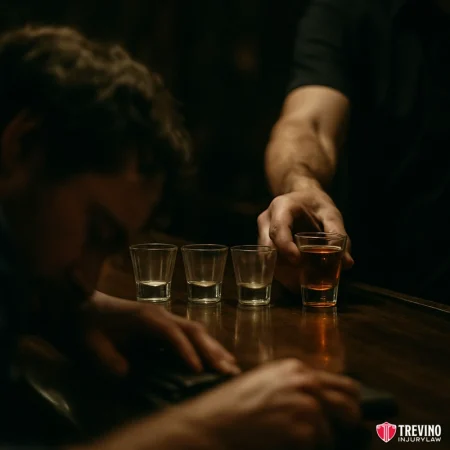
This is why an immediate investigation is so critical, as the “smoking gun” is almost always the bar’s surveillance video. A server is trained to look for specific, visible signs, including:
- Slurring speech
- Stumbling, swaying, or inability to stand
- Spilling drinks or fumbling with their wallet
- Belligerent or aggressive behavior
What Is the Liability for Providing Alcohol to a Minor?
Under Texas Alcoholic Beverage Code § 2.02(c), the liability for providing alcohol to a minor (under 18) is much stricter and applies to both licensed vendors and social hosts. Any adult who knowingly provides alcohol to a minor or allows them to drink on their property can be held legally and financially responsible for any harm they cause.
This is the major exception to the “social host” rule. For minors (under 18), the social host liability shield disappears. For example, if you knowingly allow your teenager’s friends to drink in your home, and one of them later causes a crash, you could be held personally liable for the damages. This rule reinforces the seriousness of providing alcohol to minors and covers this critical edge case.
Understanding these fundamental rights under the Texas Dram Shop Act is the first step, but the true challenge lies in the legal battle required to prove your case in court.
How Do You Prove a Texas Dram Shop Case?
To win a dram shop case, your attorney must prove that the establishment continued to serve alcohol to a patron after they were already “obviously intoxicated”, and that this over-service was a direct cause of the victim’s injuries or death. This presents the core challenge of the case: the [Burden of Proof] is high and rests entirely on the victim.
Bars and their insurance companies know this and will actively fight to hide, deny, or “lose” the very evidence needed to meet this burden. This is where an attorney’s immediate, trial-focused investigation makes or breaks the case; it is not a claim you can “wait and see” on. For example, proving a driver’s BAC after a crash on Loop 1604 is relatively straightforward; proving what a bartender in Shavano Park saw three hours earlier requires a trial-ready lawyer.
What Evidence Is Needed to Prove “obvious Intoxication”?
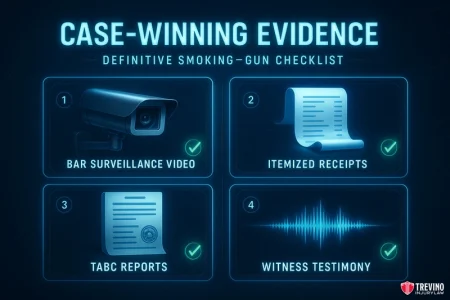
The most powerful evidence is a combination of time-stamped surveillance video, the patron’s itemized receipts or credit card slips, eyewitness testimony, and official TABC investigation reports. This combination is used to create a clear timeline of the patron’s behavior and the bar’s negligence. Our legal team focuses on securing these key pieces of evidence:
- Bar Surveillance Video: This is the “smoking gun.” It is the best way to show a jury the patron stumbling, slurring, or acting belligerent at the bar.
- Receipts & Credit Card Slips: These [Surveillance Video & Receipts] are time-stamped records that can show a dangerously high volume of alcohol served to one person in a short period.
- TABC Investigation Reports: These are official reports from the Texas Alcoholic Beverage Commission (TABC), which may include violations or findings against the bar.
- Witness Testimony: Statements from other patrons or staff who witnessed the patron’s behavior and can confirm the patron was obviously intoxicated.
How Do Lawyers Get Surveillance Video and Receipts From a Bar?
We immediately send a legal spoliation letter, also known as an evidence preservation letter, to the bar and all other at-fault parties. This formal legal demand requires them not to erase, destroy, or alter any evidence related to the incident.
This is the first and most critical step we take, often within hours of your first call, precisely because this evidence is so fragile. This letter is a formal legal demand that they not erase, destroy, or alter any evidence. This demand specifically covers video footage, digital receipt data, employee time logs, and even manager text messages.
What Happens if the Bar’s Surveillance Video Is Erased?
If the bar’s surveillance video was erased before you hired a lawyer, it makes the case more difficult, but not impossible. We can still build a powerful case using additional evidence, such as receipts, TABC reports, and witness testimony. If, however, the bar erased the video after receiving our spoliation letter, this is called spoliation of evidence.
This is a powerful trial tool. While the legal standard is high, as set by the Texas Supreme Court in Brookshire Bros., Ltd. v. Aldridge, we can request that the judge instruct the jury on this issue of spoliation. In cases of intentional destruction, this instruction may instruct the jury to assume that the missing video would have supported our case. This demonstrates deep trial expertise and is a consequence that the bar’s lawyers work hard to avoid.
Is Eyewitness or Expert Testimony Required?
Yes, eyewitness testimony from other patrons and expert testimony from a toxicologist are often essential to win a contested dram shop case. Eyewitnesses confirm the visible behavior (“obvious intoxication”), while an expert toxicologist reinforces the case with science.
These two types of testimony serve different but complementary functions. Eyewitnesses confirm the behavioral standard; they can testify that they “saw the patron slurring” or “saw them get cut off”. The Expert Toxicologist uses science to support the claim, reviewing receipts and the timeline to “testify about the patron’s likely BAC and visible impairment level,” creating a full, undeniable picture for the jury.
Proving what happened with this evidence is half the battle; the other half is defeating the aggressive legal defenses the bar’s insurance company will use to avoid paying for the harm they caused.
How Do Bars and Their Insurance Companies Fight Dram Shop Claims?
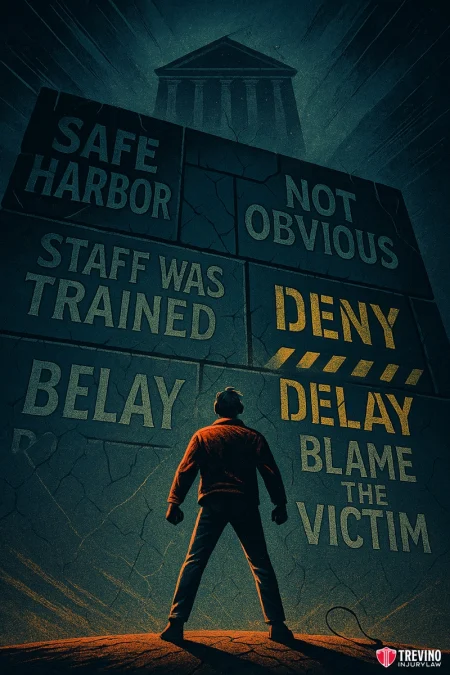
Bars and their commercial insurance carriers use two main tactics to avoid paying for the harm they cause: the “Safe Harbor Defense” and aggressive strategies designed to deny liability or blame you. This is not a minor tactic; it is their primary playbook. In an analysis of TABC cases from 2018 to 2023, approximately 40% of cases filed against businesses for underage drinking were resolved under the “Safe Harbor” provision. They will claim the driver’s intoxication wasn’t “obvious” or that their staff was “fully trained”.
This is a “David vs. Goliath” fight. These establishments and their insurance companies have teams of lawyers whose only job is to deny, delay, and defend. They will use any tactic, from claiming the patron’s intoxication wasn’t “obvious” to arguing their staff was “fully trained” or even trying to blame the victim for the crash. These insurance companies are aware of which law firms are considered “settlement mills” that tend to settle cases for low amounts, and which firms, such as Trevino Injury Law, are more likely to go to trial. Our reputation for being trial-ready is our clients’ biggest leverage.
What Is the “Safe Harbor Defense” and How Can You Beat It?
The “Safe Harbor Defense,” outlined in Tex. Alco. Bev. Code § 106.14(a) is a legal loophole that bars use to avoid liability by claiming they had proper TABC certifications and trained their staff, but our trial team knows how to defeat it. We work to prove that this training was a “sham” or that employees didn’t follow it.
This is the primary “legal loophole” that bars use, the Safe Harbor Defense. They claim they are immune from a lawsuit because they followed TABC rules, such as ensuring all staff are “TABC certified”. This is where insurance companies expect victims to give up. We do the opposite; we investigate to prove the policy was a “sham”. We do this by:
- Deposing employees to show they didn’t follow their training.
- Finding evidence that the bar encouraged overserving for profit.
- Checking TABC records to prove the specific server was not, in fact, certified at the time of the incident.
How Our Trial-First Mindset Drove a 1 Million Dram Shop Settlement
Our firm secured a $1 Million Settlement for a wrongful death claim involving dram shop (bar) liability because we were fully prepared to prove the bar’s negligence to a jury. The defense knows we have taken over 80 cases to trial and pays more to avoid facing us in a Bexar County court. This is the “Trial-Ready” leverage in action.
When the defense knows you have taken 80+ cases to trial and have a reputation for winning, their calculations change. They pay more to avoid facing us in a Bexar County courtroom. This value is evident in cases like Arriaga v. Montemayor, where the defense initially offered only $5,000. Still, we proceeded to trial and secured a $536,007 jury verdict, over 100 times the original offer. This is the value of not backing down.
How Does Knowing the “insurance Playbook” Help Win Your Case?
Our team includes lawyers with over 20 years of insurance defense experience, meaning we are familiar with the “playbook” they will use against you, as we have written it. This inside knowledge gives our clients a distinct and powerful advantage in negotiations and at trial.
We anticipate their every move. We are aware of how they will attempt to conceal evidence, the motions they will file to dismiss the case, and how they value claims based on the opposing lawyer’s trial record. This insider knowledge is a powerful advantage that helps us build a stronger case and counter their tactics before they are even deployed.
Why “Settlement Mill” Law Firms Fail in Dram Shop Cases
High-volume settlement mill law firms often fail these cases because they lack the trial-first mindset, resources, or willingness to fight the “Safe Harbor Defense” properly. They are designed to settle cases quickly and affordably, rather than maximizing value for complex claims. These firms are built to settle cases fast and cheaply.
When an insurer presents the “Safe Harbor Defense,” a settlement mill will often pressure its client to accept a lowball offer because it isn’t prepared to fight the case. We do the opposite: we see it as a challenge, investigate, and prepare for trial. This approach is fundamental to our Trial Authority Persona.
Defeating the insurance company’s tactics is the key to unlocking your claim, which then allows us to focus on the most important outcome: securing the full and maximum compensation your family needs for the future.
What Compensation Can Be Recovered in a Dram Shop Lawsuit?
A Texas dram shop lawsuit allows you to recover the maximum compensation for all your losses, including economic damages for financial costs, non-economic damages for personal suffering, and potentially punitive damages to punish the bar. This section is dedicated to answering your “Financial Necessity” motivation. We begin by busting the myth of the “average settlement”. The value of your case is not an average; it is specific to your losses.
A catastrophic spinal cord injury from a crash on I-35 is valued completely differently than a broken arm. A trial-ready attorney calculates the full value of your future needs, not just what an insurance company offers today. Our firm’s history of fighting for maximum value in related vehicle accidents, as evidenced by a $1.4 million settlement in an intoxicated driver case involving a wrist fracture and low back injuries, demonstrates our commitment to securing what our clients truly deserve.
What Damages Can Be Claimed in a Texas Dram Shop Lawsuit?
Our firm fights to recover compensation for every loss your family has endured, including economic, non-economic, and punitive damages. Economic damages cover tangible expenses, while non-economic damages encompass the intangible costs associated with the injury. We pursue compensation for all categories of loss, including:
- Economic Damages (The Bills): These are the tangible costs, including past and future medical bills (the economic cost of alcohol-impaired crashes in the U.S. was $58 billion in 2019 alone), lost wages, and the loss of future earning capacity if you can no longer work.
- Non-Economic Damages (The Human Cost): This covers the immense “human” cost of the injury, such as physical pain and suffering, mental anguish, disfigurement, physical impairment, and loss of consortium (the loss of a family relationship). This ‘human cost’ is immeasurable. In 2023, 253 children (14 and younger) were killed in alcohol-impaired crashes; over half were passengers in the drunk driver’s own vehicle.
- Punitive Damages: This is a separate category designed to punish the bar for its conduct, which we will explain in the next section.
Does Texas Allow Punitive Damages for Dram Shop Cases?
Yes, Texas law allows victims to pursue punitive (or exemplary) damages in a dram shop case if we can prove the bar acted with gross negligence or malice. These are not automatic and are reserved for cases where the bar has shown an extreme indifference to safety. It is important to distinguish these damages.
They are not to compensate you for a loss, but to punish the bar for their extreme indifference to safety. These are not automatic. They are reserved for rare cases where we can prove the bar acted with “gross negligence or malice”, for example, serving a patron who was already unconscious at the bar. This is the law’s most powerful tool for (Justice & Accountability), as it deters the establishment and others from engaging in such dangerous behavior again.
How Much Does a San Antonio Dram Shop Lawyer Cost?
We handle all dram shop cases on a contingency fee basis, which means you pay us nothing unless and until we win your case. You will never pay a single dollar out of your own pocket, as our firm covers all costs of the investigation and litigation. This fee structure removes all financial barriers to getting elite legal representation.
Our firm covers all costs associated with the investigation, including hiring expert witnesses (such as toxicologists) and taking the case to trial. Our fee is a percentage of the financial recovery we secure for you. This means our interests are 100% aligned with yours: to secure you the maximum compensation possible.
Can I Sue the Bar if the Drunk Driver Was Uninsured?
Yes, and this is one of the primary reasons the Texas Dram Shop Act exists. In Texas, where 1 in 7 drivers is uninsured, this claim provides a critical path to financial recovery. The bar’s commercial liability insurance policy is often the only resource available to cover your devastating losses.
This is a core problem we help victims solve. In many catastrophic injury or wrongful death cases, the at-fault driver has little or no insurance. The bar’s commercial liability insurance policy is often the only “deep pocket” available to cover the full, devastating costs your family is facing. We pursue this claim to get you the justice and financial stability you deserve.
While knowing the compensation you can recover is vital, that right is meaningless if you miss the strict legal deadline to file your claim.
How Long Do You Have to File a Dram Shop Lawsuit in Texas?
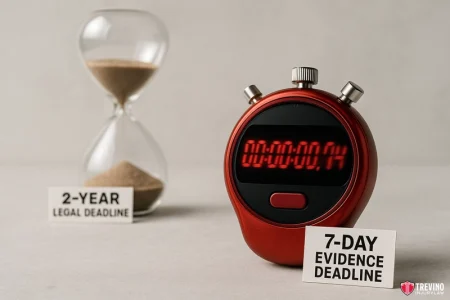
In Texas, the statute of limitations for a dram shop lawsuit is generally two years from the date of the injury or death. This deadline is set by Texas Civil Practice & Remedies Code § 16.003.
This legal term defines a strict deadline. If you file a lawsuit even one day late, your case will be permanently dismissed, regardless of how strong your evidence is. However, this section is dedicated to the most critical, time-sensitive problem you face: the “dual clock”. The two-year legal clock is separate from the practical evidence clock. Bar surveillance video is frequently erased on a 7-day or 30-day loop. This means that while the legal deadline is two years, the practical deadline to build a winning case is often just a few days.
This critical distinction is why you must act immediately. Waiting even a few weeks can mean the “smoking gun” video evidence is erased forever, making your case significantly harder to prove.
This urgency to act, combined with the complexity of the legal process, leads many victims to wonder what the legal journey actually entails from start to finish.
Dram Shop FAQs
What Is the Legal Process for Suing a Bar in Bexar County?
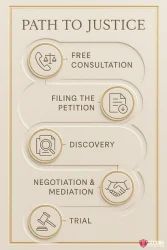
While every case is unique, the process for a dram shop claim in Bexar County typically follows five key stages, beginning with an immediate investigation and concluding with a settlement or jury verdict. Our team guides you through this entire process, which is designed to build a trial-ready case from day one.
- Free Consultation & Immediate Investigation: You call us 24/7, and we meet with you for a free, confidential consultation. If we take your case, our team will immediately send spoliation letters to preserve the video and begin collecting all critical evidence.
- Filing the Petition: We draft and file the official lawsuit in the Bexar County Courthouse or the appropriate jurisdiction. This petition names all at-fault parties, including the drunk driver and the negligent establishment.
- Discovery: This is the formal stage of evidence gathering. We depose the bar’s employees, request all relevant documentation (such as TABC certifications and receipts), analyze the preserved video, and hire expert witnesses, including toxicologists, to build the case.
- Negotiation & Mediation: Armed with a trial-ready case, we show the defense the strength of our evidence. Most cases settle at this stage because the insurance company does not want to face our 80+ trial record in court.
- Trial: If the insurance company refuses to offer a fair and full settlement, we are 100% prepared to present your case to a jury and demand justice.
Is the Statute of Limitations for the Dram Shop Two Years in Texas?
Yes, for almost all dram shop cases, you must file a lawsuit within two years of the date of the injury-causing accident or the date of death.
Does Suing the Bar Affect My Claim Against the Drunk Driver?
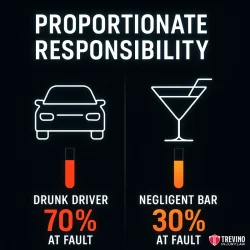
No, these are two separate and parallel claims; you can and should pursue financial compensation from both… In fact, Texas law addresses this issue through the doctrine of proportionate responsibility. A jury, based on the case F.F.P. Operating Partners, L.P. v. Duenez, will assign a percentage of fault to the driver and a percentage to the bar. The bar is then responsible for paying its share of the damages.
When Is the Best Time to Call a Dram Shop Lawyer After an Accident?
The absolute best time to call a dram shop lawyer is immediately, in the first 24-48 hours after the accident, if possible. This is not a sales tactic; it is an evidence-preservation tactic.
Most bars in areas like The Pearl or Stone Oak operate on a 7-day or 30-day loop for their surveillance cameras. If you wait, that critical video proof showing “obvious intoxication” will be erased forever.
Calling us immediately allows us to send the legal preservation letter before that evidence disappears, which is the single most important step in building a successful claim.
What Happens if the Bar I’m Suing Closes Down?
If the bar closes down, you can still pursue compensation, as the lawsuit is technically against the business entity and, more importantly, its commercial liability insurance policy. The insurance policy that was active at the time of the incident is what matters, not whether the bar is still open. Our firm will continue the claim against their insurance carrier. This is a complex situation that makes hiring an experienced trial lawyer even more critical, as we have the resources to track down the correct policy and corporate entity.
What Happens if I Miss the Filing Deadline (statute of Limitations)?
Suppose you miss the two-year statute of limitations. In that case, your case is permanently barred in almost every situation, and you will lose your right to recover any compensation from the negligent bar forever. While there are very few, very narrow exceptions, such as the “discovery rule” or if the victim was a minor, these are extremely rare and should never be relied upon. This deadline is the single most important reason you must not “wait and see.” The time to act is now.
Demand the Best San Antonio Dram Shop Lawyer: Call 210-TREVINO Now
With DWI fatalities rising across Bexar County, victims of crashes on roads like Loop 1604 cannot afford to face aggressive insurance carriers alone. Corporate giants use the “Safe Harbor” defense to deny liability, expecting “settlement mills” to fold and accept lowball offers. At Trevino Injury Law, we fight for families and force the other side to pay.
Don’t Guess About Your Rights. Get a Definite Answer.
The insurance company is already evaluating your accident. Call 210-TREVINO Now to level the playing field, or choose your next step below. It’s confidential and you pay nothing unless we win.
A skilled dram shop lawyer must secure evidence before it disappears. We immediately send a spoliation letter to lock down the establishment’s surveillance video. This trial-first aggression secured a $1 Million wrongful death dram shop settlement. Schedule a free case review at our San Antonio office. We fight on a strict No Win, No Fee basis. Injured families across South Texas trust a plaintiff trial firm that litigates, not just settles to fight for them.
Call 210-TREVINO for a free case review. Se Habla Español.